
The separate federal case centers on claims Britton-Harr used lab companies to run a money-laundering scheme.
WASHINGTON, DC, September 3, 2026 — Patrick Britton-Harr is scheduled to return to federal court in Baltimore during October for a separate Medicare fraud prosecution alleging that laboratory businesses under his control generated unlawful healthcare proceeds and supported a related money laundering transaction.
The upcoming case moves beyond the private aviation conduct underlying his AeroVanti convictions, placing Medicare claims, respiratory testing records, physician authorization, corporate banking activity, and the movement of allegedly fraudulent payments at the center of another federal trial.
Prosecutors have charged Britton-Harr with five counts of healthcare fraud and one count of money laundering, creating a two-part case that requires proof that specific Medicare payments resulted from fraud and that a charged financial transaction involved criminal proceeds.
Published court reporting identifies October 13 as the scheduled opening date, although federal trial calendars can change through later judicial orders, pending motions, evidentiary disputes, witness availability, or developments in Britton-Harr’s separate post-verdict litigation.
Britton-Harr remains presumed innocent of every healthcare and money laundering charge because neither the AeroVanti verdict nor an earlier civil judgment establishes criminal guilt in this separate prosecution, where the government bears the burden beyond a reasonable doubt.
The October case begins with alleged laboratory fraud
The Justice Department’s account of the indictment says Britton-Harr offered COVID-19 screening to nursing home patients nationwide before allegedly billing Medicare through Provista Health for expensive respiratory pathogen panel tests that prosecutors contend did not qualify for payment.
According to prosecutors, the panels were medically unnecessary, lacked treating-physician orders required for reimbursement, or were never performed, with some disputed claims allegedly identifying patients who had already died before the stated testing activity occurred.
The indictment attributes more than $15 million in submitted respiratory-panel claims to the operation and says Medicare paid more than $5 million, figures that prosecutors will use to demonstrate scale while proving specific charged executions through admitted evidence.
Those allegations make the healthcare counts the financial foundation for the laundering charge because the government cannot establish criminal proceeds without first proving that relevant Medicare reimbursements originated from the alleged fraud rather than legitimate laboratory services.
The defense can attack that foundation by challenging medical-necessity conclusions, physician-order evidence, laboratory-performance records, claim attribution, and Britton-Harr’s knowledge, potentially weakening both the healthcare counts and the connected theory concerning laundered proceeds in the October prosecution.
COVID-19 demand allegedly created the business opportunity
Nursing homes urgently needed coronavirus screening during the pandemic, when older residents faced exceptional risk and administrators struggled with outbreaks, testing shortages, regulatory obligations, staffing disruptions, and rapidly evolving guidance from public-health authorities.
Prosecutors contend that Britton-Harr’s business model used this legitimate demand to access patient samples and Medicare billing information before adding broader respiratory pathogen panels that carried substantially greater reimbursement than coronavirus screening alone.
The government must distinguish necessary COVID-19 services from allegedly unnecessary additional testing, showing why particular residents lacked symptoms or clinical circumstances supporting panels for numerous other viral and bacterial respiratory organisms during the charged period.
That proof may include patient charts, facility communications, physician testimony, requisition forms, laboratory results, billing codes, coverage policies, and expert explanations describing when broad respiratory testing serves a genuine diagnostic purpose in the October courtroom.
Britton-Harr’s lawyers can argue that uncertain symptoms, vulnerable populations, outbreak management, and the extraordinary conditions of the pandemic supported broader clinical judgment, while incomplete records years later may not reliably show what practitioners understood at the time.
The trial will therefore require jurors to separate aggressive utilization from intentional fraud, ensuring that disagreements about testing strategy do not replace proof that Britton-Harr knowingly participated in materially false representations submitted for federal payment.
The physician-order allegations create a documentary test
Medicare laboratory reimbursement generally depends upon services being supported by valid medical orders, allowing prosecutors to compare submitted claims against electronic health records, signed requisitions, physician communications, and laboratory information systems for corresponding authorization.
When no order appears, the government can call clinicians and facility employees to explain whether they requested the panel, understood its scope, received its results, or authorized documentation created in their names during pandemic operations.
The defense can respond that missing documents do not prove absent authorization, especially during a health emergency when facilities relied upon telephone directions, standing protocols, remote physicians, hurried paperwork, and multiple organizations handling patient information.
Britton-Harr’s personal role remains critical because even widespread ordering defects would not automatically prove that an owner knowingly caused fraudulent claims, given that sales teams, technicians, billers, clinicians, contractors, and compliance personnel performed different operational functions.
Prosecutors will seek communications, directives, financial analyses, ownership records, witness testimony, and reimbursement discussions that show Britton-Harr understood the ordering deficiencies and nevertheless caused or encouraged the disputed submissions for Medicare payment.
Tests allegedly billed but never performed present a different problem
A clinical dispute can center on whether a performed test was medically necessary, but billing for a service that never occurred raises a more direct factual question because the reimbursement request reflects completed laboratory work.
Investigators can compare claim files with accession numbers, machine logs, technician records, reagent inventories, specimen-tracking data, and result reports to determine whether each billed panel produced the operational trail ordinarily associated with actual processing.
Claims involving deceased beneficiaries could become particularly influential if official death dates precede stated specimen-collection dates, although the defense can investigate data errors, delayed submissions, misidentified patients, corrected claims, and inaccurate external records.
The government will likely argue that repeated anomalies form a pattern inconsistent with random clerical mistakes, while Britton-Harr’s lawyers can insist that claim-level discrepancies must be assessed individually before jurors infer deliberate conduct.
That distinction matters for laundering because payments associated with legitimate services remain lawful revenue, while only money derived from established criminal activity can satisfy the proceeds component of the charged financial offense under federal law.
Money laundering requires more than spending Medicare revenue
The indictment includes one money laundering count, but receiving or spending Medicare reimbursement does not automatically constitute laundering because prosecutors must prove the statutory elements governing the particular transaction charged by the grand jury.
The government generally must identify property representing proceeds of specified unlawful activity, connect that property to a financial transaction, establish Britton-Harr’s knowledge concerning its unlawful source, and prove any additional purpose required by the charged subsection.
That structure prevents the laundering count from operating as a simple duplicate of healthcare fraud, even though the alleged false claims supply the predicate activity from which prosecutors say the disputed money originated.
Trial evidence may trace reimbursements entering a laboratory account, moving among related businesses, and reaching another destination, while authorization records and communications could show who controlled each transfer and understood its business purpose.
Because the publicly available Justice Department announcement does not describe the charged transaction in detail, the trial record will need to establish its amount, date, participating accounts, alleged proceeds, and relationship to the laboratory operation.
Corporate accounts can clarify or complicate the tracing process
Businesses commonly move money among operating, payroll, management, tax, and reserve accounts, meaning transfers between affiliated companies can reflect ordinary administration rather than concealment, promotion, or spending of criminally derived funds in the ordinary course.
Prosecutors can nevertheless argue that Britton-Harr controlled the relevant entities and used intercompany movements to direct Medicare proceeds, relying upon bank signatures, online access records, accounting entries, emails, and testimony from financial employees.
The defense can challenge whether corporate accounts contained commingled funds from legitimate testing, other healthcare services, investments, or loans, making it difficult to connect a particular outgoing payment exclusively to allegedly fraudulent reimbursements.
Federal tracing principles can permit prosecutors to follow proceeds through commingled accounts, but jurors still must assess whether the government’s methodology accurately identifies the charged money and proves Britton-Harr’s required knowledge beyond a reasonable doubt.
Accountants and federal agents may use transaction charts to simplify a complicated financial trail, while defense experts can test assumptions, identify omitted deposits, and offer legitimate explanations for payments that prosecutors characterize as suspicious.
The jury must avoid concluding that complexity itself proves laundering because multilayered corporate banking may look unusual without being criminal, particularly when several businesses share employees, vendors, equipment, and administrative responsibilities across different operations.
Britton-Harr’s knowledge connects the two halves of the case
Healthcare fraud requires knowing participation in a scheme, while money laundering requires its own culpable mental state, making Britton-Harr’s understanding of laboratory practices, Medicare rules, account activity, and payment sources central throughout the trial.
Prosecutors may present emails, internal warnings, reimbursement reports, physician complaints, employee testimony, and financial approvals showing that Britton-Harr received information contradicting the representations ultimately attached to claims and transfers through related corporate accounts.
The defense can argue that he relied upon laboratory professionals, billing specialists, clinicians, lawyers, or compliance advisers, believing the testing and reimbursement system remained lawful despite administrative errors created during an unprecedented public-health emergency.
Reliance arguments become stronger when advice was complete, informed, and followed consistently, while prosecutors can undermine them by showing that Britton-Harr withheld material facts, ignored warnings, bypassed controls, or continued challenged practices after receiving contrary guidance.
Jurors will therefore examine not merely what Britton-Harr should have known as a business owner, but what admissible evidence establishes he actually knew or deliberately intended when charged claims and transactions occurred during the relevant period.
The civil case cannot decide the criminal trial
The government previously filed a False Claims Act lawsuit against Britton-Harr, Provista Health, and other healthcare companies, alleging more than 24,000 false claims associated with over 300,000 respiratory pathogen panel tests during the pandemic.
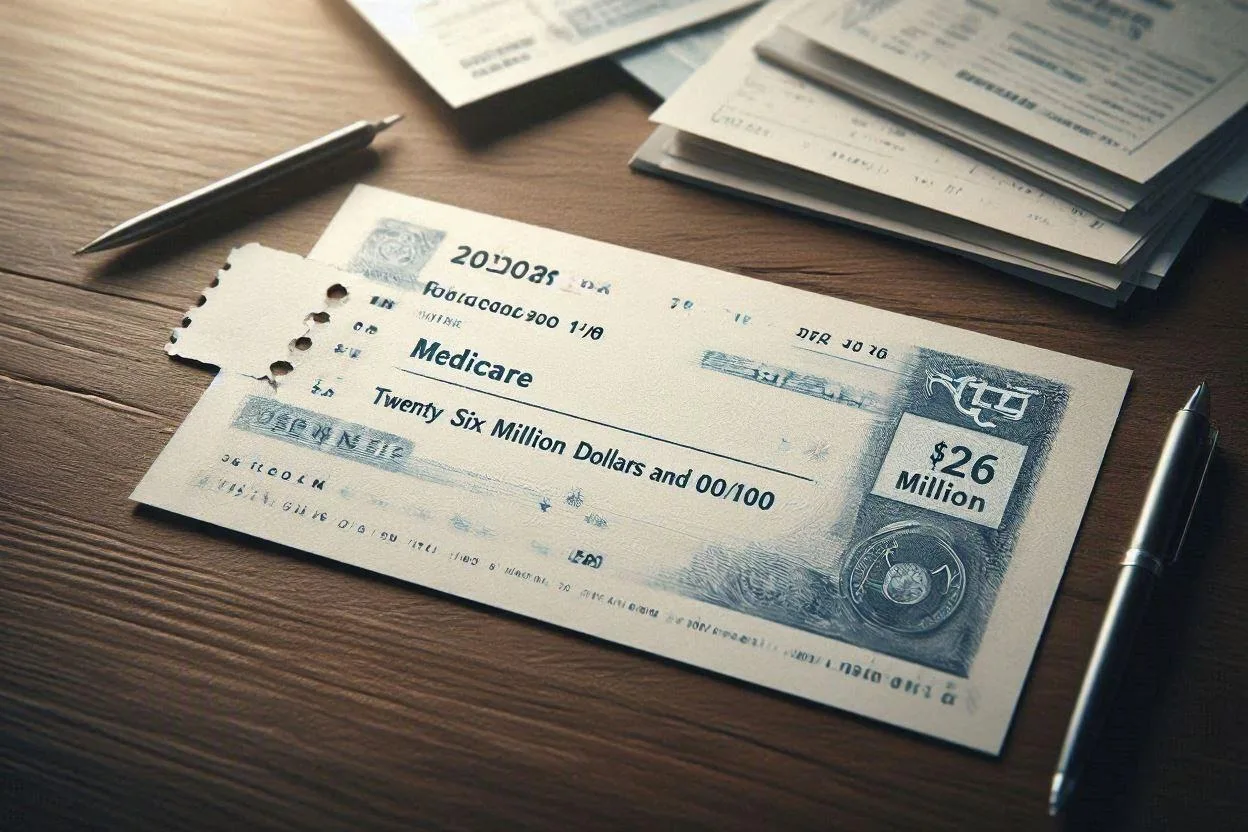
A federal court later entered a default judgment exceeding $26 million against Britton-Harr and Provista Health, but that civil outcome arose through different procedures and cannot eliminate his constitutional presumption of innocence on the criminal indictment.
Civil liability can involve statutory penalties, treble damages, payment mistakes, and a lower burden of proof, whereas criminal conviction requires unanimous jurors to find every element established beyond a reasonable doubt through admissible trial evidence.
The prosecution may seek to use underlying documents, admissions, or independently relevant conduct developed during the civil litigation, while the defense can object to references that risk converting a default judgment into improper character evidence.
The trial judge must preserve that distinction so jurors can consider valid records from the laboratory operation without assuming that earlier civil findings automatically prove healthcare fraud, knowledge, or money laundering during the criminal proceeding.
The AeroVanti conviction belongs to another evidentiary record
Britton-Harr’s six wire fraud convictions arose from AeroVanti’s Top Gun membership program and allegations involving private aircraft payments, not Medicare billing, respiratory testing, physician orders, laboratory performance, or healthcare proceeds during the pandemic era.
The reported October 13 trial date follows that aviation verdict, but prosecutors cannot use one jury’s conclusion about AeroVanti as automatic proof that Britton-Harr committed the separate laboratory offenses in Maryland federal court.
Federal evidence rules generally restrict propensity reasoning that invites jurors to infer guilt from unrelated wrongdoing, although specific evidence could become admissible for a permitted purpose if the court finds its relevance outweighs unfair prejudice.
Defense lawyers will likely seek careful jury screening and limiting instructions because extensive publicity surrounding AeroVanti could influence potential jurors before they hear the medical, billing, and banking evidence unique to the October prosecution.
The continuing motion for a new AeroVanti trial also remains procedurally separate, meaning success or failure in that dispute would not directly resolve the laboratory indictment or the government’s laundering theory during the scheduled October proceeding.
Five healthcare counts and one laundering count carry serious exposure
Each healthcare fraud count and the money laundering count carry a maximum statutory term of ten years, although those maximums do not predict the sentence a federal judge would impose following any conviction.
Sentencing would depend upon guidelines calculations, established loss, offense characteristics, criminal history, acceptance of responsibility, obstruction findings, restitution, forfeiture, and the statutory factors governing a punishment sufficient but not greater than necessary in federal court.
The existing AeroVanti convictions could affect the broader sentencing posture if they survive post-trial review, but federal rules governing multiple judgments, concurrent terms, consecutive terms, and related conduct require individualized judicial analysis from the sentencing judge.
An acquittal in October would end the criminal healthcare counts without disturbing the separate civil judgment, while convictions could produce additional restitution, forfeiture, imprisonment, supervised release, and appellate litigation concerning trial rulings in the federal system.
The trial will place compliance systems under scrutiny
Laboratories billing Medicare operate under rules governing enrollment, medical necessity, physician orders, coding, documentation, test performance, record retention, and repayment, requiring compliance processes that can detect errors before claims reach federal contractors in a timely manner.
Prosecutors may argue that the alleged conduct reflected a deliberate business model rather than isolated compliance failures, emphasizing scale, repetition, financial incentives, related companies, and Britton-Harr’s alleged control over operational decisions throughout the charged period.
The defense can identify policies, training, audits, billing reviews, corrective actions, or professional consultations showing a good-faith effort to follow complex requirements, even if later investigation uncovered mistakes or disagreements during the relevant period.
For other healthcare businesses, the prosecution illustrates why compliance programs must connect clinical decisions with claims data and bank controls, preventing questionable revenue from moving unchecked through affiliated corporate accounts within related business groups.
Public communications must distinguish allegations from established facts
Responsible crisis and public-relations management should explain the separation among the October indictment, the earlier civil judgment, the AeroVanti verdict, and the pending new-trial motion without merging distinct allegations into one narrative for public audiences.
Effective social and reputational rebranding may document verified compliance reforms, leadership accountability, and lawful business changes, but it cannot erase court records or represent unresolved criminal charges as exoneration through promotional language during continuing litigation.
Britton-Harr may publicly maintain his innocence and challenge the prosecution’s evidence, but accurate reporting must acknowledge the indictment, claimed Medicare losses, the money-laundering count, the civil judgment, and separate aviation convictions with appropriate context.
Government officials likewise must preserve the difference between accusation and proof because strongly worded claims about pandemic exploitation do not relieve prosecutors of establishing every criminal element before an impartial jury at the October trial.
October will test the government’s financial narrative
The government enters the scheduled trial with an alleged national testing operation, millions in Medicare payments, extensive laboratory records, and a theory connecting false healthcare claims to a subsequent financial transaction involving unlawful proceeds.
Britton-Harr enters with the right to contest medical necessity, physician authorization, actual test performance, personal attribution, proceeds tracing, transactional purpose, and knowledge at every stage of the alleged operation in the Maryland case.
If the October 13 schedule holds, jurors in Baltimore will decide whether prosecutors have transformed a complicated collection of medical and financial records into proof beyond a reasonable doubt rather than suspicion based upon scale.
Until that verdict arrives, the laboratory and laundering accusations remain unresolved, even as the separate federal case extends the Maryland businessman’s legal exposure beyond AeroVanti and into the highly regulated world of Medicare reimbursement.