
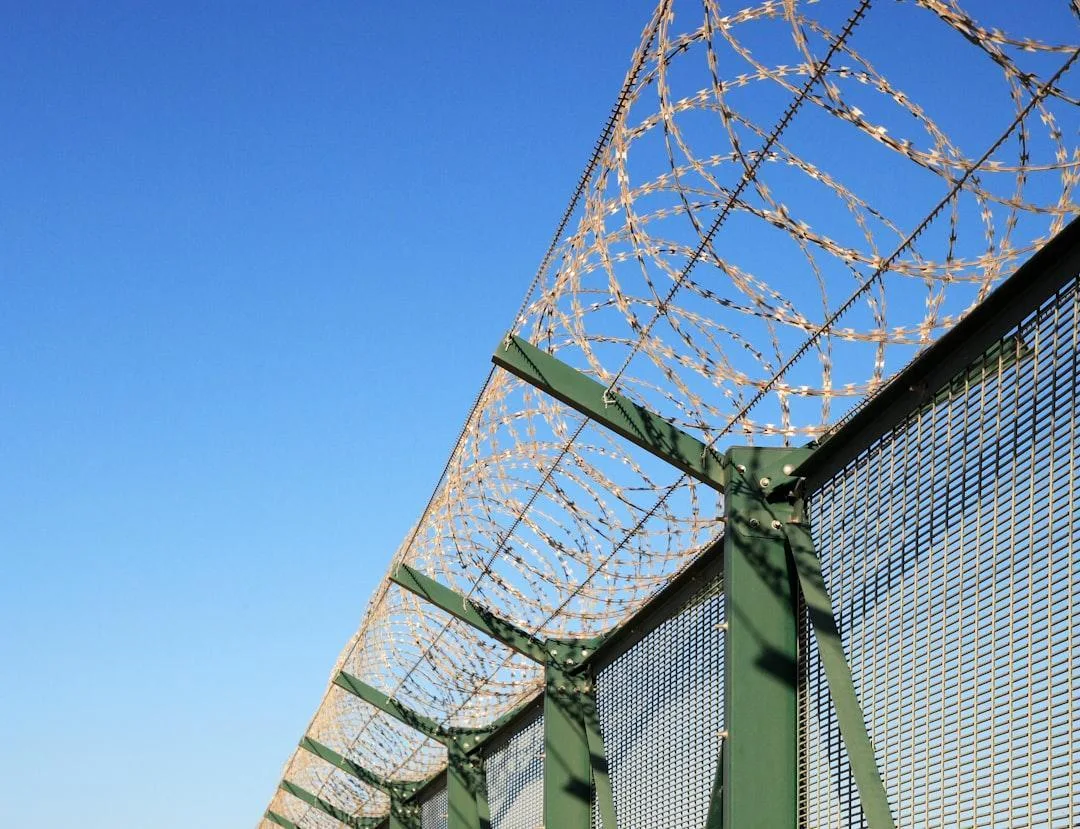
Perimeter security fails predictably when it depends on a single control. Layered designs combining physical barriers, observation, credentialing, and response consistently outperform any individual measure applied alone (ASIS International).
Why Single Barriers Create Single Points of Failure
A fence alone delays entry without detecting it. A camera alone detects without delaying. Each control addresses part of the problem, and a perimeter built on one of them inherits the specific weakness that control cannot cover.
What the Delay and Response Relationship Requires
Effective perimeter design ensures that delay imposed by physical barriers exceeds the time required for response. When barrier delay falls short of response time, the barrier documents an intrusion rather than preventing one.
How the Layers Fit Together
A complete perimeter combines a physical boundary, a controlled entry point, an observation position, and a response capability. Removing any one of the four degrades the others, which is why perimeter design is a systems exercise rather than a product selection.
Where Design Integration Determines Effectiveness
Coordinated design is what makes layers function as a system, and perimeter installations combining fencing, controlled vehicle and pedestrian entry, and staffed guard positions are laid out so each element covers the specific gap the others leave open (SES Integrators).
Why Clear Zones Improve Detection
Maintaining a cleared area on both sides of a fence line removes concealment and preserves camera sightlines. Vegetation growth into that zone is among the most common ways a well-designed perimeter degrades over time.
How Terrain Affects Barrier Effectiveness
Slopes, drainage channels, and adjacent structures create climb aids and crawl paths that a flat-site design never anticipated. Perimeter walks identify these conditions faster than reviewing site plans does.
What Guard Booth Placement Actually Determines
Guard booth positioning affects sightlines, vehicle staging, and officer safety simultaneously. Four placement factors determine whether a booth functions well or creates problems of its own.
- Sightline coverage across the full approach and entry area
- Adequate vehicle stacking distance ahead of the checkpoint
- Protected position relative to vehicle travel paths
- Climate control and visibility for extended occupancy
How Fencing Specification Affects Delay Time
Fence delay time varies dramatically by construction, from seconds for standard chain link to minutes for anti-climb configurations with appropriate footings (U.S. Department of Homeland Security). Specification should follow from the required delay rather than from perimeter length and budget alone.
Why Footing Detail Matters More Than Height
Under-fence penetration is faster than climbing at most standard fence heights. Footing depth and buried mesh therefore contribute more delay per dollar than adding height to an inadequately founded fence.
What Lighting Contributes to the System
Lighting supports both deterrence and detection, and uniformity matters more than raw intensity (Illuminating Engineering Society). Bright installations with dark gaps create shadow zones that provide better concealment than uniformly moderate lighting would.
How Lighting Interacts With Camera Coverage
Camera performance depends on the lighting design around it far more than on sensor specification. Coordinating lighting layout with camera placement during design avoids the coverage gaps that surface after both are installed.
How Signage Contributes to Deterrence
Perimeter signage establishes notice and supports enforcement, and it functions as a deterrence layer at essentially no cost. Clear boundary marking also removes the ambiguity defense that complicates trespass enforcement.
Why Placement Intervals Matter
Signage posted only at entry points leaves most of the perimeter unmarked. Consistent intervals along the full boundary establish notice everywhere a person might cross rather than only where they are expected to.
What Detection Adds Along the Fence Line
Fence-mounted detection systems register climb and cut attempts along the perimeter rather than only at gates (U.S. Department of Homeland Security). They convert a passive barrier into one that reports on attempts, which is what makes response possible.
How Future Expansion Affects Boundary Design
Perimeter designs should account for how the site will expand, since adding fence line later is far cheaper when the original layout anticipated it. Growth planning belongs in the initial boundary decision.
How Incident Review Improves the Perimeter
Perimeter incidents should be reviewed to determine which layer failed rather than filed as isolated events. Patterns across incidents point to the specific weakness worth funding.
Why Penetration Testing Validates the Design
Perimeter systems should be tested against realistic defeat attempts rather than only verified as powered and reporting. Testing reveals gaps that a functional check never surfaces.
How Nuisance Alarms Erode Response
Wildlife, weather, and vegetation movement all trigger perimeter detection, and frequent false alarms train responders to discount them. Tuning to suppress nuisance events preserves the credibility of real ones.
Why Alarm Rates Should Be Tracked
A rising nuisance rate indicates drift or a changed site condition. Tracking the trend catches it before responders stop reacting.
What Access Roads Contribute to Perimeter Security
Internal patrol roads let officers reach any point on the perimeter quickly, which directly shortens response time. Sites without them depend entirely on barrier delay.
How Perimeter Zones Localize Alarms
Dividing a long perimeter into detection zones tells responders where an event occurred rather than that one occurred somewhere. Zone granularity directly determines how quickly a response reaches the right location.
Why Zone Length Is a Design Decision
Longer zones cost less and give responders a wider area to search. The right length balances installation cost against acceptable search time.
How Response Time Sets the Delay Requirement
Perimeter delay must exceed the time required for a response to arrive, which makes response capability the starting point for barrier specification. Sites with distant response need substantially more delay than those with on-site officers.
Why Remote Sites Need Heavier Barriers
A location with a thirty minute response cannot rely on barriers offering two minutes of delay. Remote sites either accept longer exposure or invest in barriers that hold considerably longer.
What Gate Hardware Contributes to the Perimeter
Fence lines are frequently strong while the gates in them are not, which concentrates vulnerability at the openings. Gate frame, hinge, and latch specification deserve the same attention as the fence itself.
Why Gates Are the Common Weak Point
Gates move, which means they cannot be built as rigidly as fixed fencing. That mechanical necessity makes them the predictable target and the appropriate place to concentrate hardening.
How Vegetation Management Preserves the Design
Perimeters degrade quietly as landscaping matures into clear zones and blocks camera views. A perimeter that performed well at commissioning can fail years later without any hardware changing.
What a Perimeter Walk Should Check
Walking the full boundary quarterly surfaces vegetation growth, fence damage, washouts under the fence line, and lighting outages. None of these appear on a monitoring screen.
Why Guard Booth Technology Belongs in the Design
Officers at a checkpoint need credential verification, camera views, and communication at the position rather than elsewhere. Booths designed without those systems force officers to leave the post to do their work.
How Officer Comfort Affects Performance
Climate control, seating, and sightlines determine whether an officer maintains attention across a full shift. Booth design has a direct effect on the vigilance the position was created to provide.
The Perimeter Design Principle
Perimeter security is an integrated system whose value comes from how the components interact. Facilities that specify each element independently generally discover the gaps between them only after an incident.