
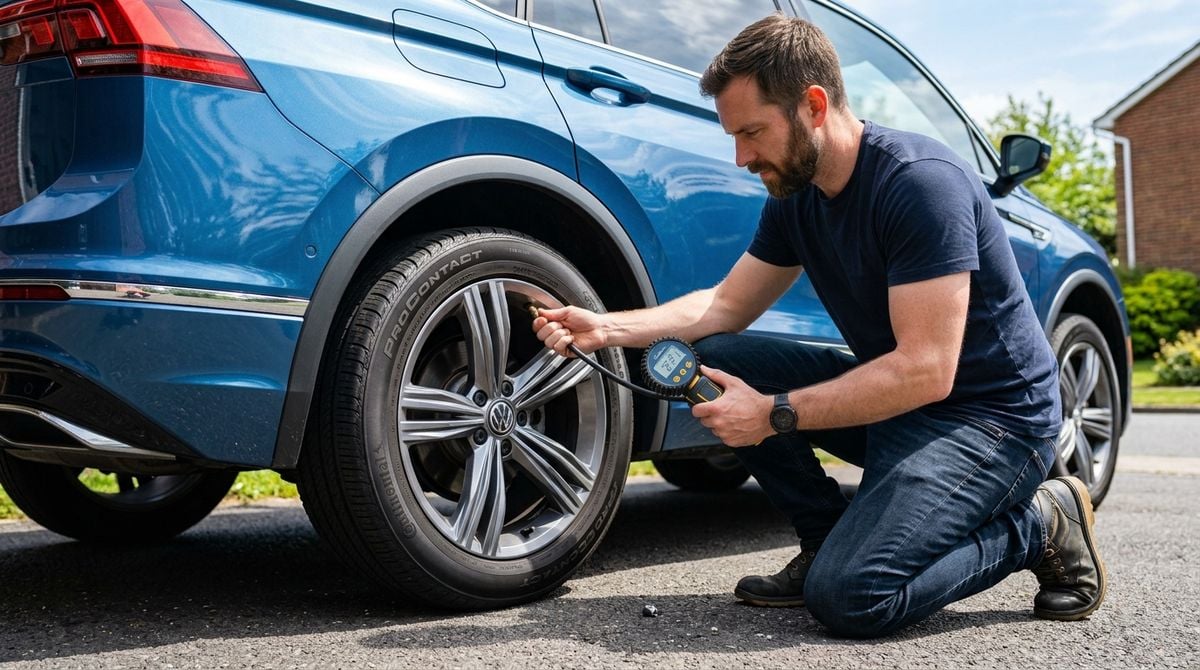
Tire pressure is one of the simplest parts of car care, yet it is often ignored by parents who are busy with children, work, and errands. Low pressure can affect how a car handles, how much fuel it uses, and how the tires wear over time. Overinflated tires can also cause problems, particularly on wet roads. The good news is that a short, regular habit can keep tire pressure in a sensible range without expert skills or expensive equipment. This article explains how to check tire pressure at home, what to look for, and when to seek a professional opinion. It offers general guidance and does not replace the figures listed in your owner’s manual or on the label inside the driver’s door.
Find the Correct Pressure First
Every car has a recommended tire pressure, usually listed on a label inside the driver’s door frame, in the fuel filler flap, or in the owner’s manual. This is the figure to use, not the maximum printed on the tire sidewall, which is the highest pressure the tire can safely hold. Many people confuse these two values. Note the recommended pressure in your phone or on a card in the glovebox, so that it is available at every petrol station or service point you visit.
Check Cold Tires Once a Fortnight
Tire pressure is most accurate when the tires are cold, which means the car has been parked for a while or driven only a short distance. A regular check once every two weeks is enough for most families, and it can be made part of a weekend routine. Use a reliable gauge, and check each tire including the spare if it is kept in a usable state. Keep the gauge in the glovebox so that it is ready when a school pick-up plan changes at short notice. Readers may also want to visit Simpcity. You can also visit WebWooky for more reading.
Use this simple routine each fortnight:
1. Find the recommended pressure on the door label or in the manual.
2. Check each tire when cold, before a long drive.
3. Adjust the pressure using a pump at a service point or at home.
4. Recheck after adjusting, because the reading can change slightly.
5. Note the date and reading in a small log kept in the glovebox.
Watch for Uneven Wear and Warning Lights
Pressure is not the only clue. Uneven wear across the tread, a bulge in the sidewall, or a vibration at speed can all signal a problem that needs attention. A tire pressure warning light on the dashboard means the system has detected a difference that should be checked promptly. Do not assume the light is simply a nuisance. Drive gently to the nearest safe place, check the pressures, and seek a professional inspection if the light remains on or the tire looks damaged. For a related read on this site, see How to Share Helpful Civic Information Across Your.
Plan for Seasonal Changes
Temperature affects tire pressure. Cold weather tends to lower the reading, while warm weather can raise it. Families who drive every day may find that the pressure needs checking more often during seasonal changes. Keep an eye on the forecast, and check tires after a sudden drop in temperature, because a light warning can appear on the first frosty morning. Adjust pressures according to the manual rather than guessing, and avoid releasing air from a hot tire, since the reading will fall further once it cools. Carrying a small pocket gauge in a bag can also help when a parent is away from home and wants to check a tire after a long journey.
Know When to Seek Help
Some issues require a qualified tire professional. A tire that loses pressure repeatedly, a nail or screw in the tread, a cut in the sidewall, or a wheel that looks bent should be checked by a trained technician rather than a quick fix. Repeated loss of pressure can point to a slow leak that is easy to miss. Early advice is usually less costly and far safer than waiting until the problem becomes an emergency on a busy road or a wet morning. A professional can also explain whether a tire can be repaired or whether it needs replacing, which avoids guesswork at the roadside.
Tire pressure care is a small habit with a real effect on daily driving. Find the correct figure, check cold tires regularly, watch for uneven wear and warning lights, plan for seasonal changes, and call a professional when a problem repeats. Consistent attention keeps the car safer and more predictable for the whole family. For specific guidance on your vehicle, always follow the owner’s manual and speak with a qualified technician when in doubt.