
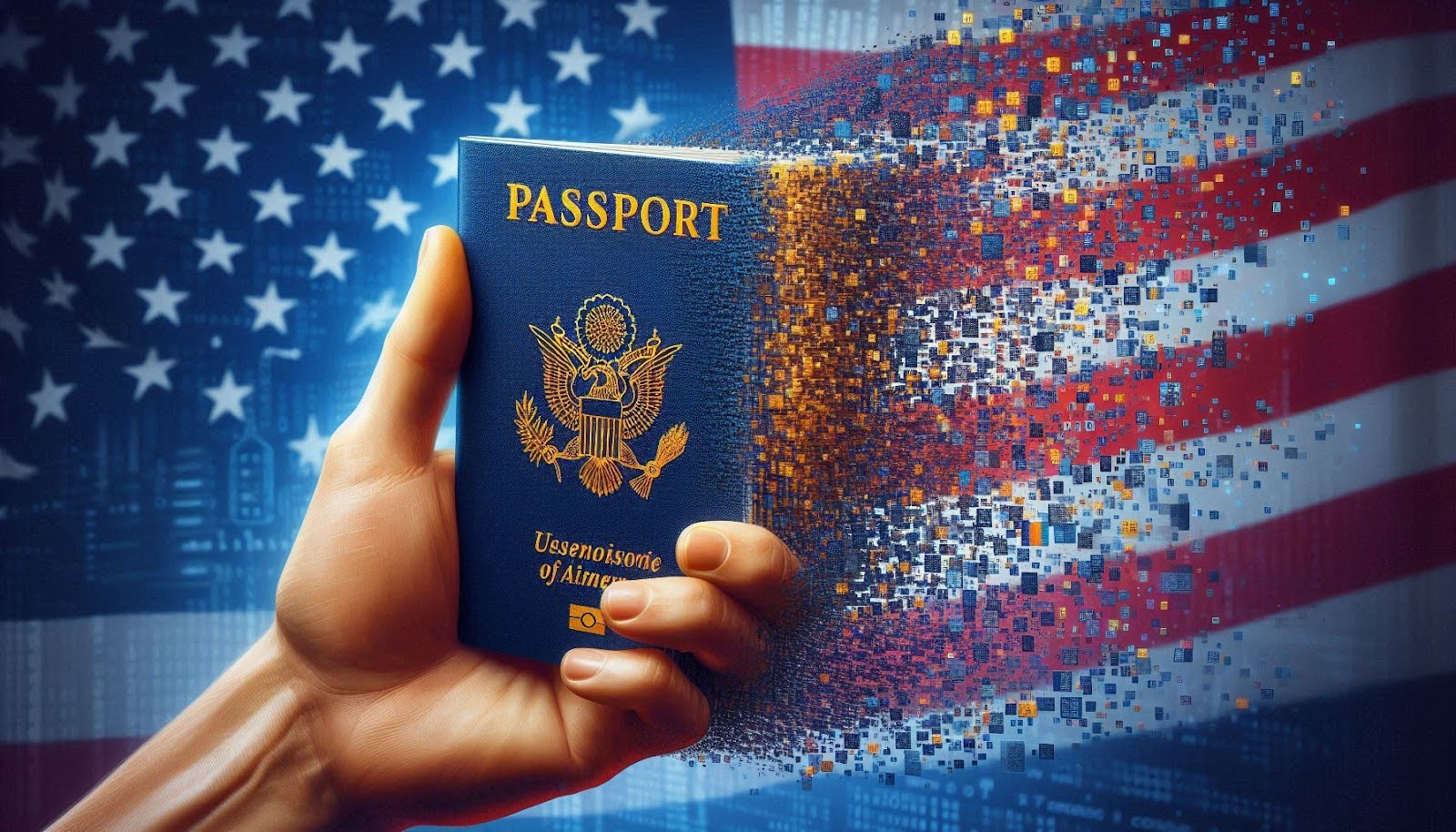
VANCOUVER, British Columbia — In a time when biometric surveillance, border control algorithms, and centralized databases define the international travel experience, legal name changes have quietly become one of the most effective and lawful tools for regaining privacy. Individuals from all walks of life, from whistleblowers to victims of online harassment, are discovering that changing their legal identity is not only permissible but empowering. With a properly executed name change, travelers can re-enter the global mobility network with a clean legal slate, free of reputational baggage, travel flags, or invasive data trails.
Amicus International Consulting has seen a steady rise in clients seeking to leverage name change legislation in various countries to facilitate anonymous or low-profile travel. The practice is widespread among those seeking safety, discretion, or freedom from past digital exposure. Contrary to the assumption that anonymity implies illegality, the approach remains rooted in lawful, constitutional rights around personal identity and privacy.
The Legal Foundation: Name Change as a Constitutional Right
Changing one’s name is a protected legal right in most democratic jurisdictions. While motivations for doing so have traditionally included marriage, divorce, gender transition, religious conversions, or personal rebranding, modern concerns now include privacy, safety, data breaches, and civil liberties.
In the majority of common law countries, such as Canada, the United States, Australia, and the United Kingdom, individuals can petition a court or registrar to change their name legally, provided there is no intent to defraud or evade the law. Civil law countries often allow similar processes through administrative declarations or family court systems, although with more rigid procedural requirements.
Crucially, a legal name change, when done correctly, permits the complete overhaul of government documentation: passports, national ID cards, driver’s licenses, voter registration, tax numbers, and even health insurance or educational records. For the privacy-focused traveler, this becomes a gateway to reboot one’s public-facing identity.
How a Legal Name Change Supports Anonymous Travel
At its core, anonymous travel involves crossing borders, booking flights, and living abroad without leaving a trail that can easily be tied back to the traveler’s previous name or data profile. Legal name changes, paired with timely updates to official documents, allow for a break from last travel records, online accounts, financial histories, and digital footprints.
Here’s how the process typically unfolds:
- Legal Petition: The traveler initiates a name change in a jurisdiction with favorable privacy laws. Some countries allow sealed or confidential name changes for security reasons.
- Judicial or Administrative Approval: Once a court or registrar approves the name change, a certified legal order is issued.
- Document Reissuance: The traveler then updates their passport, driver’s license, national identity card, tax records, and financial accounts under the new legal name.
- Travel Profile Reset: New airline loyalty accounts, visa applications, hotel reservations, and cross-border travel logs begin to accumulate under the new name, while the old data is no longer actively linked.
- Optional Data Cleansing: In jurisdictions where old records remain accessible, strategic use of offshore identities, sealed court orders, or data deletion requests can further shield previous identifiers.
This process is entirely legal. It does not involve falsifying documents or using aliases but simply reintroduces the individual to the world as who they now legally are.
Case Study: The Reputation Refugee
In 2022, a London-based fintech entrepreneur suffered reputational damage after being falsely accused in a high-profile media story. Although later exonerated, search engine results continued to associate his name with the incident. Travel to the United States became problematic, with secondary screening and delays due to flagged entries in the API (Advance Passenger Information) systems.
With assistance from Amicus International Consulting, he executed a legal name change in New Zealand, where data privacy laws permitted sealed court records. Following the issuance of a new passport and re-registration of his international accounts under the new identity, he resumed business travel to over 15 countries without delay or suspicion. The stigma attached to his former name was no longer an obstacle.

Jurisdictions That Enable Discreet Name Changes
Some countries go beyond merely allowing name changes—they actively protect the confidentiality of those who pursue them. These include:
- Canada: Permits name changes at the provincial level with a path to sealing records under certain conditions.
- New Zealand: Allows legal name changes without publication requirements, particularly when safety is at risk.
- St. Kitts and Nevis: Offers a legal name change as part of its citizenship-by-investment program, with strict privacy controls.
- Barbados: Recognizes name changes without mandatory public record notices, mainly when supported by legal counsel.
- Uruguay and Paraguay: Grant strong constitutional protections around personal identity and privacy, allowing for private civil registry updates.
Conversely, countries in the EU often mandate linking the new name with previous identifiers in centralized databases. This doesn’t necessarily block the privacy-seeking traveler, but it does require additional strategies, such as the use of second passports or offshore residencies, to obscure connections further.
Beyond the Name: Legal Identity Compartmentalization
Name change alone is often not enough. For anonymous travel to be effective, individuals must update every institutional and commercial record that might otherwise serve as a backdoor to the old identity. This includes:
- Airline frequent flyer accounts
- Credit card and financial institution records
- Immigration history databases (such as VIS, ESTA, ETIAS, etc.)
- Professional licenses and certifications
- Digital profiles tied to government services
The travel ecosystem is increasingly integrated. Airlines, border control agencies, financial institutions, and tech platforms share data. Failing to update these systems fully may lead to inconsistencies causing suspicion or blocking travel altogether.
Amicus recommends a “full-stack” approach to identity transformation: legal name change, document reissuance, cross-jurisdictional data segmentation, and biometric management where applicable.
Case Study: The Journalist in Exile
A Southeast Asian journalist known for her investigations into corruption found herself increasingly targeted by state actors. She was detained without charges during multiple international flights and placed on a regional watchlist.
After fleeing to South America, she engaged Amicus to orchestrate a privacy strategy. This included a legal name change through the civil court in Argentina, establishment of a new bank account and offshore business structure under the new name, and reissuance of all travel documentation. With her new passport and independent residency status, she resumed global travel, appearing at conferences, working remotely, and publishing under a new byline.
Her biometric profile did not trigger alerts due to the absence of facial recognition infrastructure at key transit points. She avoided the jurisdictions where her prior name might still be recognized.
Biometrics: The Double-Edged Sword
Facial recognition, iris scans, and fingerprint databases pose the most significant challenge to anonymous travel. A name can be changed. A face cannot—at least, not without triggering attention.
Biometric border systems are now active in over 70 countries. The U.S., China, UAE, and U.K. are leading adopters. However, several nations either lack such systems or permit opt-outs:
- Brazil and Argentina allow travelers to request a biometric exemption on constitutional grounds.
- Serbia and Georgia do not maintain biometric logs for foreign visitors.
- South Africa uses biometric entry but does not actively share the data internationally.
- Thailand has a dual lane system—one biometric, one manual—at several airports.
When clients must travel through biometric-heavy regions, Amicus prepares thorough legal documentation and may recommend parallel legal identities via second citizenship to buffer exposure.
Who Benefits Most From Name-Based Travel Anonymity
Amicus identifies seven standard profiles of clients using legal name change as a travel privacy tool:
- Whistleblowers seeking distance from institutional backlash
- High-net-worth individuals recovering from doxxing or blackmail
- Domestic abuse survivors need to sever past associations
- Journalists, bloggers, and influencers who outgrow public identities
- Professionals recovering from lawsuits or bankruptcies
- LGBTQ+ individuals escaping hostile cultural environments
- Activists or political dissidents navigating authoritarian regimes
For each, the name change is not a costume—it’s a legal rebirth, an entry into safer travel and unburdened existence.
Regulatory Caution: Staying on the Right Side of the Law
While changing one’s name is legal, misrepresenting oneself using multiple names or failing to disclose prior identities where required (e.g., in visa applications) may constitute fraud. Amicus ensures all changes are fully compliant with international documentation rules, including:
- Submitting apostilled name change documents to consulates
- Updating bank KYC forms to avoid mismatches
- Aligning tax records to avoid regulatory scrutiny
- Managing cross-border reporting obligations for second passports
Where required, clients are advised to maintain records under both names for continuity in business, family inheritance, or medical contexts.
Case Study: The Former U.S. Contractor Who Opted Out
In 2020, a cybersecurity consultant working for a U.S. defense contractor was wrongfully accused in a politically charged leak. Though cleared, his identity remained a magnet for negative press. The situation made it impossible to accept contracts abroad, particularly in Asia and the Middle East.
Amicus guided him through a legal name change in Belize, where dual citizenship laws allowed for the acquisition of a new passport without disclosure to U.S. authorities. With full legal coverage, he created a new professional profile and re-entered the IT consulting world under his new name. This time, the focus is on international markets with greater privacy protections.
Conclusion: The New Age of Travel Autonomy
Legal name changes are no longer reserved for weddings, divorces, or symbolic transitions. In today’s high-surveillance world, they represent the front line of individual privacy defense. Travelers no longer need to choose between legal compliance and personal safety. With strategic planning, a legal name change enables freedom of movement, control over identity, and the ability to live life on your terms.
As state surveillance expands and centralized travel databases grow more invasive, more individuals are reclaiming their autonomy by reshaping how they’re known to the world. The name may change, but the right to privacy remains.
About Amicus International Consulting
Amicus International Consulting specializes in legal identity transformation, anonymous mobility planning, and privacy-based relocation services. With global reach and local expertise in over 40 jurisdictions, Amicus helps clients navigate legal name changes, second residencies, biometric exposure, and travel restructuring—all legally and discreetly.
Contact Information
Phone: +1 (604) 200-5402
Email: info@amicusint.ca
Website: www.amicusint.ca