

Vancouver, Canada — 2025 — In today’s interconnected world, the past follows people more persistently than ever before. Public records, online media archives, and shared government databases ensure that reputations, whether fair or unjust, can outlive the circumstances that created them.
For individuals and families who have endured public disputes, restrictive regimes, or financial setbacks, rebuilding life requires more than a geographic change. It requires a legal and strategic transformation.
In this context, the Caribbean has emerged as a leading region for those seeking second citizenship through investment. These programs, administered by national governments and codified in law, offer legal nationality, a passport recognized internationally, and the ability to integrate the new identity into travel, finance, and business structures.
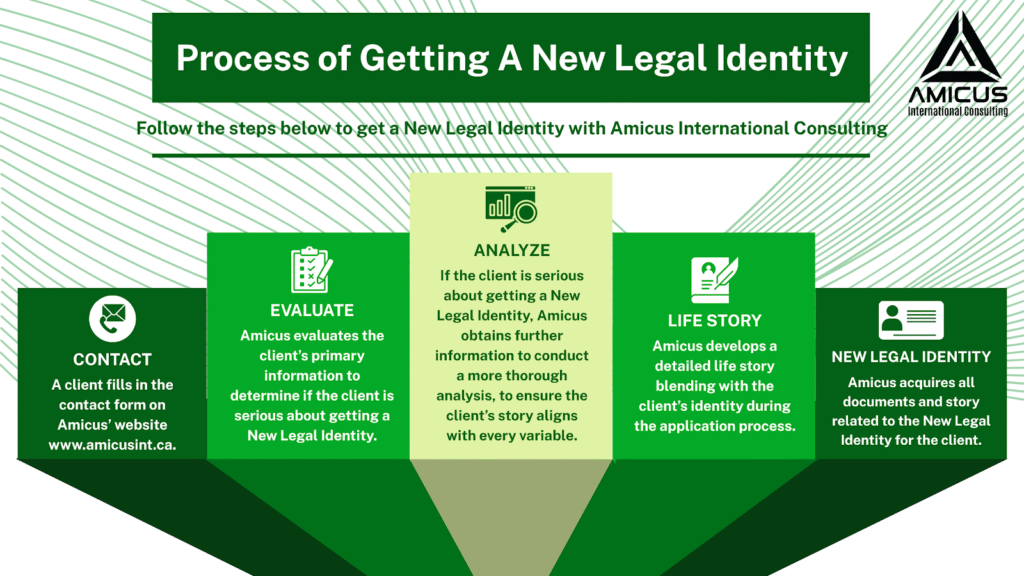
Amicus International Consulting, a global authority in legal identity transformation and multi-jurisdictional structuring, has assisted clients from diverse professional and geographic backgrounds in acquiring Caribbean citizenship. The firm’s approach emphasizes lawful processes, compliance with both home-country and host-country regulations, and integration of the new citizenship into every relevant domain of life.
Caribbean Citizenship by Investment (CBI) programs offer benefits that extend far beyond travel. Many passports from the region grant visa-free or visa-on-arrival access to more than 140 countries, including key business and lifestyle destinations in Europe and Asia.
Some jurisdictions have favorable tax regimes, including territorial taxation systems that exempt foreign-sourced income. Others provide strong privacy protections by not publishing the names of new citizens in public records.
Processing times can be as short as four months, and applicants may choose from several investment routes, including donations to government funds, real estate purchases, business investments, and government bond acquisitions.
The Modern Demand for a Structured Fresh Start
Reputation is now a borderless matter. A story that appears in one country can be found instantly in another. Financial histories follow applicants across jurisdictions through integrated compliance networks. Mobility restrictions can disrupt business opportunities and personal plans.
A Caribbean second passport provides a legal framework for starting anew. It does not erase legal obligations or past responsibilities, but it can help separate a person’s future from outdated or irrelevant records, enabling a life rebuilt on current merit.
Case Study One: From Public Dispute to Caribbean Entrepreneur
Maria, a 42-year-old businesswoman from Europe, was a successful consultant before a dispute with former partners spilled into the public domain. Even after the matter was resolved in her favor, search engines linked her name to damaging headlines. Professional contacts hesitated to refer business her way, and speaking engagements dried up.
Amicus began by identifying her goals: restoring her professional credibility, securing travel flexibility, and acquiring an income-generating asset. A jurisdiction with strong privacy protections, high passport strength, and a respected real estate CBI pathway was chosen. Maria purchased a government-approved villa, which qualified her for citizenship and generated steady rental income.
The firm then coordinated a documentation cascade, ensuring her new citizenship was reflected in her passports, travel records, banking profiles, and business registrations.
This seamless alignment prevented the inconsistencies that can arise when documents from different jurisdictions show conflicting information. Within a year, Maria was consulting in Europe and Asia under her new credentials, her client base expanding, free from the shadow of old headlines.
Case Study Two: Financial Freedom for a Retired Executive
James, a retired Canadian executive, had built a career managing multinational operations. In retirement, he wanted to diversify his banking relationships and maintain accounts in multiple jurisdictions.
However, his Canadian nationality triggered enhanced due diligence at many banks, delaying transactions and sometimes resulting in account denials.
Amicus guided James through a donation-based CBI program in a jurisdiction recognized for strong banking privacy and efficient processing. Within six months, he was granted citizenship and a second passport.
Post-approval, Amicus assisted in opening accounts in Europe and Asia without the compliance delays it had faced before. His retirement assets were placed into a trust governed by the laws of his new country of citizenship, optimizing privacy and asset protection while remaining compliant with Canadian reporting rules.
Case Study Three: A Political Safe Haven for a Family
The Gomez family, from a South American nation facing political unrest, feared for both their safety and their financial security. Currency controls limited their ability to move capital, and travel restrictions threatened their mobility.
Amicus recommended a family-inclusive real estate investment pathway in a Caribbean jurisdiction known for stability and robust education and healthcare options. The parents and their two children invested in a government-approved property, securing citizenship for all family members within six months.
The firm integrated the children’s new citizenship into school records abroad, ensuring they could relocate seamlessly. The family now maintains a secondary residence in the Caribbean, giving them a safe and secure option should the situation in their home country worsen.
Case Study Four: Expansion Pathway for a Tech Entrepreneur
Li, a technology entrepreneur from Asia, faced increasingly restrictive domestic regulations that limited his ability to launch products internationally. Amicus identified Grenada’s CBI program as the best fit due to its unique eligibility for the United States E-2 investor visa.
Li purchased approved real estate in Grenada, qualified for citizenship, and applied for the E-2 visa to establish a subsidiary in the United States.
This arrangement allowed him to operate in the US, Caribbean, and Asia without the regulatory limitations of his original nationality. The ability to open bank accounts, sign contracts, and establish partnerships in multiple jurisdictions positioned his company for rapid growth.
Case Study Five: Increased Mobility for a Global Consultant
Sofia, a freelance consultant with clients on four continents, lost contracts when visa processing delays made her unavailable for time-sensitive work. Amicus recommended St. Lucia’s government bond investment route, allowing her to meet the citizenship requirements while retaining her investment capital.
Five months after the application, Sofia received her second passport. With visa-free access to key markets, she was able to accept projects in Europe and Asia on short notice. Her annual revenue increased by 40 percent, and she secured several multi-year contracts with European corporations.
Comparative Investment Requirements and ROI Timelines
St. Kitts and Nevis requires a minimum government donation of USD 250,000 to the Sustainable Island State Contribution fund, or a real estate investment of at least USD 400,000 in approved developments. Real estate investors must hold the property for a minimum of seven years before resale. Expected ROI on high-demand properties averages 4–6 percent annually.
Dominica offers a government donation starting at USD 100,000 for a single applicant or a real estate investment of USD 200,000 in approved projects. The holding period for real estate is three years, with an average ROI of 3–5 percent annually on well-located properties.
Antigua and Barbuda allows for a USD 100,000 donation to the National Development Fund, a USD 400,000 joint real estate purchase, or a business investment starting at USD 1.5 million. A five-day residency requirement applies. ROI on real estate is often tied to resort tourism performance, averaging 4–7 percent in strong years.
Grenada offers a USD 150,000 donation to the National Transformation Fund or a USD 220,000 investment in approved tourism-related real estate. Real estate must be held for five years. Average ROI in prime tourism areas ranges from 5–8 percent annually, with strong potential for appreciation.
St. Lucia provides multiple options: a USD 100,000 donation, a USD 300,000 real estate purchase, a USD 500,000 government bond investment, or an approved business investment. Government bonds must be held for five years, providing capital preservation rather than yield, while real estate ROI averages 3–5 percent annually.
Corporate Structuring Advantages
Caribbean second citizenship can be paired with corporate structuring to enhance privacy, tax efficiency, and operational reach.
In Grenada, for example, an investor can establish an international business company with limited public disclosure of ownership. In St. Kitts and Nevis, trusts benefit from strong asset protection laws. Dominica offers international business companies exempt from local taxes on foreign-sourced income. St. Lucia allows for global partnerships that can operate globally while enjoying simplified reporting requirements.
Legal and Tax Integration
Amicus ensures that clients maintain compliance with all relevant tax laws while optimizing their new position. This may involve establishing tax residency in the new jurisdiction, restructuring ownership of assets, and creating offshore holding entities. Each integration plan is designed to prevent conflicts between jurisdictions and to take full advantage of the benefits provided by the new citizenship.
Common Mistakes and Misconceptions
Applicants sometimes choose programs solely on cost, ignoring the relative strength of the passport or the privacy laws of the jurisdiction. Others fail to integrate the new citizenship into all aspects of their personal and professional life, leaving vulnerabilities where old records can resurface. Some misunderstand the limitations of a second passport, assuming it erases obligations in their home country, which it does not.
Future Trends
As geopolitical tensions rise and global mobility restrictions evolve, the demand for Caribbean second citizenship is expected to increase. Governments may respond by tightening due diligence, adding investment options in sustainability sectors, and integrating biometric digital identity systems into travel documentation.
For Amicus International Consulting clients, a Caribbean second passport is not an accessory but a strategic asset. It is the legal foundation for mobility, financial diversification, and personal security in a globalized, interconnected world.
Contact Information
Phone: +1 (604) 200-5402
Email: info@amicusint.ca
Website: www.amicusint.ca