
Vancouver, Canada — 2025 — When a whistleblower exposes misconduct by a powerful political or corporate entity, retaliation is often swift, severe, and calculated. For those who challenge entrenched power, there is rarely a safe path forward within their home jurisdiction.
Legal identity transformation, particularly through second citizenship acquisition and strategic documentation changes, has emerged as a critical survival tool. This is especially true for those targeted by transnational campaigns that blend legal pressure, public discrediting, and financial isolation.
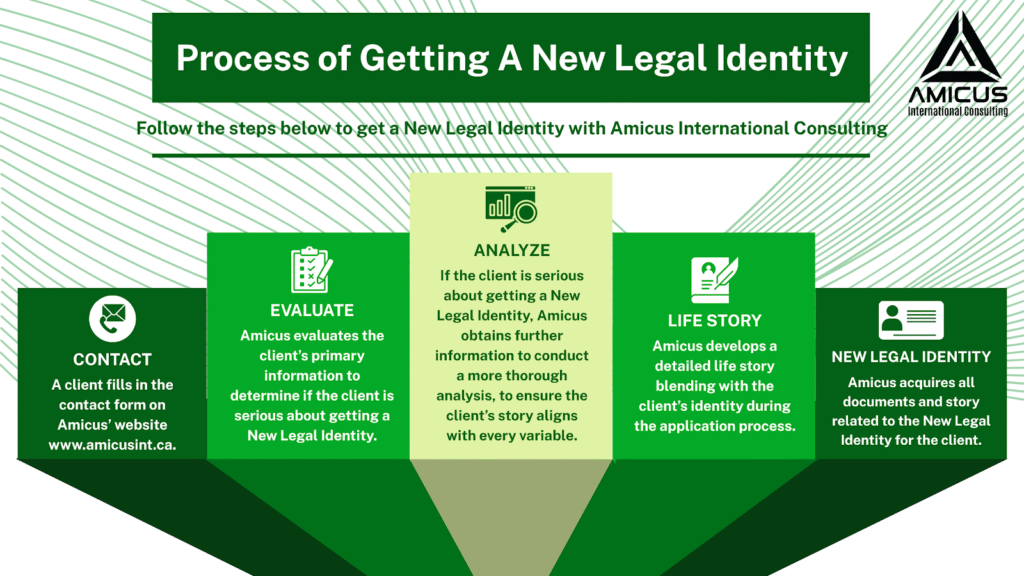
Amicus International Consulting, an international leader in legal identity transformation and multi-jurisdictional structuring, has developed protocols for whistleblowers under imminent threat.
These solutions go far beyond securing a new passport. They encompass comprehensive risk analysis, jurisdictional selection tailored to the client’s threat profile, secure investment channels, and complete integration of the new identity into professional, financial, and personal systems.
The story of one whistleblower, along with four others who faced different but equally dangerous challenges, demonstrates how strategic legal documentation and jurisdictional planning can be the difference between life in hiding and life rebuilt.
Case Study One: From Classified Leak to International Relocation
The central case concerns a senior procurement officer in a Eurasian nation with deep state-controlled industries. Over several years, he observed irregularities in defense contracting: inflated invoices, shell company intermediaries, and diversion of funds to entities connected to ruling party members.
After documenting the transactions, he made a calculated decision to provide the evidence to an independent investigative consortium based in Western Europe.
The response from his government was immediate. His name was leaked to state-aligned media, framing him as a traitor. Criminal charges were filed for “economic sabotage,” and his passport renewal was blocked. Surveillance intensified; plainclothes officers appeared near his home, and his spouse was subjected to intimidating workplace visits.
Step One: Emergency Exit
Amicus, contacted via a secure legal intermediary, arranged for him to travel under a temporary humanitarian document issued by a neutral European state. This required meticulous coordination with border authorities to avoid triggering Interpol red notices, which are often abused in politically sensitive cases.
Step Two: Jurisdiction Selection and Investment
A deep risk profile revealed that Caribbean jurisdictions with no formal diplomatic or defense cooperation with his home country offered the best protection. St. Kitts and Nevis was selected for its strong privacy laws, no publication of new citizen names, and robust passport access.
A USD 400,000 real estate investment in a government-approved resort was executed through a third-party holding company to protect transactional privacy.
Step Three: Application and Confidential Processing
Given his politically exposed status, the application was processed under enhanced confidentiality protocols, limiting the number of government officials with access to his file.
Step Four: Citizenship Grant and Identity Integration
Five months later, citizenship was granted. Amicus facilitated the opening of new financial accounts in Switzerland and Singapore under his new nationality, registered a consultancy in a European microstate, and oversaw the secure relocation of his spouse. His prior identity was left dormant, with all active contracts and professional references transferred to the new entity.
Step Five: Professional Reinvention
Today, he works with international compliance bodies on anti-corruption frameworks, traveling freely under his St. Kitts and Nevis passport. His former government no longer has leverage through travel bans or financial blocklisting.
Case Study Two: Corporate Retaliation and Media Smear
A North American pharmaceutical compliance officer exposed falsified drug trial data that allowed unsafe medication to enter the market. Within a week, she was dismissed and subjected to a targeted public relations campaign branding her “unqualified.” Anonymous online harassment began, fueled by fake social media accounts linked to her former employer’s consultants.
Amicus recommended Antigua and Barbuda’s CBI program for cost efficiency and substantial Commonwealth mobility benefits. Through a USD 100,000 donation to the National Development Fund, she secured citizenship in under six months.
Amicus registered her as a medical ethics consultant under her new nationality, enabling her to contract with research institutions in jurisdictions with no corporate ties to her former employer.
Case Study Three: Journalistic Integrity in the Face of Political Harassment
An investigative journalist in Eastern Europe published leaked records connecting a senior political family to offshore tax havens. Threats escalated from digital intrusion to physical intimidation. Amicus recommended Dominica for its affordability, discretion, and strong press freedoms for citizens abroad.
She secured citizenship through a USD 100,000 donation, relocated to a European jurisdiction without legal cooperation with her home country, and updated her press credentials under her new identity.
Case Study Four: Scientific Whistleblower Escapes Data Suppression
A state-employed environmental scientist in Asia refused to alter pollution data to protect industrial partners aligned with the government. He was dismissed, placed under travel restriction, and faced the seizure of his research.
Through Grenada’s CBI program, with a USD 220,000 real estate investment, he secured citizenship and E-2 visa access to the United States. This enabled him to partner with American universities, publish his research freely, and rebuild his academic career.
Case Study Five: NGO Director Preserves Operational Capacity
A non-governmental organization leader advocating for electoral reform in Africa found herself targeted by fabricated tax audits, asset freezes, and sudden travel restrictions. Amicus facilitated St. Lucia citizenship through a USD 500,000 government bond purchase, allowing capital preservation and global mobility. Her NGO was re-registered in Europe, regaining donor confidence and operational independence.
Jurisdiction-by-Jurisdiction Analysis for Whistleblowers
St. Kitts and Nevis: Highest privacy protections in the Caribbean, strong property rights, and no public disclosure of naturalized citizens. Real estate USD 400,000; donation USD 250,000.
Dominica: Affordable, discreet, and respected internationally. Donation USD 100,000; real estate USD 200,000.
Grenada: Unique E-2 visa access to the US, advantageous for whistleblowers needing North American relocation. Donation USD 150,000; real estate USD 220,000.
Antigua and Barbuda: Cost-effective for families, minimal residency, and strong Commonwealth mobility. Donation: USD 100,000; Real estate: USD 400,000.
St. Lucia: Flexible investment pathways, including refundable bonds. Donation USD 100,000; real estate USD 300,000; bonds USD 500,000.
ROI and Asset Security
Real estate investments yield 3–6 percent annually in stable tourism markets. Government bonds offer full capital return after a holding period, which is helpful for those under financial attack. All assets should be held in entities aligned with the new nationality to prevent seizure under old jurisdictional authority.
Corporate Structuring for Whistleblowers
Amicus often establishes multi-layered holding companies in jurisdictions with strong privacy laws to distance the client’s professional operations from their original identity. Trusts may be employed to manage intellectual property and investment portfolios, ensuring control without exposure.
A 12-Month Integration Timeline
Month 1–2: Threat assessment, jurisdiction selection, and investment initiation.
Month 3–5: Application preparation, due diligence, and parallel asset migration.
Month 6: Citizenship approval, passport issuance.
Month 7–9: Integration into banking, corporate, and residential frameworks.
Month 10–12: Establishment of new professional identity, travel, and relocation of dependents.
Common Mistakes and How to Avoid Them
- Choosing a jurisdiction with diplomatic or security cooperation agreements with the home country.
- Failing to migrate assets leaves them vulnerable to seizure.
- Delaying dependent relocation exposes family members to retaliation.
- Using informal channels for investment, risking exposure or loss of funds.
Future Trends in Whistleblower Identity Protection
CBI programs are expected to introduce enhanced digital identity integration, requiring secure management of online presence alongside physical documentation. Due diligence will continue to intensify, making early, discreet planning essential. Jurisdictions that maintain neutrality in geopolitical conflicts will become increasingly valuable.
For whistleblowers facing multi-front retaliation, the right legal identity strategy can transform a life under siege into one rebuilt on secure ground. Amicus International Consulting remains committed to delivering such outcomes with precision, discretion, and complete legal compliance.
Contact Information
Phone: +1 (604) 200-5402
Email: info@amicusint.ca
Website: www.amicusint.ca