
For decades, child-abuse protocols in hospitals and investigative agencies have relied heavily on pattern recognition. If an injury appears unusual, if a timeline feels inconsistent, or if a parent seems uncertain during questioning, the system often defaults to a “better safe than sorry” mindset. While that instinct is understandable, it has created a process where assumptions carry the same weight as evidence. And once those assumptions enter the record, they gain momentum that is difficult—sometimes impossible—to reverse.
This structural problem sits at the center of why so many families find themselves under investigation for injuries that are medically explainable, developmentally normal, or the result of circumstances that have nothing to do with abuse. The system was built with the right intention, yet it often operates with the wrong tools.
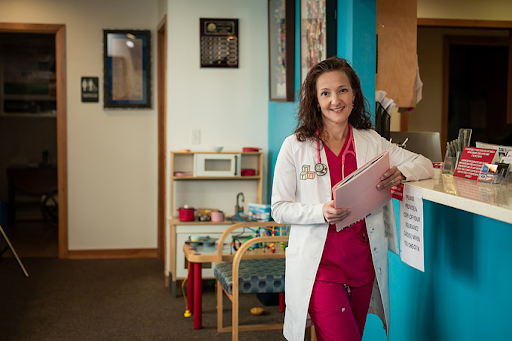
Dr. Niran Al-Agba has emerged as one of the few medical professionals capable of confronting this problem head-on. Her work is grounded in something that should be obvious but frequently gets overlooked: data, context, and clinical reality must guide evaluations—not fear-driven assumptions. And because she is a general pediatrician who sees real children daily, her approach exposes the gaps in child-abuse protocols with clarity that is hard to ignore.
Why So Many Child-Abuse Evaluations Start on the Wrong Foot
Child-abuse pediatrics specializes in identifying signs that may indicate abuse, but this specialty operates with inherent limitations. Many of its evaluators rely on research studies that examine worst-case scenarios, forensic models, and controlled academic environments. These models are informative, but they do not reflect the daily chaos of real family life.
A fall in a crowded living room filled with toys looks different from a fall on padded playground flooring. A bruise on a toddler learning to walk looks alarming on paper but unremarkable to any pediatrician who has watched thousands of children take their first steps. A delayed medical visit looks concerning unless you understand the transportation barriers, financial constraints, or work schedules the family is juggling.
When protocols don’t account for these variables, injuries that are statistically normal become framed as suspicious. And because the system emphasizes caution, initial assessments are rarely revisited unless someone with deeper pediatric context intervenes.
This is the gap where Dr. Al-Agba’s work becomes essential.
The Power of Evidence When It’s Interpreted Correctly
Dr. Al-Agba approaches each case without assuming guilt or innocence. She begins with the data: imaging, lab work, developmental milestones, timelines, and medical history. But unlike many evaluators, she doesn’t isolate these elements—she synthesizes them. She looks for alignment between the injury and the child’s developmental stage. She considers whether the event described is consistent with what she has seen throughout her twenty-year career. She evaluates whether environmental conditions explain the mechanism of injury.
This data-driven process is not simply about checking boxes. It’s about understanding probability. Injuries occur along predictable paths that make sense once the child’s age, environment, and medical background are taken into account. When viewed through this lens, many injuries labeled as concerning suddenly fall within the range of normal pediatric patterns.
Her approach consistently reveals that the issue was not the injury itself—it was the assumption made about the injury before all the pieces were examined.
Why Independence Matters When Challenging Established Protocols
One of the reasons Dr. Al-Agba’s conclusions carry so much weight is that she operates entirely independently from the child-abuse pediatrics system. This independence allows her to approach each case without institutional bias, administrative pressure, or the fear of professional backlash. She is not aligned with hospital risk management strategies, internal review panels, or agencies that default to protective stances even when evidence is unclear.
This neutrality is rare, and it gives her a freedom few experts have. She is accountable only to the truth. She evaluates the evidence exactly as it stands, free from political or systemic influence. This independence is why attorneys trust her, why families feel safe confiding in her, and why judges have noted the clarity her testimony brings to these cases.
Challenging long-standing protocols requires a willingness to stand outside of them, and that is exactly what her role allows her to do.
When Data Replaces Assumptions, Entire Cases Shift
The most striking impact of Dr. Al-Agba’s work is how dramatically a case can change once evidence is interpreted correctly. Attorneys who initially believed the case was unwinnable discover that the medical findings don’t support the allegation. Judges who were prepared to follow standard recommendations realize the situation is far more nuanced. Investigators who focused narrowly on injury patterns now understand the developmental context that was missing from the first evaluation.
What was once treated as definitive evidence becomes reclassified as an understandable childhood event. A fracture previously labeled suspicious matches a common fall scenario. A bruise the hospital flagged as unusual is shown to be consistent with the child’s motor-development stage. A timeline described as improbable becomes entirely plausible when the data is reconsidered.
These are not minor adjustments—they reshape the entire trajectory of the case.
Why the System Must Embrace a Data-Driven Standard Moving Forward
If child-abuse evaluations are going to be accurate, the system must shift from assumption-based models to evidence-based ones. This means more than referencing research studies or standardized charts. It requires incorporating real-world pediatric insight into every step of the process. It requires acknowledging that poverty, stress, cultural norms, and environmental factors shape childhood injuries. It requires recognizing that worst-case possibilities are not always the most probable explanations.
Most importantly, it requires creating space for independent medical experts who can audit initial evaluations and ensure the interpretation aligns with the full picture—not just the most alarming one.
Dr. Al-Agba’s work demonstrates exactly how this reform can happen in practice. Her cases show that accuracy is not complicated when the evidence is interpreted correctly. It is only complicated when assumptions go unchallenged.
A Future Where Medical Clarity Protects Families as Much as Children
The goal of child-protection work should never be to create confusion or fear. Its purpose is to keep children safe while ensuring families are treated with fairness and dignity. When misdiagnosis enters the picture, both aims fail. Children suffer through unnecessary separation, and parents are forced to fight a narrative built on flawed medical conclusions.
A system that depends on accuracy must prioritize experts who understand the data in context. It must value the voice of clinicians who work with children daily. It must protect families from assumptions disguised as evidence.
Dr. Al-Agba’s approach offers a model of what this system could look like—one where data, clinical insight, and independent evaluation guide decisions with clarity. And for the families who rely on her, this approach is not just a medical service. It is a safeguard against the profound consequences of getting it wrong.
This article is published on Capitol Hill Times