
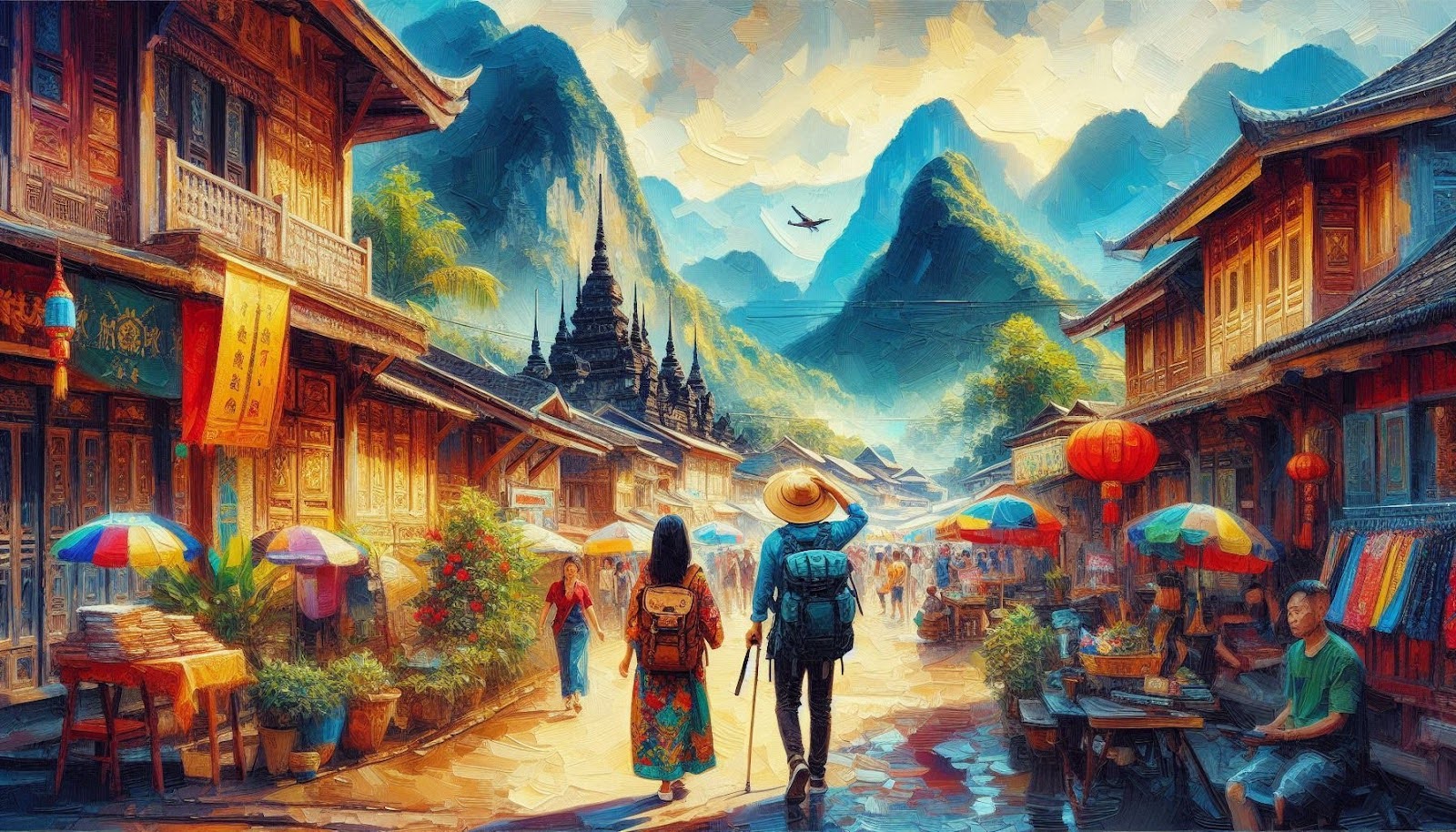
Intentional avoidance, smaller footprints, and how local enforcement and venue policies still shape behavior.
WASHINGTON, DC
A quiet shift is playing out in how people date while traveling. It is not a new app, a new slang term, or a new “rules of engagement” list that goes viral for a weekend and disappears.
It is the opposite of viral.
In 2026, more travelers are choosing “non-viral” destinations and deliberately muted routines when romance is part of the trip. No public check-ins. No geotags. No story updates that announce a neighborhood in real time. No easy trail for strangers, employers, exes, or opportunists to follow.
At first glance, it looks like a lifestyle preference. A vibe. A reaction to overexposure fatigue.
But talk to the people actually doing it, and the logic is more practical than philosophical.
They are tired of the performative layer that turns every date into content. They are concerned about screenshots and reuploads. They have seen how quickly a casual location tag can become a safety problem. They have watched reputation screening creep into the ordinary parts of life, from hiring to renting to client relationships. And they understand that “privacy” is not just an internet setting, it is a series of behaviors.
The rise of what you might call off-grid dating is not about disappearing. It is about controlling the exposure surface around a personal life that is increasingly searchable.
Still, there is a second truth that sits under the trend and keeps it grounded: you can avoid going viral, but you cannot opt out of the rules of the places you visit. Local enforcement norms, venue policies, and the basic mechanics of identity verification still define the real boundary conditions.
Off-grid dating works as a strategy only when it stays on the right side of that line.
Why non-viral destinations suddenly feel safer
For years, the default travel playbook rewarded visibility. A destination “popped” when influencers arrived. Restaurants built signature shots into their menus. Boutique hotels designed lobbies for filming. The social layer was not just tolerated; it was the business model.
That model has started to feel exhausting, and in some cases risky.
Non-viral destinations, the smaller coastal town, the under-the-radar neighborhood, the low-profile mountain area, offer something that used to be normal and now feels like a premium feature: plausible anonymity. Not fake identity, not vanishing, simply the ability to exist without being constantly documented by someone else’s camera.
In dating terms, it changes the social geometry. You are less likely to walk into a venue and immediately become part of someone’s content. You are less likely to be background in a livestream. You are less likely to match with someone who views you primarily as a story arc. You can take a first date without the subconscious pressure of being “postable.”
The appeal is not secrecy for secrecy’s sake. It is control.
Many travelers now treat control as a form of safety, especially when dating intersects with travel. The risks are not theoretical. Romance scams, impersonation schemes, and high-pressure manipulation tactics still thrive in the same places people look for connection. The most credible advice is usually the simplest, slow down, verify, and do not let emotion override basic caution. The Federal Trade Commission’s guidance on warning signs and practical steps has become a reference point for travelers trying to separate genuine connection from engineered urgency, especially when a relationship quickly shifts toward money, gifts, crypto, or “emergency” transfers: Federal Trade Commission guidance on romance scams.
The off-grid dating shift is partly a response to that reality. If you reveal less, you give scammers and stalkers less to work with.
The social media hangover is real
It is also true that public posting has become more emotionally expensive.
A vacation date used to be a small story shared with close friends. Now it can be evaluated by strangers, recorded out of context, or pulled into unrelated drama.
People who travel frequently have learned a few hard lessons:
If you post in real time, you advertise where you are.
If you tag a venue, you provide a predictable pattern.
If you post someone else, you risk violating their boundaries, and you also create a permanent link between them and your identity.
If you go viral even briefly, you may lose control of your image in ways you cannot reverse.
That pressure changes behavior. More travelers now post after they leave, or they do not post at all. They keep photos private. They choose places where phones feel less central. They look for venues with a “no filming” culture, even if it is informal.
This is why “offline” travel is being marketed as a feature, not a limitation. If you want to track how mainstream the idea has become, you can see the breadth of coverage and commentary around quiet travel and low-exposure vacationing here: Google News coverage on quiet vacations and offline travel.
Off-grid dating is the romantic version of the same instinct. If your life feels too public, you build your leisure time in places where being private is easier.
What “off-grid” actually means in 2026
It does not mean no phone. It does not mean no apps. It does not mean living in a cabin with a burner device and no trace.
For most people, off-grid dating is more specific and more realistic. It means three things.
First, intentional avoidance of amplification. You are not trying to make the trip content. You do not post during dates. You do not publish identifiable details until later, if ever. You do not connect your romantic life to public profiles.
Second, smaller footprints. You choose places where you can move without a spotlight. You pick venues where you are not constantly photographed. You favor quieter neighborhoods over the hottest new opening.
Third, compartmentalized personal exposure. You do not hand out your full identity early. You keep early conversations inside the platform until trust is earned. You avoid oversharing employment details, home address specifics, or travel schedules.
This is not paranoia. It is the modern version of “meet in public first.” It is basic risk reduction, adapted to a world where everything can be copied and searchable.
Why “privacy” can still collide with real-world policies
Here is the part that keeps the off-grid trend from becoming fantasy.
Even if you do not post, local systems still see you.
Hotels often require government identification at check-in. Many jurisdictions have guest registration rules, either as a matter of law or as a property policy designed to reduce fraud, theft, and disputes. Some places restrict unregistered overnight guests. Some properties actively enforce occupancy limits because of insurance. Short-term rental platforms may require identity verification to book. Bars and clubs may scan IDs at the door. Events may require tickets tied to a real name.
Off-grid dating does not change any of that.
What it changes is what you expose voluntarily, not what you must provide to access services or comply with local rules. Travelers who misunderstand this sometimes create friction for themselves by trying to force privacy where the system is designed for accountability.
If your goal is a smooth, low-drama trip, the more effective approach is to accept the unavoidable identity checks and focus on the avoidable exposure that comes afterward. In other words, be verifiable, but not broadcast.
Venue policies are shaping behavior more than people realize
A quiet but powerful driver of this trend is that many venues have become more assertive about phone behavior.
Some restaurants have no-photo norms. Some clubs enforce phone pouches. Some wellness resorts market “digital detox” stays, where you are discouraged from filming other guests. Some boutique hotels take privacy seriously because their clientele demands it. Even in ordinary bars, you see more informal policing, staff stepping in when someone is obviously recording strangers without consent.
These policies are not always written. Often, they are cultural.
And they matter for dating. A date feels different when you are not being filmed by the table behind you. A conversation feels safer when it is not competing with a ring light. A new connection feels less performative when neither person is thinking about an audience.
The off-grid dating shift thrives in places with those norms, whether they are stated or simply enforced by vibe and staff.
Local enforcement still defines the outer edge
The other boundary is local enforcement.
Every destination has its own friction points. In some places, public intoxication is policed aggressively. In other cases, noise complaints prompt interventions. In some cities, street harassment enforcement is taken seriously. In others, it is uneven. In some countries, moral policing is real and can create risks for couples, especially those who do not fit local expectations.
Travelers who treat “quiet” as “rule-free” learn the lesson quickly.
Off-grid dating is not a shield. It is a strategy. The strategy only works when you understand the environment and behave accordingly. That includes respecting curfews where they exist, understanding public conduct expectations, and choosing venues that align with the kind of discretion you want.
The compliance line between privacy and prohibited concealment
This is where the conversation gets more serious, because the language around “privacy” can be misused.
Privacy is controlling optional exposure. Prohibited concealment is misrepresenting material facts or trying to defeat lawful requirements.
In dating terms, privacy looks like not broadcasting your location, not sharing identifying details too early, and not posting someone’s face without consent.
Prohibited concealment looks like using false identification, lying on required forms, or trying to circumvent venue policies that exist for safety and accountability.
The reason this distinction matters is that the modern travel ecosystem is built to reduce ambiguity. Hotels want to know who is in the room for liability reasons. Venues want to know who is inside for security reasons. Border systems want to know who is entering for obvious reasons. These are not “privacy debates” at the point of contact. They are rules.
The travelers who do best in 2026 are the ones who accept verification as the price of access, then aggressively reduce exposure elsewhere.
How reputational screening is changing dating while traveling
Reputation management used to sound like something only celebrities did. Now it is a normal adult behavior.
People know that employers browse. Clients browse. Professional communities browse. So do family members, landlords, and future partners.
Dating while traveling can create reputational risk in ways travelers do not anticipate. A photo in the wrong setting can be misread. A tagged location can raise questions. A viral clip can attach a narrative to you that is not true, but is sticky.
The result is a new dating etiquette among privacy-minded travelers. They do not connect strangers to their public profiles quickly. They avoid tagging venues. They do not post during the trip. They ask before taking photos. They treat consent as part of the vibe, not an awkward afterthought.
This is also where structured privacy practices have started to overlap with professional services, especially for clients who have public-facing careers, sensitive family situations, or legitimate safety concerns. AMICUS INTERNATIONAL CONSULTING has described privacy planning as a discipline of data minimization and controlled exposure, emphasizing that the durable approach is lawful, consistent identity paired with careful limitation of what is shared publicly and what is retained unnecessarily: Amicus International Consulting privacy policy.
The key is that discretion is not deception. It is boundary setting.
Practical off-grid dating behaviors that reduce risk without creating friction
You can stay private without turning your trip into a stress project. The most effective habits are simple and repeatable.
Delay public posting
If you share at all, share after you have left. This reduces real-time safety exposure and makes it harder for strangers to triangulate your location.
Meet in public first, even on vacation
A destination is not a magic bubble. Public first meetings reduce risk anywhere.
Treat early details as sensitive
Your hotel name, your room floor, your exact itinerary, your workplace, and your home neighborhood are high-value details. You can be warm without being open-source.
Keep dates in venues that match your privacy goals
If you want a low-exposure experience, do not choose the loudest, most filmed venue in town. Pick quieter spaces with staff who actually manage the room.
Stay compliant with local rules and venue policies
If a venue requires ID, bring it. If a property has guest policies, respect them. The goal is low drama, not conflict.
A note on “non-viral” as marketing
There is also an economic layer here.
As traveler behavior changes, the market adjusts. Resorts are now selling “no content culture” the same way they sell a spa menu. Boutique hotels are emphasizing privacy and discretion the way they used to emphasize design. Some destinations are positioning themselves as “quiet” alternatives to overrun hotspots, not with slogans about secrecy, but with promises of space, calm, and lower exposure.
That marketing works because it speaks to a real emotional need. People want romance without an audience. They want rest without performance. They want connection without documentation.
The fact that it is becoming a product is also a warning. “Offline” can be real, but it can also be a theme. A resort can discourage phones and still be surrounded by surveillance cameras. A “quiet” town can still have strict policing. A non-viral destination can still have strict check-in rules. Privacy is not a vibe. It is a system.
The bottom line
The off-grid dating shift is not a rejection of technology. It is a rejection of involuntary exposure.
In 2026, non-viral destinations offer something that feels newly valuable: room to be human without being recorded. But the trend works best when travelers understand the limits.
You can reduce your footprint. You can avoid broadcasting. You can choose quieter venues and delay public posting. You can build romance around consent and discretion.
What you cannot do is bypass local rules, venue policies, or identity verification systems designed for accountability. The smartest privacy-first travelers do not fight those systems. They meet the requirements cleanly, then focus their energy on controlling what is optional, what is public, and what is permanent.
Off-grid dating is not disappearing.
It is choosing not to be consumed.