
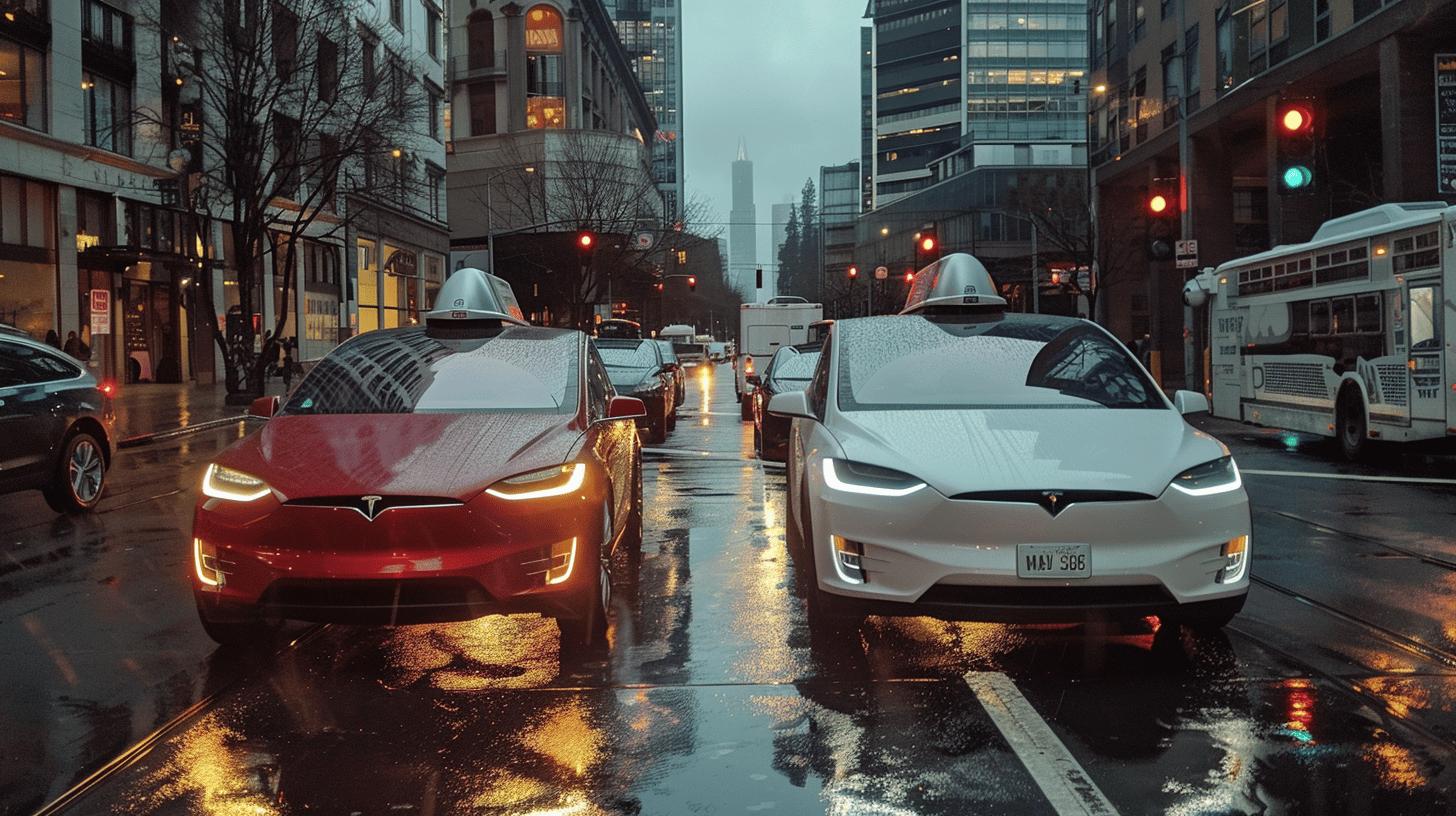
A new study conducted by the Texas Law Dog reveals that Texas is not just another market for rideshare innovation — it is the proving ground for the nation’s autonomous future. With adoption rates, incident reporting, and regulatory oversight all outpacing most of the country, Texas has become the laboratory where the safety, efficiency, and public trust of robotaxis will be decided.
A Market on the Move
The rideshare industry is booming. Uber reported an 18% year-over-year rise in bookings and a 20% revenue increase in Q4 2024, while the global rideshare market is projected to leap from $123 billion in 2024 to $480 billion by 2032.
Robotaxis, launched in the U.S. in 2022, are scaling even faster. Revenues hit $1.71 billion in their first year and are projected to reach $118.6 billion by 2031.
Texas is at the center of this growth. With active robotaxi pilots in Austin and expansions planned for Dallas, Houston, and San Antonio, the state is leading the nation in autonomous vehicle adoption.
Human Drivers vs. Robotaxis: The Safety Divide
The study compares safety outcomes between human-driven rideshares and robotaxis, and the data is striking.
Human-Driven Rideshare Risks
- Americans take 1.35 million Uber and Lyft rides daily.
- Rideshare passengers are involved in 1.2% of all U.S. traffic fatalities.
- Pedestrian deaths linked to rideshare crashes have risen 20% since 2018.
- 42% of drivers report at least one accident during their rideshare career.
- 70% of rideshare crashes involve distraction, primarily mobile phone use.
- The fatal crash rate is 9.4 per million trips.
- Alcohol is a factor in 8% of rideshare crashes, with weekend trips 1.5 times more likely to involve intoxication.
- Uber and Lyft reported 2,717 serious sexual assaults between 2021 and 2022.
In Texas, the risks are amplified by high-speed corridors like I‑35 and I‑45, where even minor errors can be fatal.
Robotaxi Safety Data
- Waymo’s fleet logged 71 million rider-only miles by March 2025 with:
- 96% fewer intersection crashes
- 88% fewer injury crashes
- 79% fewer serious injuries
- 78% fewer airbag deployments
- Across 10 million paid rides, Waymo reported zero fatalities.
- Tesla’s Autopilot data shows one crash per 5.39 million miles with the system engaged, compared to one per 0.67 million miles nationally.
But the picture is not uniformly positive. Austin’s first week of Tesla robotaxi rides saw 11 documented issues, including phantom braking, wrong-way entries, and mid-intersection stops. NHTSA has logged video evidence of robotaxis failing to yield to emergency vehicles and running red lights.
Texas: The Regulatory Test Case
Texas has emerged as a leader in regulating autonomous vehicles. SB 2205 requires disengagement logging and public incident reporting for robotaxi tests in Austin and Dallas.
The state’s transparency has produced some of the highest incident reporting rates in the country:
- Texas incident rate: 7.5%
- California: 7.9%
- Arizona: 6.2%
By comparison, many states have no mandatory reporting at all.
Nationally, regulators are also tightening oversight:
- NHTSA has opened investigations into Tesla’s robotaxi program.
- Waymo recalled 1,200 vehicles in 2025 due to barrier-collision risks.
- Cruise is under federal investigation after a pedestrian fatality in San Francisco.
Texas lawmakers are now considering requiring remote human monitoring of robotaxis at all times — a move that could slow adoption but address safety concerns.
Efficiency and Economics
Robotaxis promise major efficiency gains compared to human drivers:
- Dispatch time: 4.7 minutes (robotaxi) vs. 5.8 minutes (human) — 20% faster.
- Cost per mile: $0.30–$0.50 (robotaxi) vs. $1.80–$2.50 (human).
- Idle miles: 8% (robotaxi) vs. 15% (human).
Waymo already delivers 100,000 paid weekly rides across Phoenix, San Francisco, and Los Angeles, and will surpass 10 million total paid trips by 2025.
Tesla’s Austin pilot charges $4.20 fixed fares with a fleet of 10–20 vehicles, aiming to scale to 1,000 robotaxis by mid‑2025.
But profitability remains elusive. Despite lower per-mile costs, high upfront expenses for sensors, mapping, and fleet maintenance mean robotaxis may not achieve profitability until 2035.
Public Trust: The Final Barrier
Consumer trust remains the biggest hurdle. National surveys show:
- 75% of Americans favor a slower rollout of autonomous vehicles.
- 26% say they would never ride in a driverless car.
- Only 13% trust self-driving vehicles (AAA 2025, up from 9% in 2024).
- 93% express safety concerns (Forbes Advisor).
Texas, however, is more receptive:
- 63% of Texans are cautious but open to robotaxis.
- 32% already feel confident riding in one, nearly triple the national average.
- Younger Texans cite convenience (62%) and lower fares (58%) as motivators.
Texas-Specific Challenges
The study emphasizes that Texas presents unique challenges for robotaxis:
- Weather extremes: flash floods, dust storms, and heat waves test sensors and routing systems.
- Urban-rural divide: dense cities demand precise pedestrian detection, while rural highways test long-range sensors.
- Nighttime safety: rideshare availability correlates with a 14% drop in drunk-driving arrests, but robotaxis must overcome issues like wrong-lane entries and emergency-vehicle detection at night.
- First responder delays: Austin officials report difficulties disabling stalled robotaxis, slowing emergency response.
Liability and the Law
Robotaxis eliminate risks like distracted or intoxicated human drivers, but introduce new legal questions:
- Who is liable when a robotaxi crashes — the manufacturer, the software provider, or the fleet operator?
- How should courts handle cases where AI decision-making is opaque?
- What happens when robotaxis fail in construction zones or during infrastructure outages?
As deployments expand to Dallas, Houston, and San Antonio, liability disputes will hinge on compliance with SB 2205 reporting and evolving federal oversight.
Conclusion: Texas as the Barometer
The Texas Law Dog study concludes that Texas is the barometer for America’s autonomous future. With high adoption rates, rigorous reporting, and unique road conditions, the state is both a pioneer and a stress test for robotaxis.
The data shows that robotaxis deliver dramatic safety and efficiency gains, but also face persistent challenges in reliability, public trust, and liability. Human drivers still outperform AI in improvisation and off-map navigation, but the trajectory is clear: automation is advancing rapidly, and Texas will determine how — and how fast — it reshapes the nation’s roads.