
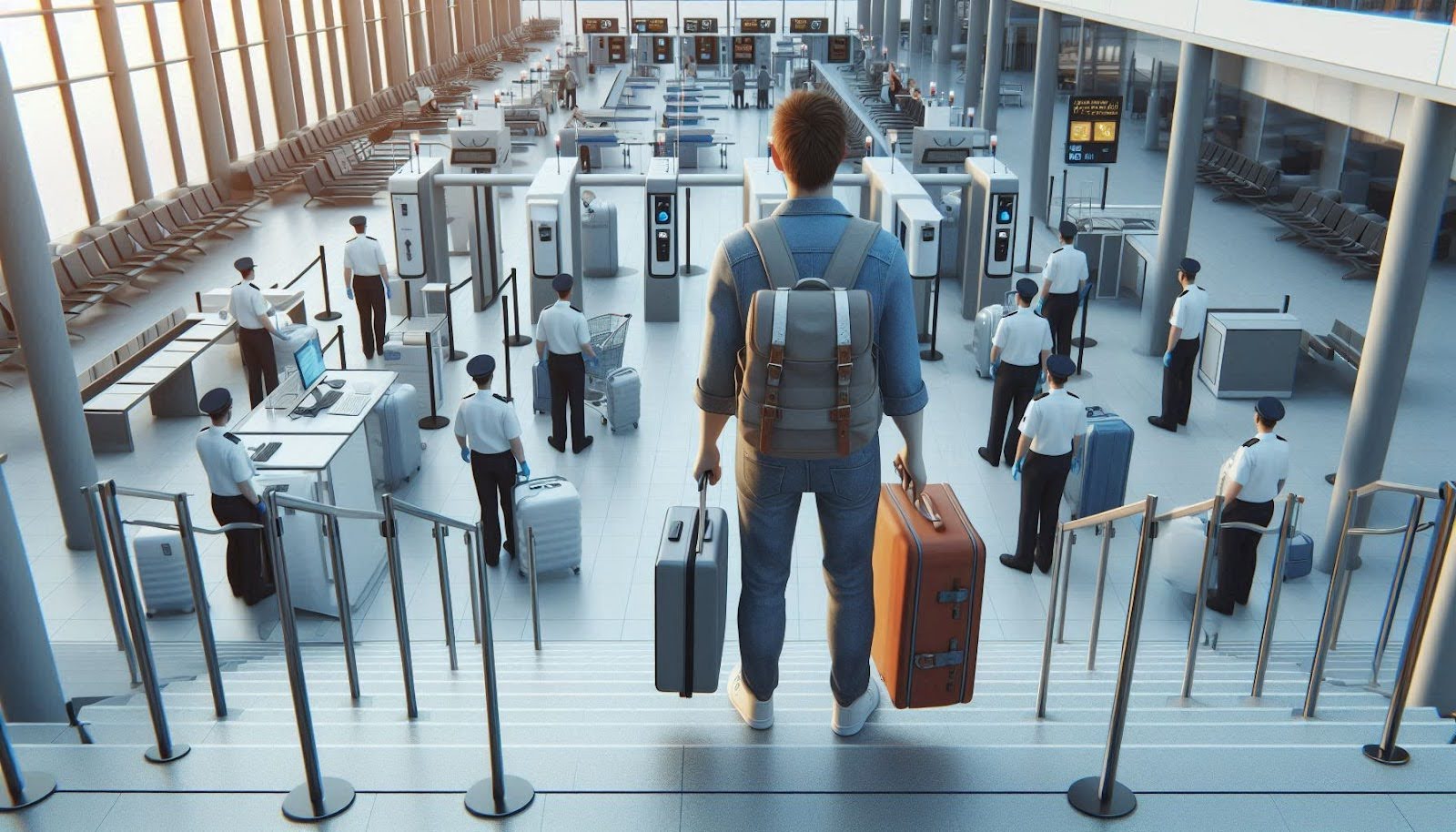
First-of-its-kind land and air preclearance operations aim to intercept security threats before they reach the border
WASHINGTON, DC. Preclearance used to be an airport convenience story, the kind that only mattered to frequent flyers who wanted to land in the United States like a domestic passenger, bypassing a crowded arrivals hall. In 2026, it is becoming something more consequential: a security architecture decision that pushes border screening earlier, moves enforcement upstream, and changes what “the border” even means.
The core idea of preclearance is simple. Instead of waiting for the moment a traveler arrives at a border, the inspection happens before they get there. That can mean U.S. officers screening travelers in Canada before they board U.S. bound flights. It can also mean Canadian officers screening travelers and goods on the U.S. side of the line before they enter Canada. Done well, it reduces bottlenecks and catches threats earlier. Done poorly, it creates confusion about rights, jurisdiction, and accountability because the “border encounter” is no longer happening at the border.
The preclearance conversation has accelerated because Canada and the United States are now moving beyond the long-standing airport model and into new territory. Canada’s border agency has publicly laid out plans for the first Canadian land preclearance operation on U.S. soil, a two-year effort centered on the Cannon Corners port of entry in New York State, adjacent to Covey Hill, Quebec. The stated logic is explicit: screen earlier, intercept risks sooner, and streamline legitimate movement. The Canadian government’s own description of the initiative spells out the fundamentals, including the two-year duration, the facility location, and the security purpose, including screening for dangerous goods such as firearms and drugs before they leave the United States and enter Canada: The CBSA announces first Canadian land preclearance operation in the U.S.
That announcement is about Canada-bound traffic, not U.S. bound traffic, and that distinction matters. But it also tells you where preclearance is headed: outward. The border is no longer a single line on a map. It is becoming a set of controlled spaces, preclearance areas, perimeters, and corridors, where screening happens earlier, and decisions are made before travelers arrive at the traditional checkpoint.
Preclearance is evolving from passenger convenience into threat interception
For travelers, the immediate benefit is time. For security agencies, the benefit is leverage.
When an officer screens a traveler earlier, the agency gains options. It can deny boarding before the person enters a secure flight environment. It can prevent a risky traveler from reaching a congested border crossing where enforcement becomes harder. It can reduce the operational chaos that follows when a problem is discovered late, at the arrival gate, in a packed arrivals hall, or in a land queue that is already stretching down a highway.
That is why modern preclearance is increasingly framed as prevention rather than processing. It is not just about making lines shorter. It is about reducing the number of uncertain cases that make it to the last mile.
The CBSA’s land pilot is a clear example of that logic. Canada is effectively moving one of its border decision points onto U.S. soil in a co-located facility. That changes the sequence of enforcement. Instead of waiting for a traveler to arrive at a Canadian port of entry, Canadian officers examine admissibility before the traveler reaches the Canadian side.
Now zoom out. The United States has been doing the reverse for decades, screening U.S. bound travelers in Canada at major airports. The CBSA announcement notes that U.S. preclearance already operates at eight Canadian airports. That is the established model: you clear U.S. inspection in Canada, then arrive in the U.S. as if you were a domestic passenger.
Put those two realities together, and you get the bigger story: both countries are working toward a two-way system where the “screening moment” happens earlier on both sides, in both directions, across both air and land environments. It is a quiet reengineering of North American mobility.
Why land preclearance is a bigger deal than airport preclearance
Airport preclearance has a built-in control mechanism: the airport itself. The traveler is already in a security-managed environment. The facility can be designed for inspection. The queues can be separated. The perimeter can be enforced. There is less ambiguity about where the inspection begins and ends.
Land preclearance is messier. Cars arrive continuously. Local traffic patterns matter. The surrounding geography matters. The facility has to handle more variability, and it has to do it without creating community-level disruption. A land preclearance site also changes the emotional psychology of border crossing. Drivers expect to “reach the border” before inspection. Preclearance flips that expectation.
The Cannon Corners concept highlights the trade-off. During the two-year operation, travelers entering Canada who would normally use the Covey Hill port of entry are routed through Cannon Corners. In practice, that means a portion of the border experience is being relocated and resequenced. It is not just a policy change. It is a geographic change.
The security case focuses on early interception. Screening firearms, drugs, and other dangerous goods before they cross is the most concrete example. But the underlying logic extends further. A preclearance model gives agencies a better chance to stop someone before they enter the jurisdiction where the consequences become more complicated.
This is one reason preclearance is increasingly discussed in the same breath as fugitives, organized crime mobility, and repeat identity abuse. The point is not that most travelers are threats. The point is that the threats agencies care about tend to move through the same shared infrastructure as everyone else. Earlier screening gives enforcement more time and more room to act.
The jurisdiction question, what it means to be questioned “outside” the border
Preclearance always raises the same practical question: whose rules apply.
In a U.S. airport preclearance facility in Canada, U.S. officers are operating under U.S. authorities within a Canadian legal framework that defines what they can do and how. In a Canadian land preclearance facility on U.S. soil, Canadian officers are operating under Canadian authorities within a U.S. legal framework that defines the site.
For the average traveler, this is invisible until something goes wrong. A referral to secondary inspection. A search. A refusal. A misunderstanding. Then it becomes very visible, very quickly.
The most important detail for travelers is that preclearance is designed to be a lawful system of shared consent and defined powers, not an improvisation. It is built on treaties, implementing legislation, and regulations that define the boundaries. That legal scaffolding is precisely why preclearance can expand across environments without becoming diplomatic chaos.
But it is also why preclearance is controversial in cycles. Civil liberties advocates often worry that foreign officers operating on domestic soil can create confusion about rights and remedies. Law enforcement advocates argue the opposite: that earlier screening improves security and reduces last-minute enforcement risk.
The truth is that both arguments can be valid at the same time. A system can improve security and still require strong oversight, clear traveler communication, and tight limits on scope creep.
Air preclearance is the familiar face of a newer strategy
Most people associate preclearance with airports because that is where it is most visible. You walk into a special zone, you answer questions, you clear inspection, and then you fly.
But the air model is also changing. Biometric identity tools, more integrated passenger data, and more automated routing of travelers are reshaping how preclearance works in practice. The long-term trajectory is toward fewer manual interactions for routine travelers and more targeted scrutiny for exceptions.
That is not only a technology story. It is a staffing story. Every government is dealing with hiring pressure and throughput expectations. Preclearance is attractive because it can help agencies allocate resources where they matter most.
It is also a risk management story. A problematic traveler denied boarding in Canada does not arrive in the U.S. airport system. That is a meaningful operational advantage. It is why preclearance is often described, bluntly, as moving the border outward.
The fraud question, identity and the “clean record” advantage
Preclearance amplifies a modern reality: mobility increasingly depends on clean identity continuity.
A traveler with consistent documents, consistent booking records, and a stable travel narrative tends to move quickly through automated and semi-automated systems. A traveler with mismatches, recent identity changes, inconsistent records across jurisdictions, or a history that triggers extra verification tends to move slowly and be routed to human review.
This is where the preclearance expansion intersects with the larger biometric travel shift. The more systems rely on data matching and database confidence, the less tolerant they are of ambiguity. That can be a good thing for security and a frustrating thing for lawful travelers who are in the middle of legitimate changes, such as new passports, name changes, or dual nationality documentation updates.
Analysts at Amicus International Consulting have been increasingly blunt about the operational consequence: as preclearance and biometric verification expand, the traveler’s biggest risk is often not being “suspected,” it is being “unclear” to the system. In practical terms, Amicus’s professional services often focus on helping globally mobile clients reduce friction by aligning documentation timelines, identity records, and compliance narratives so that automated screening and officer review see one coherent file instead of a patchwork.
That sounds clinical, but it maps to lived travel reality. An unclear profile costs time. Time costs missed flights, reroutes, and stress. And in a preclearance environment, missed time can happen before you even board.
What changes for ordinary travelers and families
If you are a typical traveler, preclearance expansion is not an immediate cause for alarm. It is a planning reality.
It means you should treat preclearance time as border time, not airport time. Build buffer. If you have a tight connection, remember that preclearance is effectively an international border encounter that happens earlier in the trip.
It also means you should expect a sharper divide between “routine” and “exception” processing. Routine travelers may move faster as automation improves. Exception travelers may experience deeper questioning and longer delays because the system is designed to pull uncertainty out of the main flow.
For families, the pattern can be more complicated. A child traveling with one parent, a passport renewal, a last name mismatch, or a custody document issue can turn into a longer interaction in a preclearance zone. That is not new, but earlier processing means the consequences show up sooner, and the pressure feels different when the boarding time is ticking.
The business case, why airlines and trade corridors care
Preclearance is also an economic story because borders are not just about tourists.
For airlines, preclearance can improve schedules by reducing arrival-side congestion. For airports, it can change gate utilization because passengers arrive as domestic travelers. For cross-border regions, it can shift traffic patterns and potentially support more reliable movement.
For trade and logistics, land preclearance is the more intriguing prospect. Even a small improvement in predictability at a border crossing can matter for just-in-time operations. The appeal of land preclearance is less about cutting average wait times and more about reducing variance. Businesses hate uncertainty more than they hate slow.
The new preclearance expansion also fits a larger security and economic trend in North America: both countries are trying to strengthen enforcement against organized crime and smuggling while keeping legitimate travel and trade moving. That tension has become the defining border challenge of the decade.
Reporting on how quickly new preclearance projects are progressing, where they may expand next, and how agencies are balancing security with throughput has been closely followed in recent coverage here: preclearance expansion Canada U.S. land and air operations.
The bottom line
Preclearance is no longer just an airport perk. It is becoming a strategic tool that pushes border decisions earlier, expands enforcement options, and changes the geometry of the border itself.
Canada’s move toward land preclearance on U.S. soil is a clear signal that the old model, U.S. officers in Canada for U.S. bound flights, is evolving into something broader and more reciprocal. The border is being turned into a network of managed spaces where identity, admissibility, and risk are assessed before the traditional checkpoint.
For travelers, the winning strategy is boring and practical: keep documents current, keep records consistent, plan for border time before you board, and assume that the modern preclearance environment rewards clarity and punishes ambiguity.