
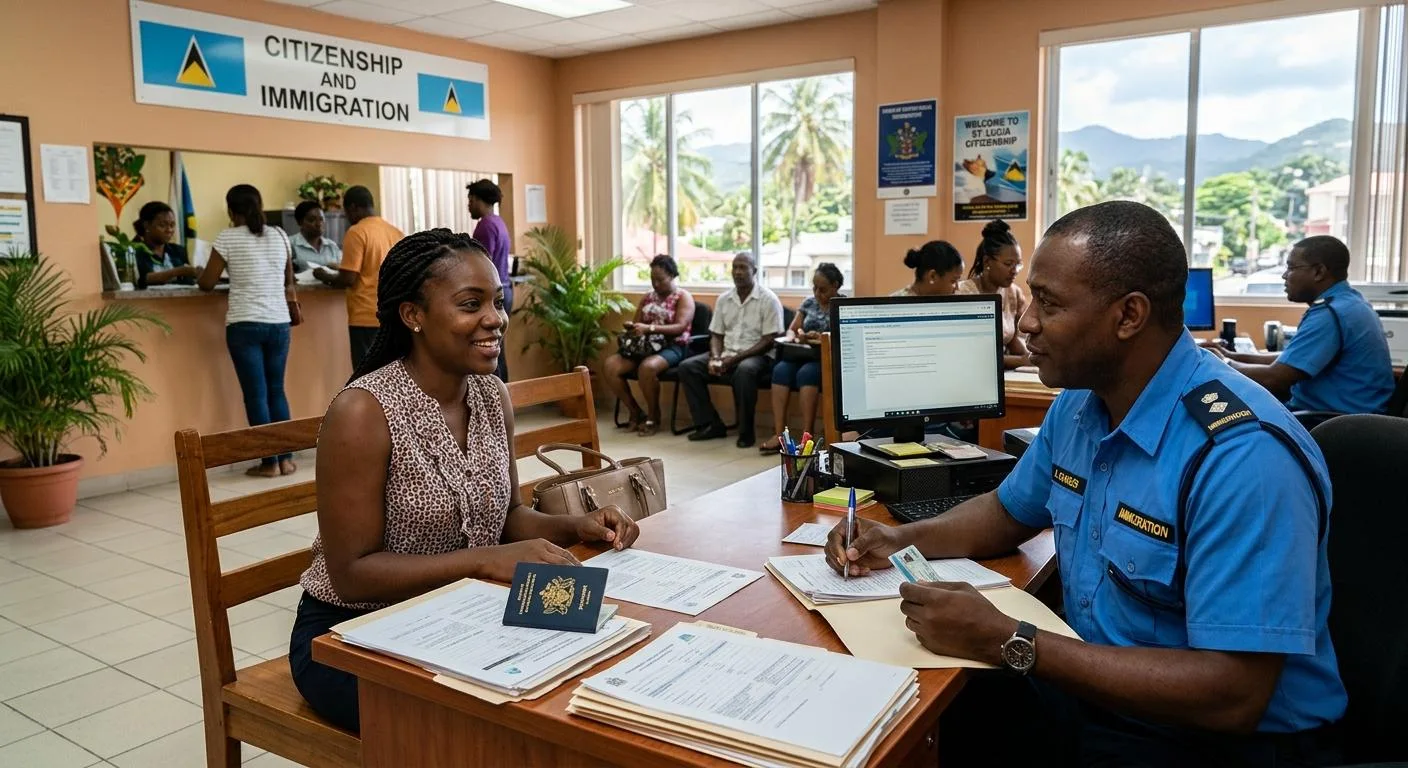
Descriptions of second citizenship applications as interview-free can mislead prospective investors, even as current government rules require direct participation, background checks, and individualized assessment before an official nationality decision.
WASHINGTON, DC, November 16, 2026 — Advertisements promising citizenship without an interview are facing renewed scrutiny as Caribbean investment migration authorities strengthen identity checks, making it essential for prospective applicants to distinguish outdated promotional descriptions from current government procedures.
A program that previously allowed document-based submissions may subsequently introduce mandatory video interviews, in-person appointments, or additional scrutiny for qualifying relatives, so families should verify requirements before transferring fees or building departure schedules around advertised processing times.
The underlying concern is not whether interviews always require international travel, but whether applicants must personally participate in a government-authorized assessment that an agent, financial contribution, or claims of confidential handling cannot bypass.
Interview-Free Advertising Can Describe an Earlier Program
Citizenship-by-investment marketing often emphasizes speed and convenience, but a statement written years ago may remain online after a government changes its screening framework, creating a misleading impression of what applicants must currently do under the procedures governing individual applications.
A consultant describing a process as entirely remote might mean that the applicant need not travel to the issuing country, whereas a consumer might reasonably understand the phrase to mean that no direct interview or identity examination occurs.
Those descriptions should be separated carefully, because a secure video interview can satisfy a mandatory government requirement without requiring an overseas flight, while still demanding personal attendance, valid identification, and answers to official questions.
Dominica Provides an Unambiguous Current Example
Dominica’s Citizenship by Investment Unit currently requires applicants aged sixteen and older to attend mandatory interviews, generally conducted through a secure virtual platform, as part of screening before the government decides whether to approve nationality.
Its published guidance also makes clear that authorized agents and licensed promoters cannot complete interviews on applicants’ behalf, even when those representatives organize records, submit forms, and serve as the principal administrative contact.
Official United States government guidance on dual nationality also underscores why a new citizenship should be treated as a legal status with obligations, rather than a commercial document package whose acquisition can be detached from government oversight.
Regional Scrutiny Helps Explain the Policy Shift
An October 29, 2026, Reuters report on European pressure surrounding Caribbean investor citizenship described how security concerns and European visa-waiver policy have intensified scrutiny of programs operated by five Eastern Caribbean countries.
The reported negotiations concern the programs’ longer-term future and international travel benefits, rather than establishing that every applicant is unsuitable or that existing legally issued passports automatically lose their underlying nationality status.
For consumers, the developments illustrate why current regulations and government notices should carry more weight than promotional assurances written when screening requirements, regional cooperation, and the diplomatic environment were materially different.
An Interview Serves a Different Purpose From a Form
A completed questionnaire can describe employment, residence, family relationships, and financial history, but an interview gives reviewers another opportunity to confirm identity, clarify ambiguous statements, and assess consistency between the applicant’s explanations and submitted records.
Questions may concern the source of wealth, the specific funds used for the contribution, previous citizenships, professional activities, or other matters relevant to statutory eligibility and the due diligence undertaken by competent authorities.
The requirement should not be characterized as an automatic finding of suspicion, because interviewing every applicant in a defined category can be a routine screening measure applied regardless of the person’s reputation or financial capacity.
Virtual Participation Does Not Mean No Interview
Remote technology can reduce travel burdens by allowing applicants to participate from their country of residence, yet a scheduled video session remains an interview when independent reviewers verify documents and ask the applicant questions directly.
Applicants should confirm the authorized platform, scheduling instructions, identification requirements, language arrangements, and whether any individual circumstances require attendance at a physical location instead of the standard virtual process.
A provider that advertises a process as requiring no travel may be describing a legitimate operational benefit, but that claim should never expand into a promise of no personal verification when official rules say otherwise.
Age Thresholds Matter for Family Applications
Dominica’s age-sixteen threshold means a family application can involve direct interviews for teenage dependents as well as adults, creating scheduling requirements that a quotation addressed only to the principal investor might overlook.
Other jurisdictions may use different age thresholds or procedures, and emerging regional standards should not be treated as proof that every government conducts the same interview for every child.
Parents should establish which relatives must participate, how identification will be checked, and whether separate sessions generate additional charges, particularly when family members reside in different countries or cannot attend together.
Authorized Agents Coordinate Rather Than Substitute
Dominica requires applications through authorized agents, whose role includes collecting forms, reviewing supporting evidence, and managing correspondence, but government authorities remain responsible for the official eligibility assessment and final decision.
The distinction protects applicants from misleading suggestions that an intermediary’s personal connections can eliminate mandatory interviews, prevent ordinary background investigations, or guarantee favorable treatment after a large contribution has been paid.
Consumers should verify the representative’s current authorization and request a written explanation identifying which tasks the firm performs, which government checks are compulsory, and which appointments must be completed personally.
Source of Wealth and Source of Funds Are Different Questions
An interview may address how an applicant accumulated overall assets over time, which differs from documenting the precise origin and lawful transfer of the money intended for a qualifying government contribution or property purchase.
Employment records, company ownership, inheritance documents, investment statements, and property-sale evidence can become relevant depending on the person’s circumstances, and independent investigations can supplement answers given during direct questioning.
Applicants should present accurate evidence rather than rehearsed explanations designed to conceal inconsistencies, because discrepancies can lead to further scrutiny and may undermine an otherwise legitimate application.
Screening Fees Should Appear in the Budget
Dominica’s published schedule identifies a mandatory interview fee of US$1,000 per interview, in addition to the applicable due diligence charges, illustrating why financial planning should not stop at the main qualifying contribution.
A household with multiple qualifying teenagers and adults may therefore face a different total screening expense than a single applicant, particularly if official procedures require separate interview arrangements or supplemental investigations.
Prospective investors should request itemized quotations that separate government screening, authorized-agent services, translations, and other expenses, and avoid assuming that paying an interview fee secures approval or waives further checks.
A Convenient Timeline Is Not an Approval Guarantee
Published processing estimates generally depend on complete documentation, successful verification, available appointments, and the absence of matters requiring extended review, so applicants should distinguish optimistic marketing timelines from binding government commitments.
If an interview reveals missing records or inconsistent information, the authority may request clarification before deciding, even if the investor submitted the initial forms correctly and has sufficient available funds.
Families should leave room for administrative uncertainty before selling homes, withdrawing children from school, or purchasing nonrefundable flights based on an assumed date for citizenship recognition and passport delivery.
Regional Regulations May Continue to Evolve
The Eastern Caribbean Citizenship by Investment Regulatory Authority framework reflects efforts toward common screening standards, including personal interviews and enhanced oversight, but implementation details and the applicable domestic rules still warrant individual verification.
A regional agreement may allow interviews through secure virtual networks while also providing for more intensive scrutiny in specified circumstances, illustrating why simplistic claims about universal interview exemptions do not capture the full regulatory picture.
Applicants should check the particular issuing country’s rules at the time of submission and again before scheduled appointments, especially when recent legislation or international negotiations may lead to procedural changes.
An Interview Does Not Replace Other Due Diligence
A successful conversation with a government-approved interviewer does not establish that every background investigation has concluded, because officials may continue checking identity records, financial sources, professional activities, and relevant international information.
Similarly, a completed interview should not be confused with approval in principle, payment authorization, final citizenship recognition, or passport issuance, since each may represent a distinct step in the program.
Applicants benefit from understanding those stages before transferring substantial funds, particularly where an intermediary describes the interview as the last obstacle despite outstanding documentary or government review requirements.
A Lawful Name Change Does Not Eliminate Questions
People who have legally changed their names may need to explain earlier identity records during citizenship screening, especially when applications request previous names, residence histories, or supporting evidence connecting documents issued at different times.
A legitimate name change can be documented through an authorized court order or comparable official record, whereas inventing a birthplace or concealing material prior identities introduces problems unrelated to the merits of another citizenship application.
An interview-free promise becomes especially concerning when combined with claims that applicants can acquire an unrelated identity without disclosing their established history to government agencies and financial institutions.
Passport Chip Checks Cannot Prove Interview Compliance
A modern biometric passport may contain electronic identity information and cryptographic protections, but technical authentication of an issued booklet cannot independently demonstrate which interviews occurred during the original citizenship application or whether every disclosure was accurate.
Amicus International Consulting explains these limitations in its guide on how to scan a passport’s NFC chip and understand the results, separating electronic document checks from citizenship decisions and current government validity assessments.
Even an authentic passport should not be treated as evidence that a commercial agent lawfully bypassed mandatory screening, because passport security and the administrative history of nationality approval are different questions.
Consumers Should Test Every Promotional Claim
Before applying, consumers should ask whether interviews are mandatory for the principal applicant and dependents, whether virtual attendance is permitted, who conducts the examination, and what fees or documents are required.
Compare written responses with the relevant citizenship unit’s current website or regulations, because an agent’s earlier experience cannot establish an exemption from a requirement introduced after a previous application was approved.
When marketing materials conflict with official guidance, the safer conclusion is that the discrepancy needs clarification before payment, not that an intermediary has undisclosed authority to circumvent government procedure.
Government Approval Remains the Deciding Factor
Citizenship-by-investment programs can offer legitimate paths to nationality, but approval depends on eligibility, accurate documentation, financial verification, interviews where mandated, and the formal decision of the responsible sovereign authority.
Applicants should view an advertised convenience as one characteristic of the process rather than proof that scrutiny has disappeared, especially as governments strengthen international cooperation and review program integrity.
Ultimately, interview claims deserve scrutiny because lawful citizenship is awarded through government procedures that can change over time, and reliable preparation begins with checking the precise requirements that apply to each applicant today.