
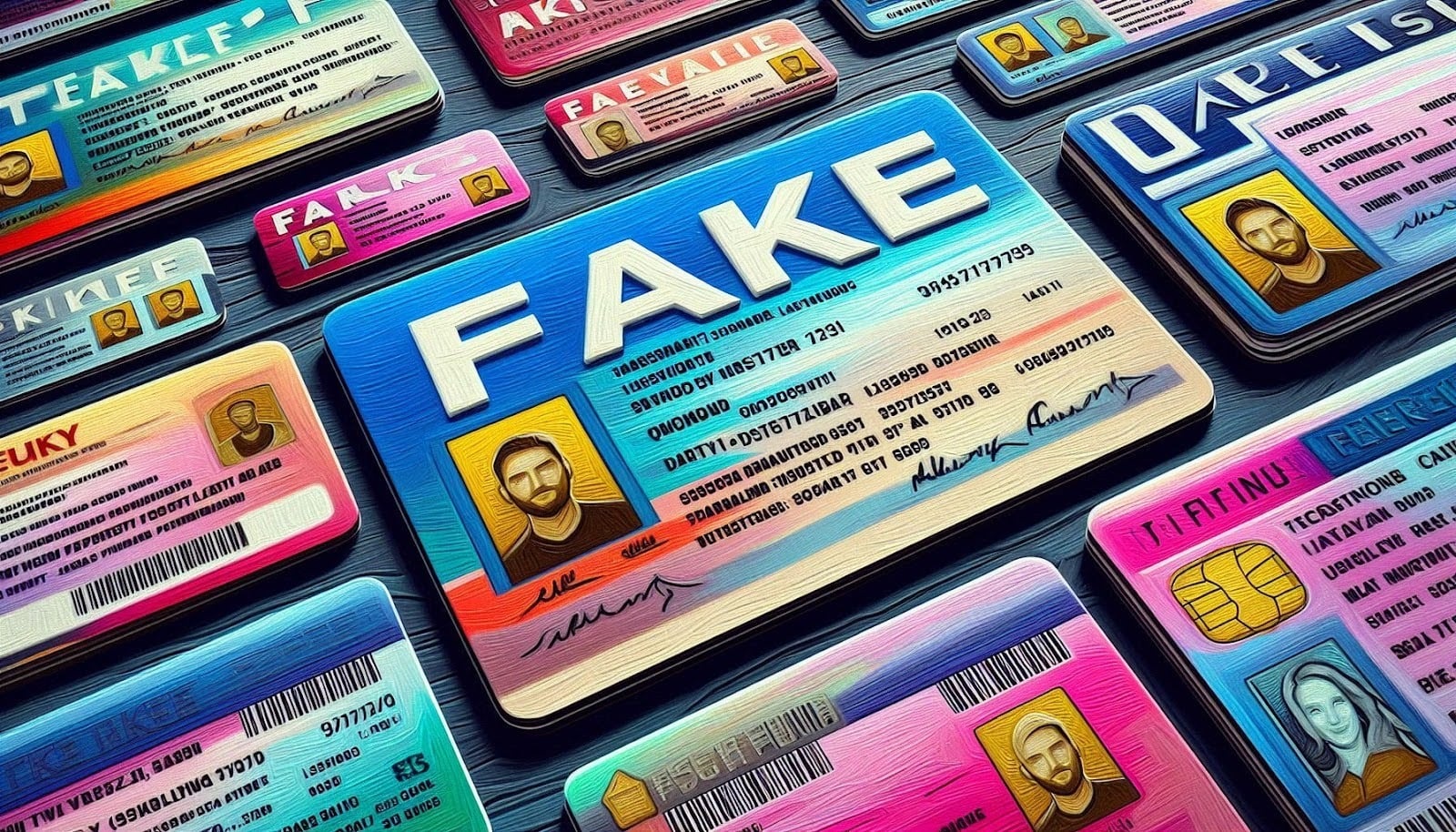
The market is no longer limited to physical counterfeits. Prosecutors say downloadable files and fabricated images are now part of the same criminal toolkit.
WASHINGTON, DC, April 8, 2026. Passport fraud used to conjure a familiar image: a forged booklet, a counterfeit laminate, a stolen blank document, or a fake card passed across a counter. That world still exists. But in 2026, investigators are increasingly describing something broader and more adaptable. The fake document does not always arrive in an envelope. Sometimes it arrives as a file.
That shift matters because it changes where document fraud happens and how easily it can scale. A digital fake ID can be downloaded, edited, duplicated, customized, and reused across multiple fraud settings without ever becoming a physical object. It can be designed to look like a scanned passport, a photographed driver’s license, a cropped ID image on a table, or a seemingly ordinary document upload inside a remote onboarding flow. In practical terms, that means passport and document fraud is no longer confined to border crossings, in-person bank visits, or counterfeit print shops. It now sits much closer to online account creation, crypto onboarding, payment processing, marketplace verification, and remote impersonation.
The fake document is increasingly built for the camera, not just the checkpoint.
That is the core change.
A criminal no longer needs to produce a perfect physical counterfeit to get value from a fake identity document. In many cases, the real objective is to create something convincing enough for a screen, an upload portal, a selfie-based onboarding step, or a visual review conducted by a human who never handles the original document at all.
That makes digital fake IDs especially useful in a fraud environment built around remote verification. A fabricated passport image can be used to support a new account application. A manipulated ID photo can help reinforce a synthetic identity. A digitally altered license can help clear a basic “know your customer” check long enough for the fraudster to move to the next stage. The criminal logic is straightforward. If the institution accepts images, files, or scans as part of onboarding, then the document only needs to survive that format.
It does not need to feel real in someone’s hand. It needs to look real on a screen.
Federal prosecutors have now described exactly that market.
In February, federal prosecutors in New York said the operator of OnlyFake had sold more than 10,000 digital fake identification documents, including digital versions of U.S. driver’s licenses, U.S. passports, passport cards, Social Security cards, and passports from dozens of other countries. Prosecutors said customers could customize whether the fake ID appeared as a scan or as a photograph of a real document lying on a surface, which says a great deal about how the market has evolved. The document was not just forged. It was being staged for the verification environment where it would be used.
That detail is more revealing than it may sound. It shows that digital document fraud is now designed around presentation format. Fraudsters are not merely copying government credentials. They are tailoring fake files to the way financial institutions, exchanges, platforms, and processors ask customers to submit identity proof.
The document has become part of a remote user interface.
Physical counterfeits still matter, but the toolkit is now hybrid.
This does not mean traditional document fraud has disappeared. Quite the opposite. Physical fake passports, counterfeit IDs, and forged breeder documents still appear in seizures and active investigations. But the modern toolkit is increasingly hybrid. One fraud operation may use a digital fake to clear onboarding, stolen personal data to reinforce the application, throwaway phone numbers to complete verification, and a mule account or crypto wallet to receive the proceeds.
That is why digital fake IDs are reshaping the broader fraud picture. They are not replacing every older tactic. They are joining them.
The result is a market that is more flexible than the old counterfeit-document trade. A fraudster can use a fabricated passport image for one platform, a digitally altered license for another, and a more traditional printed counterfeit for a situation that still requires in-person presentation. The fake identity package is now modular, and the document format is just one variable.
Cheap files create a scale problem that old document fraud did not have.
Once a fake identity document becomes a downloadable product, the economics change.
Digital templates can be sold more cheaply, replicated endlessly, and distributed globally in seconds. They can also be customized for multiple countries and document types without the same production risks attached to physical manufacture and shipping. That lowers barriers for buyers and widens the customer base. Someone does not need access to a specialist print operation or a corrupt supply chain to obtain a fake ID image. In many cases, they only need money, a browser, and enough confidence to try the upload.
That shift makes document fraud look less like boutique forgery and more like digital commerce.
It also makes failure cheaper. If one document does not pass, the buyer may simply try another format, another image style, another jurisdiction, or another service. The fraud becomes iterative. The file can be adjusted and redeployed. That is a very different environment from the older model in which a physical counterfeit had to be manufactured, shipped, and physically presented with much higher friction.
Weak remote checks help digital fake IDs travel farther.
The rise of digital fake IDs is also colliding with a broader reality of online fraud; many platforms still rely on low-cost checkpoints that can be worked around at scale. That is one reason these fake documents matter beyond classic passport fraud. They fit neatly into an ecosystem where fake accounts, synthetic users, and remote impersonation can all be assembled in layers.
A recent Reuters report on researchers’ finding that SMS verification barriers can be bypassed for pennies helps illustrate the point. A fake document on its own is useful. A fake document paired with a cheap throwaway number, stolen personal data, and a platform willing to accept image-based verification is much more powerful. The criminal does not need one perfect forgery. The criminal needs a package that looks coherent long enough to pass.
That is why digital fake IDs should not be viewed as a narrow document problem. They are part of a wider remote-fraud architecture.
The target is often not travel, but access.
This is another place where public perception still lags behind the market.
Many people hear “fake passport” and assume the goal is border evasion or physical travel under an alias. That still happens, but prosecutors and investigators increasingly describe document fraud serving online purposes, opening accounts, bypassing KYC checks, creating marketplace identities, enabling payment fraud, and laundering proceeds behind a fictional or borrowed profile.
In that sense, the fake document is often less about movement than access.
It can help unlock a bank account, a processor, a social media profile, a digital wallet, or a commercial platform that would otherwise reject the user. Once that access is obtained, the identity itself may be used only briefly. The document’s role is to get the fraudster inside the system, not to support a long-term second life.
The legal line remains clear, even when the market language tries to blur it.
As document fraud evolves, it becomes even more important to distinguish criminal fabrication from lawful identity planning. A digitally fabricated passport image, a counterfeit license file, or a manipulated government ID used to deceive an institution is not the same thing as a legal name change, a documented second citizenship process, or any government-recognized form of lawful status change.
But online, those distinctions are often blurred by sellers who market illegal document services using the language of privacy, anonymity, reinvention, or “starting over.” That language is designed to make fraud sound like a personal solution rather than a criminal act.
A lawful advisory firm such as Amicus International Consulting operates in a completely different category. The difference is not cosmetic. It is the difference between recognized legal process and fabricated evidence. In 2026, people searching for privacy or lawful restructuring often encounter both worlds at once, and misunderstanding that boundary is one of the fastest ways to walk into fraud exposure.
The new document-fraud era is digital first, but not digital only.
That is the real takeaway.
Passport and ID fraud did not disappear when onboarding moved online. It adapted to the screen. Prosecutors are now describing a market where downloadable files, fabricated scans, staged document photos, and customizable fake IDs sit alongside physical counterfeits in the same criminal inventory. The forgery is no longer just a thing. It is a format.
And that is why digital fake IDs are reshaping passport and document fraud in 2026. They make forgery easier to distribute, easier to customize, and easier to plug into the wider fraud economy, where the goal is often not to build a believable life, but to clear one checkpoint, gain one layer of access, and move on before anyone notices.