
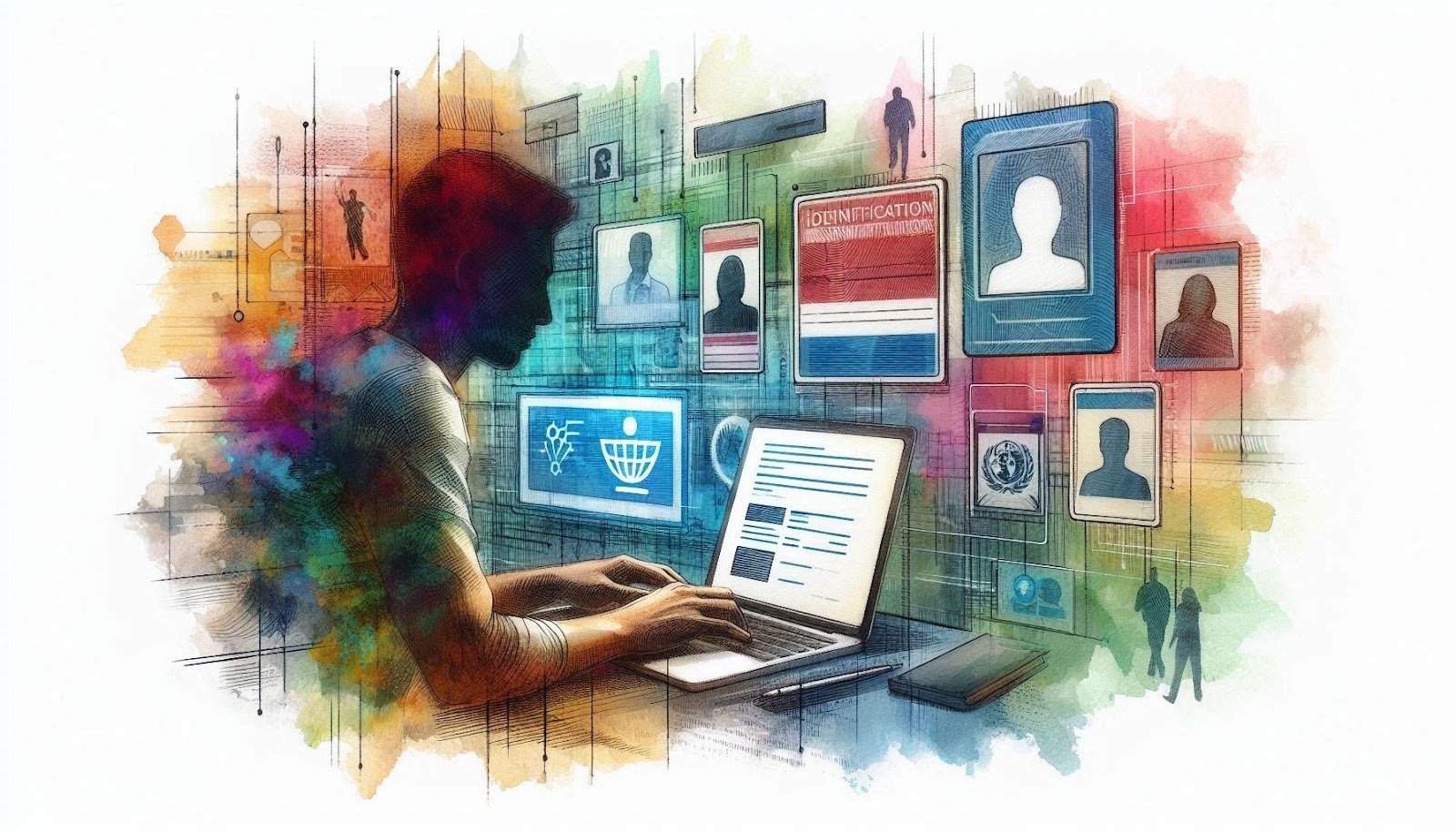
Search engines are flooded with claims about getting a new identity online, but legal reality is far different from internet fantasy.
WASHINGTON, DC.
The most dangerous lie in the online identity market is not that a new identity can be bought with a few clicks. The most dangerous lie is that what is being sold is legal.
Search for a “new identity” in 2026, and the internet quickly fills with fantasy, because ad-heavy pages, sketchy marketplaces, dark-web references, anonymous chat accounts, and polished scam sites all promise what sounds like a clean escape hatch from real life. The pitch is always some version of the same dream: a fresh passport, a clean credit history, a new name, a new birth certificate, a usable backstory, and a faster route to disappearing than any government process could possibly offer. The language is designed to feel modern, confidential, and frictionless. The reality is usually much uglier.
What most buyers are actually purchasing is not lawful reinvention, but document fraud, stolen data, synthetic identities, or empty promises backed by crypto payments and disappearing usernames. In February 2026, the U.S. Department of Justice announced that the operator of the “OnlyFake” website had pleaded guilty after prosecutors said the platform sold more than 10,000 digital fake identification documents, including passports and driver’s licenses, which is a useful reminder that the online identity trade is not a secret legal shortcut but an active criminal market under law-enforcement pressure, as shown in the Justice Department’s 2026 OnlyFake guilty plea announcement.
That detail matters because it cuts directly through the marketing. A real legal identity change does not begin with a Telegram handle, a crypto wallet, and a promise to deliver a passport image file in twenty-four hours. It begins with law, documents, eligibility, government recognition, and a paper trail strong enough to survive scrutiny from banks, border agencies, tax systems, insurers, employers, and immigration authorities. The internet version is not a shortcut around that reality. It is a trap built around people who want the result without the process.
The online pitch is selling urgency, not legitimacy.
The identity-scam economy works because it understands the emotional state of the buyer.
Most people searching for a new identity online are not doing so out of idle curiosity. They are frightened, desperate, ashamed, angry, cornered, or exhausted. Some are trying to escape stalking, reputational collapse, abuse, debt, public scandal, or political exposure. Others are looking for a criminal workaround and telling themselves it is only temporary. In both groups, urgency becomes the exploitable weakness.
That is why the marketing is so predictable. It promises speed where the law offers delay. It promises anonymity where the law demands verification. It promises global usability where real systems demand origin records, biometrics, and consistency across databases. It flatters the buyer into believing that governments are cumbersome, outdated, and easy to outsmart, while the seller is smart, plugged in, discreet, and faster than the state.
This is also why so many buyers panic only after the payment is gone. They thought they were purchasing certainty. What they actually purchased was exposure.
Most “new identity” offers online are one of four scams.
The first category is the fake-document scam, where the seller offers passports, driver’s licenses, birth certificates, utility bills, bank statements, or full “identity kits” that are either worthless or good enough only to deepen the buyer’s criminal exposure. Sometimes the files are digital mock-ups. Sometimes they are cheaply printed physical documents. Sometimes they are AI-generated images meant to fool a platform upload rather than a border officer. None of that adds up to a lawful identity.
The second category is the stolen-identity scam, where the buyer is not getting a “new” identity at all, but some mixture of another real person’s records, leaked personal data, or fragments of an existing profile recycled into a criminal package. That means the buyer is entering a fraud chain that may already involve identity theft victims, compromised data brokers, and unrelated crimes before the first fake card ever arrives.
The third category is the synthetic-identity scam, where bits of real and fabricated data are blended into something that appears plausible in low-level screening but collapses under serious review. This kind of package may briefly work against a weak online form or low-grade account opening process, but it tends to fail quickly once a stronger institution checks dates, issuance history, biometric consistency, or government records.
The fourth category is the pure exit scam, where nothing of value is ever delivered at all. The seller asks for more crypto, more urgency fees, more authentication charges, more “diplomatic release” costs, or more custom-production money until the buyer realizes there is no document, no courier, and no service, only a dead wallet address and an archived chat.
Those four models account for most of the market, and none of them are lawful identity change.
The law does not care that the buyer was “just trying to start over.”
One of the most common misunderstandings in this space is moral self-exemption. Buyers often tell themselves they are not real fraudsters because they are not trying to build a cartel, open a shell company, or cross a border with a weapons load. They are “just” trying to get away, reset, or breathe.
The problem is that criminal systems do not run on the buyer’s self-description. They run on acts. Using forged identification, stolen personal data, synthetic credentials, false employment records, fake passport files, or fabricated civil documents still places the buyer inside a fraud pattern, even if the emotional story feels sympathetic from the inside. That is why the downstream consequences are so severe. Bank fraud controls, travel screening, visa processing, beneficial ownership checks, employer onboarding, sanctions reviews, and platform trust systems are built to detect inconsistency and deception, not to grade the buyer’s intentions on a curve.
The criminal exposure is not hypothetical either. In March 2025, Reuters reported on a former lawyer who was sentenced to prison after prosecutors said he used fake identities and other people’s personal information to obtain jobs at law firms, which is a blunt reminder that identity fraud can spiral quickly from paperwork manipulation into felony sentencing, as shown in this Reuters report on a lawyer sentenced for using fake identities to get law-firm jobs.
That story matters because it illustrates the point people miss when they browse “new identity” offers online late at night. Even when the buyer thinks the fake identity is just a bridge to stability, the state often sees it as the beginning of a larger fraud chain.
The panic phase starts when the document meets a real system.
Online identity scams survive because most buyers imagine the purchase as the hard part.
It is not.
The hard part begins the moment the fake identity has to function in a real environment. A fake driver’s license image might look convincing on a phone screen. That does not mean it will survive a bank’s onboarding tools, a payroll processor’s verification stack, a landlord’s third-party screening, a border kiosk’s document checks, a compliance officer’s manual review, or a consular officer’s follow-up questions. Modern systems do not merely inspect cards. They compare patterns.
That is where the panic begins.
The bank account application gets held. The payment processor freezes the account. The rental application goes silent. The airline booking triggers document questions. The employer asks for secondary proof. The platform rejects the upload. The courier asks for adult identification at delivery. The buyer thought they had purchased a new life. What they actually purchased was a sequence of high-risk moments where every next institution can become the first one to notice that the identity has no lawful spine.
Once that happens, the scammer often becomes a second threat. Some vendors extort the buyer by threatening to expose chats, crypto transfers, shipping addresses, or uploaded selfies used during the fake ordering process. Others vanish. Either way, the “solution” becomes a pressure point.
The legal path exists, but it is slower, narrower, and much less cinematic.
This is the part most online sellers try hardest to bury. Lawful identity change is real, but it does not look anything like the digital fantasy.
A legal name change is one thing. A court-recognized correction of civil records is another. Witness-protection-style intervention is another. Immigration-based relocation is another. Second citizenship or lawful second-passport planning is another. These are different categories with different legal thresholds, different jurisdictions, and different consequences. They are not interchangeable, and they are not sold as instant anonymity products.
That is why the serious private advisory market, when it is operating lawfully, speaks the language of eligibility, documentation, compliance, and jurisdiction rather than darknet convenience. People trying to understand the legitimate side of identity restructuring are far better served by looking at frameworks such as legal new identity planning and second-passport strategy, because the lawful route is built through recognized government processes, not counterfeit shortcuts.
That difference is the whole story. The online scam market sells secrecy first and legality never. The lawful route sells legality first and secrecy only within the limits that the law will actually recognize.
What buyers are usually searching for is not a fake passport, but a lawful exit.
This is where the conversation becomes more honest.
A surprising number of people searching for “new identity online” are not truly asking for a forged passport. They are asking, in the worst possible language, for safety, mobility, privacy, or a way to stop living under the weight of their current circumstances. The search query is criminalized. The underlying need is often not.
That is why the online market is so effective. It intercepts a lawful human need with an unlawful sales funnel.
The person fleeing domestic abuse may need relocation, name protection, digital hygiene, and legal support. The person buried under a reputational disaster may need counsel, asset planning, and jurisdictional change, not a fake identity card. The person afraid of political targeting may need lawful residency options or second citizenship planning. The person under criminal investigation needs counsel, not a counterfeit backstory. The person trying to leave behind debt or enforcement actions does not need a new identity online. They need to understand that online fraud will usually worsen the original problem.
Search engines do not make those distinctions well. Scammers do not make them at all.
Why the online fantasy is getting darker in 2026.
The market is becoming more dangerous because the tools are getting more polished.
AI-generated document images look cleaner than older fake templates. Scam sites are more professional. Vendor scripts are more persuasive. Payment rails are faster. Fraudsters understand what buyers expect to hear about biometrics, NFC chips, “database insertion,” and “government channels,” so they borrow the vocabulary of real systems and wrap it around nonsense. That makes the market more convincing to people who are frightened enough to suspend disbelief.
But the underlying truth has not changed. A “new identity” bought online is usually just an expensive way to collide with fraud controls, criminal liability, and blackmail risk at the same time.
The click is easy. The payment is easy. The panic is what comes after.
The bottom line is brutal and simple.
If someone online says they can sell you a completely New Legal Identity, a working passport, clean civil records, and instant anonymity with no real government process, no serious eligibility review, and no lawful documentation chain, they are not selling reinvention. They are selling fraud, theft, or fantasy.
The legal world is slower than the internet fantasy because the legal world has to hold up under scrutiny. The scam world is faster because it only has to hold up long enough to get paid.
That is the dark truth behind getting a new identity online in 2026. What looks like escape is usually a funnel into document crime, financial loss, and deeper exposure. What looks like convenience is usually the beginning of the buyer’s next emergency.
Click, pay, panic. That is the real product.