

The wrecked car inspection process is the step most drivers know the least about going in — and understanding what actually happens during it removes a lot of the uncertainty that keeps people sitting on a damaged vehicle longer than they need to. Knowing what to expect, what to bring, and how the valuation actually gets calculated turns an unfamiliar process into a straightforward one with a clear timeline.
Why the Inspection Comes First
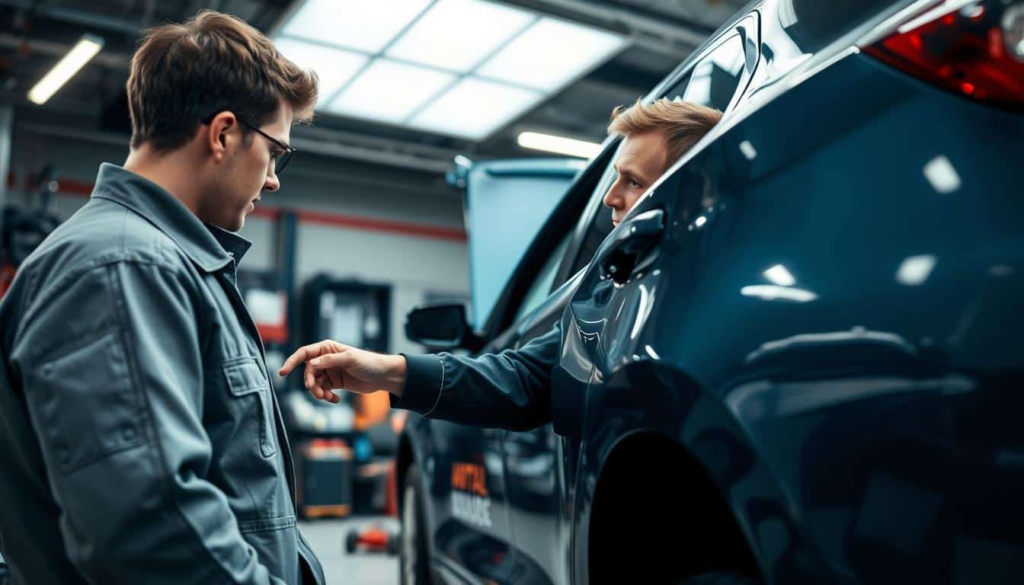
Before any trade value can be established, the vehicle needs to be physically assessed to confirm its pre-wreck condition, mileage, options, and the extent of damage from the accident. This isn’t a formality — it’s the foundation that the entire trade value calculation rests on. Skipping straight to a number without an inspection would mean guessing at a value rather than establishing one based on the vehicle’s actual documented condition before the accident occurred.
The wrecked car inspection process typically takes considerably less time than most drivers expect — usually well under an hour for a standard passenger vehicle, assuming the car is accessible and the necessary documentation is on hand.
What Gets Assessed During the Inspection
The inspection covers several distinct elements. First, the assessor documents the vehicle’s pre-wreck condition based on available evidence — service records, prior photos, and the undamaged portions of the vehicle that confirm overall maintenance and condition. Second, mileage and trim level are confirmed against the vehicle’s documentation, since both significantly affect the baseline value before any accident damage factors in.
Third, and most specific to the wrecked car trade in process, the extent and nature of the accident damage gets documented — not to determine a repair cost, but to confirm the vehicle’s pre-wreck value is the appropriate basis for the trade credit rather than the post-accident damaged value a typical buyer or salvage yard would offer.
What to Bring to Make the Process Faster
Drivers can speed up the wrecked car inspection process significantly by bringing a few key items. The vehicle’s title or registration confirms ownership and basic vehicle details immediately rather than requiring a separate lookup. Any available service or maintenance records help establish the vehicle’s pre-accident condition and care history, which can meaningfully support a stronger valuation. A copy of the accident report, if one was filed, provides documentation of how the damage occurred, which can be useful context even though it doesn’t directly determine the trade value.
None of these documents are strictly required to begin the process, but having them available typically makes the inspection move faster and gives the assessor more complete information to work with when establishing the pre-wreck baseline value.
How Pre-Wreck Value Gets Calculated
The core principle behind the entire wrecked car trade in process is that the trade credit reflects what the vehicle was worth before the accident, not what it’s worth in its current damaged condition. That pre-wreck value gets established using standard vehicle valuation methods — comparable sales data, mileage adjustments, trim and options, and overall market conditions for that specific make and model — applied as if the accident hadn’t occurred.
This is the detail that makes the trade path so much more favorable than selling a damaged vehicle privately or to a junkyard, where any offer reflects the car’s current damaged state rather than its underlying value. The inspection process exists specifically to support that pre-wreck valuation with documented, defensible evidence rather than an arbitrary number.
What Happens After the Inspection
Once the inspection is complete, the driver receives a clear picture of the trade credit available and can begin reviewing replacement vehicle options against that credit. There’s no obligation to proceed at this stage — drivers can take time to consider the numbers before committing to anything. If they decide to move forward, the process typically moves quickly from there, with many drivers driving away in a replacement vehicle the same day the inspection and trade decision are finalized.
For drivers who’ve been putting off dealing with a wrecked vehicle because the process felt unclear or intimidating, understanding that the inspection itself is straightforward, fast, and free of any obligation often removes the biggest barrier to actually getting started.