
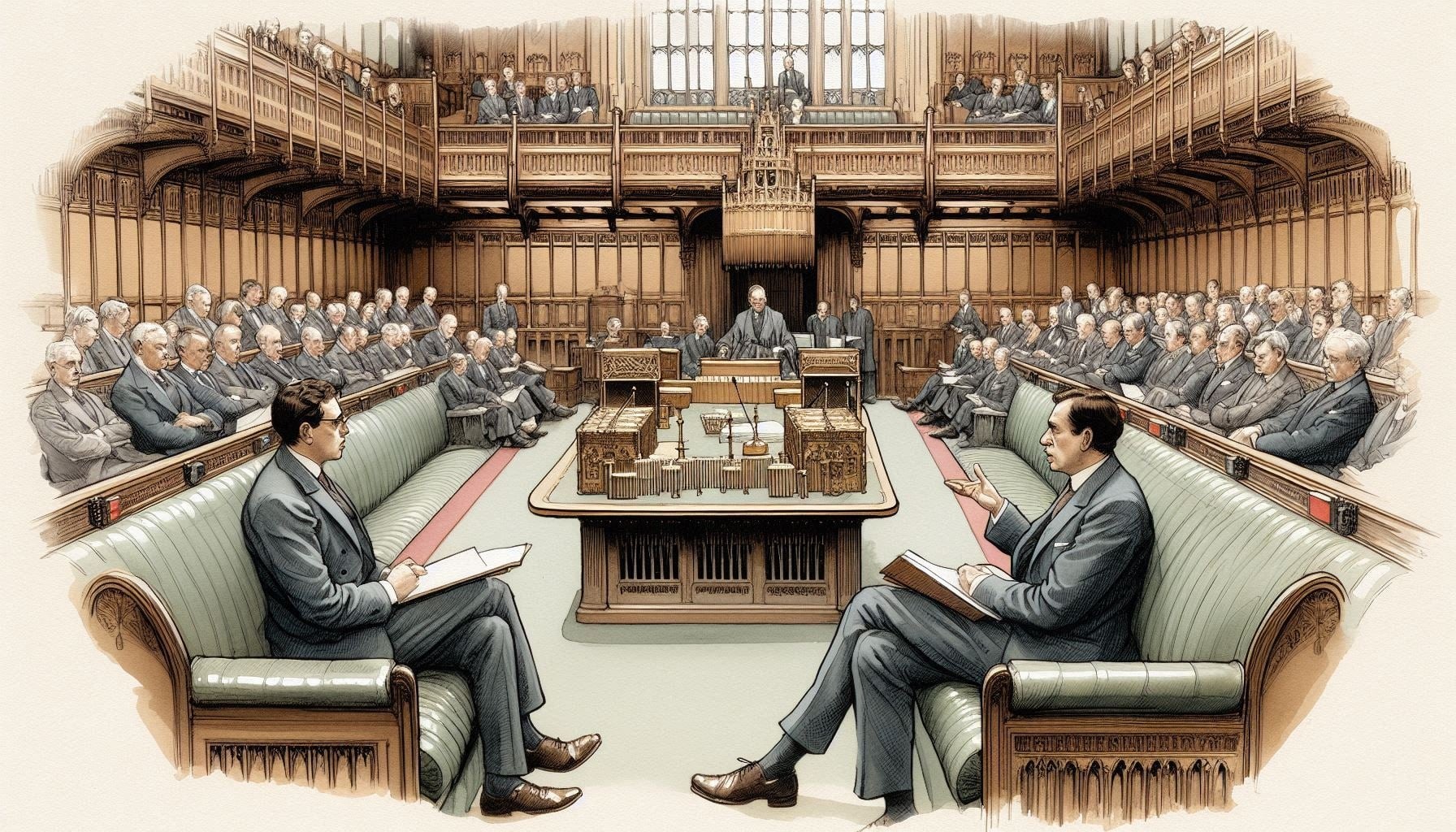
Before his downfall, the Labour MP served in senior government roles and became one of Harold Wilson’s most visible ministers.
WASHINGTON, DC, Before John Stonehouse became infamous as the British minister who faked his own death, he was regarded as one of Labour’s ambitious postwar modernizers, a polished political operator who rose from party activism into the heart of Harold Wilson’s government.
Stonehouse’s downfall became legendary because his rise had once seemed so promising.
The scandal that later consumed Stonehouse is remembered for false passports, a staged drowning, financial fraud, spy allegations and a spectacular arrest in Australia, but the earlier story is one of talent, access and rapid political ascent.
Stonehouse was not a fringe figure when he vanished from Miami Beach in 1974, because he had served as a minister, held a parliamentary seat, worked closely with senior Labour figures and built a public identity around competence.
His career matters because the fake-death scandal shocked Britain precisely because it involved a man who had occupied a serious office, not an obscure political eccentric already outside the corridors of power.
That contrast between promise and collapse made the Stonehouse affair one of the most extraordinary scandals of the 1970s, a case later revisited in British media as a story of ambition, deception and political ruin.
The drama of the disappearance cannot be fully understood without first understanding the man who once appeared to represent the capable, technocratic and internationally minded wing of Labour politics.
Stonehouse came from Labour roots and built himself as a postwar modernizer.
Stonehouse was born into a politically engaged family and entered public life through the Labour and Co-operative movement, a route that connected him to the party’s postwar traditions of social reform, public ownership and institutional service.
His father’s Labour background and Stonehouse’s own wartime service helped shape an image of public seriousness, social mobility and patriotic commitment that suited the political atmosphere of postwar Britain.
He was not merely a local organizer seeking office, because he presented himself as articulate, energetic and modern, the kind of Labour politician who could speak both to working-class constituencies and administrative reform.
That combination gave him appeal inside a party trying to prove it could manage a modern economy, technological change, post-imperial transition and public institutions under intense national pressure.
By the time he entered Parliament, Stonehouse had already cultivated the profile of a man who understood organization, communication and political presentation, qualities that would help carry him upward before they became tools of self-destruction.
His first parliamentary breakthrough came in the industrial Midlands.
Stonehouse entered the House of Commons in 1957 as Labour and Co-operative MP for Eynesbury, a Staffordshire constituency rooted in the industrial and working-class politics that shaped much of Labour’s postwar identity.
The seat gave him the platform he needed, but his ambitions quickly extended beyond constituency representation and into national debates about empire, development, technology and government administration.
He became known as an active and forceful speaker, a politician who wanted attention and often knew how to get it through causes that matched Labour’s internationalist self-image.
One early example came through his criticism of white minority rule in Southern Rhodesia, where his outspoken support for African political rights placed him firmly inside anti-colonial debates that animated Labour politics in the late 1950s and 1960s.
That episode gave Stonehouse a reputation for conviction and international engagement, qualities that made him more visible than many backbenchers of his generation.
His rise accelerated under Harold Wilson.
Harold Wilson’s leadership created space for politicians who could speak the language of modernization, administration and technological progress, and Stonehouse fit that political style with unusual confidence.
Wilson wanted Labour to appear practical, forward-looking and capable of governing a changing industrial country, which helped elevate MPs who looked comfortable with policy detail, media appearances and departmental responsibility.
Stonehouse benefited from that atmosphere, moving from the back benches into ministerial office and becoming associated with the energetic managerial image Wilson wanted to project.
He served in roles connected with aviation, technology, communications and postal reform, giving him exposure to areas of government that carried symbolic value in a country trying to modernize public infrastructure.
Later accounts, including British coverage of Stonehouse’s political rise and collapse, have emphasized how charm, ambition and political timing helped propel him upward before the contradictions in his private life overwhelmed him.
The aviation role placed him inside a high-stakes industrial policy world.
Stonehouse served as a junior aviation minister during a period when aircraft procurement, national prestige, industrial jobs and international competition were politically sensitive subjects.
Aviation policy in 1960s Britain was not merely technical, because aircraft orders carried implications for domestic manufacturing, transatlantic relations, national technology strategy and the future of state-backed industry.
Stonehouse’s involvement in aviation exposed him to the pressures of government decision-making, where ministers had to balance commercial realities, public money, industrial lobbying and national pride.
The role helped build his reputation as a minister comfortable with complex administrative questions, even when decisions involved controversy and competing claims from powerful interests.
It also placed him inside a culture where political ambition and technical authority mixed closely, reinforcing his self-image as a man suited to consequential government work.
The Post Office made Stonehouse a national administrative figure.
Stonehouse’s most visible government role came when he became Postmaster General, an office that placed him in charge of one of the country’s most familiar public institutions before major reforms changed the structure of postal governance.
The Post Office touched daily life through letters, telephones, savings systems and communications infrastructure, making the office more publicly visible than many ministerial positions with narrower policy reach.
Stonehouse’s tenure became associated with the introduction of first and second-class postal services, a reform that changed how Britons understood delivery speed, postage categories and everyday communication.
The role made him a recognizable government figure because postal services affected households, businesses and Parliament itself, giving even technical changes a broad public profile.
As Postmaster General, Stonehouse stood close to Wilson’s modernization project, presenting himself as a minister capable of reshaping an old public institution for a faster and more complex era.
Communications policy gave him influence during a changing media age.
After postal reform, Stonehouse served as Minister of Posts and Telecommunications, a position that placed him near debates about broadcasting, radio regulation and the future of public communications.
The late 1960s and early 1970s were a period of rapid technological and cultural change, with television, offshore radio, telecommunications and mass media altering how politics reached the public.
A minister in this field dealt not only with infrastructure but with information flows, public authority and the relationship between government and emerging communication systems.
Stonehouse’s association with communications policy added to his public visibility, because it placed him near issues that ordinary voters could understand and journalists could report.
It also gave later irony to his story, because a politician once responsible for communications would eventually become famous for one of the most theatrical acts of personal misinformation in British political history.
Stonehouse’s visibility made him appear more secure than he was.
To the public, Stonehouse looked like a rising minister who had moved through serious offices and retained enough profile to remain a nationally known Labour figure.
Behind that public image, however, his political and financial position became more fragile after Labour left office in 1970 and he lost ministerial salary, influence and the administrative stage that had supported his status.
He became involved in business ventures that later drew scrutiny, and the gap between the public image of competence and the private reality of financial stress began to widen.
This gap is essential to understanding the later scandal because Stonehouse’s fake death did not come from nowhere, it emerged from a life where ambition, debt, deception and fear of exposure had begun to converge.
Political rise can create an image that is difficult to abandon, and Stonehouse appears to have found the collapse of that image intolerable as his affairs unraveled.
His career survived the first Wilson era, but not the pressures after power.
When Labour lost the 1970 general election, Stonehouse did not retain the same level of importance he had enjoyed in government, and his exclusion from the top shadow ranks signaled a decline in influence.
The loss of office mattered because ministerial careers are not only about policy, they are also about salary, access, status, staff support and the public authority that comes with government responsibility.
Stonehouse’s business ventures grew more important after he left ministerial office, but they also became a source of instability as financial problems mounted.
By the time Labour returned to government in 1974, Stonehouse was still an MP, but the earlier aura of rising ministerial promise had begun to fade.
The contrast between former status and present vulnerability helped create the psychological and practical conditions for the desperate decisions that followed.
His parliamentary seat gave the scandal constitutional weight.
Stonehouse’s significance did not disappear simply because his ministerial career weakened, because he remained a sitting member of Parliament when he staged his own death.
That status transformed his personal escape into a public crisis, because a sitting MP cannot vanish without raising questions about representation, party management, parliamentary procedure and public accountability.
A private businessman faking death would have been a criminal curiosity, but a former minister and sitting lawmaker doing so became a scandal for the entire political system.
The case exposed how personal deception by a public official can disrupt democratic institutions, especially when voters, colleagues and officials must respond to a disappearance manufactured by the officeholder himself.
This is why the Stonehouse affair remains politically important, because it was not merely a fraud case, but a collapse of public trust by someone entrusted with national office.
The spy claims darkened the legacy of his public career.
Stonehouse’s rise was later overshadowed not only by fraud and fake death, but by allegations that he had supplied information to Czechoslovak intelligence during the Cold War.
Those claims have remained disputed and contested, but they added a severe layer of suspicion to his earlier ministerial career because he had served in government positions connected to communications, aviation and international affairs.
In the Cold War context, espionage allegations against a former minister carried enormous political weight, especially for a government already sensitive to security embarrassment and foreign influence claims.
Whether treated as proven, denied or unresolved, the allegations changed how many people looked back on Stonehouse’s rise, casting earlier ambition in a darker and more ambiguous light.
The result was that even his pre-scandal career became difficult to separate from the later narrative of secrecy, divided loyalties and deception.
Stonehouse’s public image depended heavily on performance.
Many accounts of Stonehouse describe charm, confidence, energy and ambition, qualities that can lift a politician quickly in systems where visibility and persuasion matter.
Those same qualities can become dangerous when performance replaces candor, because political success often rewards the ability to project certainty even when private reality is fractured.
Stonehouse’s later conduct suggests a man who believed deeply in the power of constructed narratives, first as a politician, then as a businessman, then as a fugitive attempting to live under false identities.
That does not mean his entire career was fraudulent, but it does show how public image and private deception can exist side by side until pressure exposes the divide.
His rise inside Labour politics therefore reads differently after the scandal, because the skills that once made him effective also helped him attempt one of the most audacious political disappearances in British history.
The passport scandal showed how far the fall traveled from public office.
Stonehouse’s eventual use of false identities and passports was not a lawful identity change, because it was built around fraud, evasion and the manipulation of official systems after his life began collapsing.
The U.S. Department of Justice’s public explanation of passport fraud and false statements reflects the broader democratic principle that identity documents depend on truthful claims and state recognition.
That principle applies across jurisdictions because public office, travel, banking and legal accountability all require confidence that a person’s official identity is genuine.
Stonehouse had once served inside a system of government authority, yet his escape plan later depended on attacking the same kind of trust that allows government records to function.
That reversal is one reason the case remains so striking, because a former minister who once represented the state later relied on false state documents to flee its consequences.
The scandal also exposes the difference between privacy and evasion.
There are legitimate reasons why people seek privacy, relocation, identity protection or lawful restructuring, including safety threats, political persecution, stalking, domestic violence and personal security risks.
Stonehouse’s conduct belonged to a different category because his false death and false identities were designed to escape financial accountability, political exposure and criminal investigation.
Legitimate new legal identity planning depends on recognized records, lawful eligibility and compliance, while Stonehouse’s attempted reinvention depended on deception and the identities of dead men.
That distinction matters because fake-death scandals often romanticize disappearance, making evasion appear clever when it actually imposes harm on families, institutions and public trust.
Stonehouse did not seek protection inside the law, he sought escape from the consequences of conduct that the law was beginning to uncover.
His rise makes the collapse more revealing.
The Stonehouse case endures because it was not only about a man who failed, but about a system that had elevated him into serious office before the scale of his personal instability became publicly visible.
His rise through Labour politics reflected real ability, political timing and ministerial usefulness, but his collapse exposed how ambition can outpace character when pressure builds behind a polished public face.
The public fascination comes partly from that contradiction, because Stonehouse seemed to have enough intelligence and experience to know that a fake death would likely fail.
Yet he attempted it anyway, suggesting desperation, arrogance or a belief that his own capacity for performance could defeat the systems he had once served.
The scandal, therefore, reads as both political history and psychological study, a case where public success did not prevent private disintegration.
The lessons extend beyond one failed minister.
Stonehouse’s story remains relevant because democratic systems depend not only on rules, but on the integrity of people trusted to operate those rules.
A minister can manage departments, speak in Parliament and appear serious in public while private financial pressures, personal secrets and ethical failures gather outside official view.
The scandal demonstrates why transparency, financial scrutiny, press accountability and institutional checks matter, especially when public office gives individuals prestige that may hide warning signs.
It also shows that political careers built on confidence can collapse rapidly when the facts behind that confidence are revealed as unstable.
Stonehouse’s rise was real, but the later collapse forced Britain to reconsider how much of political authority rests on image, trust and the assumption that public men are telling the truth.
The later disappearance transformed every earlier achievement.
After Miami, Australia, arrest and trial, Stonehouse’s earlier ministerial record became impossible to discuss without reference to the fake death that swallowed his reputation.
His postal reforms, aviation work and parliamentary prominence were not erased, but they were permanently reframed by the scandal that followed.
This is one of the harsh truths of political downfall, because years of public service can be condensed in memory into one catastrophic act of dishonesty.
Stonehouse became less the former Postmaster General or Labour modernizer than the minister who left clothes on a beach and tried to return to life as someone else.
That transformation shows how political legacy is not controlled by the height a figure reaches, but by the story that history decides best explains the whole life.
The bottom line is that Stonehouse rose high enough for the fall to shake Westminster.
John Stonehouse’s career inside British politics began with Labour ambition, constituency success, ministerial visibility and a place inside Harold Wilson’s modernizing project.
He served in roles connected to aviation, postal reform and telecommunications, becoming a recognizable figure in a government that wanted to project administrative competence and national modernization.
That status made his later fake death far more damaging, because the scandal involved a former minister and sitting MP whose disappearance disrupted politics and exposed deeper fraud.
His rise explains why the case still fascinates: the man who tried to vanish was not an outsider, but someone who had stood near the center of British public life.
For the public record, Stonehouse remains a cautionary figure whose political ascent made his staged death more than a personal collapse, turning it into one of Westminster’s most extraordinary scandals.