

Why Downsizing Matters Before Listing
When an Arizona homeowner decides it is time to sell, real estate conversations usually focus on price, timing, and marketing. Increasingly, however, agents say that one other factor can make or break a smooth transaction: how well the household has prepared for downsizing or estate liquidation before the property goes on the market.
Growing Demand for Estate Services
In a recent LivePositively analysis titled “Why Downsizing and Estate Liquidation Are Increasing Across Arizona in 2025,” local estate professionals described a growing wave of families downsizing, relocating for family reasons, or managing the belongings of a deceased loved one. Their work often intersects directly with real estate agents, who must coordinate listing schedules, showings, and closing dates around the very practical challenge of clearing a whole residence.
Underestimating the Scope of Clutter
Agents say the first point many sellers misunderstand is scale. After years or decades in the same property, owners tend to underestimate how many items they have accumulated. Cabinets, closets, garages, and sheds hide far more belongings than most people realize. As a result, some sellers schedule a listing date, assuming they can declutter and pack in a few weekends, only to discover that the job requires much more time.
How Delay Undermines Opportunities
From the perspective of a listing agent, this underestimation can cause delays and missed opportunities. A hot segment of the market may cool by the time the home is ready. Buyers who viewed the property during cluttered early showings may not return, even once the property is in better condition. Inspectors and appraisers may have difficulty accessing key areas, which can slow down underwriting and negotiation.
Proactive Planning and Professional Support
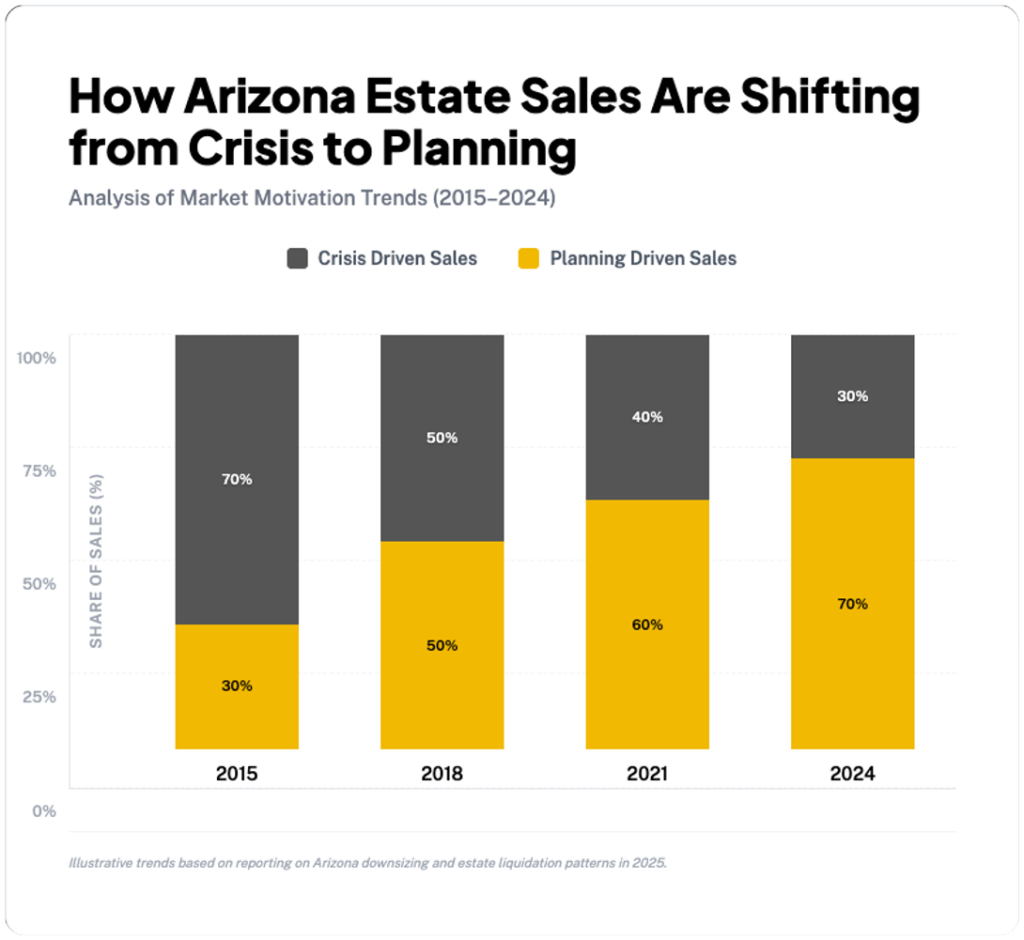
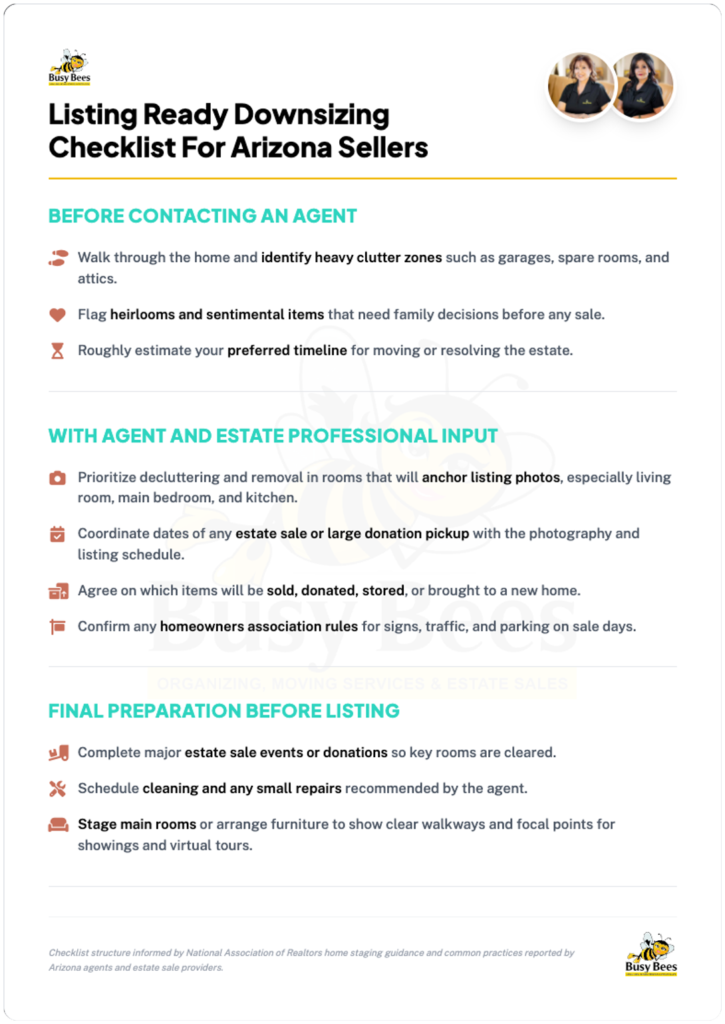
To avoid these problems, many Arizona agents now encourage clients to think about estate and downsizing decisions early, rather than waiting until the house is about to hit the market. Some provide checklists that suggest starting with storage spaces buyers are unlikely to see—such as attics or seldom-used rooms. Others refer clients directly to estate sale companies, senior move managers, or organizing professionals who can manage sorting and liquidation.
Decluttering Enhances the Listing Appeal
The LivePositively article emphasized the advantages of working with local estate teams who understand regional buyer preferences. Real estate practitioners echo that view, noting that a well‑executed sale or donation plan can radically change a property’s feel. Rooms that once seemed cramped suddenly appear open. Built‑in storage, natural light, and other architectural features become more visible—supporting a stronger asking price and faster offers.
Beyond Staging: Clearing the Clutter
Another point agents raise is the difference between staging and simply living in a home. Many owners become accustomed to full shelves, crowded counters, and furniture arrangements that suit their routines. While that is fine for daily life, it does not always translate well in listing photos. Estate liquidation offers a way to remove excess furniture, decor, and personal items so that a stager—or the owner with guidance—can present the space more clearly.
Handling Estates With Multiple Heirs
For sellers managing an estate after a death, the stakes can feel even higher. In these situations, agents often deal with multiple heirs who may have different expectations, emotional responses, and financial pressures. A structured estate sale handled by a neutral third party can establish a shared timeline and provide transparent accounting of proceeds. That transparency can support smoother decisions about pricing, repairs, and final acceptance of offers.
Realistic Approaches to Low‑Value Items
Real estate professionals also point out that not every item in a home is worth selling individually. Low‑value objects can consume disproportionate effort if families insist on handling everything themselves. Estate specialists can help categorize items for sale, donation, recycling, or disposal. Agents say sellers who accept this realistic approach often move through the process more quickly and with less frustration.
Financial Benefits of a Clean, Market‑Ready Home
There is a financial dimension as well. Some homeowners assume that every dollar earned at an estate sale directly increases their overall return. In practice, agents note that the larger financial benefit often comes from presenting a clean, well-prepared property that attracts motivated buyers. A few extra dollars from selling miscellaneous items may matter less than securing a firm purchase offer by listing sooner or avoiding concessions tied to deferred maintenance.
Addressing the Emotional Challenges
The LivePositively article highlighted the emotional pressures that accompany downsizing and estate work. Real estate agents see those pressures up close. They describe clients who feel guilty about letting go of a loved one’s furniture or who struggle with the idea of buyers walking through their childhood home. Acknowledging these feelings—rather than dismissing them—is part of the job. Agents say that when families receive support from estate professionals sensitive to the emotional side of liquidation, the entire selling experience tends to go more smoothly.
Coordination and Clear Communication
Communication among all parties makes a difference. Successful transactions often involve regular check‑ins between the agent, the estate or downsizing team, and the family. Clear timelines, written agreements about what stays and what goes, and shared calendars for sale dates and showings reduce the chances of last‑minute surprises. For example, scheduling public estate sale days before professional photos are taken can prevent conflicts between shoppers and potential buyers.
Choosing the Right Sequence for Sale or Repairs
Agents also stress that there is no single correct order for every situation. In some cases, it makes sense to complete the estate sale before any listing work begins. In others, minor repairs or upgrades should come first so contractors can access walls, floors, and fixtures before furniture is rearranged or removed. The best sequence depends on the home’s age and condition, the estate’s complexity, and the time pressure the sellers face.
Why Downsizing and Liquidation Are Integral to Selling Strategy
For Arizona residents considering a move in the coming years, many real estate professionals advise treating downsizing and liquidation as integral parts of the selling strategy rather than separate side tasks. The themes outlined in the LivePositively article provide a helpful backdrop. Population growth, changing household sizes, and the rise of multigenerational living are increasing the number of homes that must transition from whole-family life to market‑ready properties.
Presenting a Home for Its Next Chapter
Ultimately, agents say, the most successful sales involve properties that feel cared for, orderly, and ready for a new chapter. Thoughtful estate planning and downsizing do not, on their own, guarantee a higher sale price, but they help showcase the home at its best and reduce stress for everyone involved. In a state where both long‑term residents and new arrivals are constantly adjusting their housing needs, that combination of clarity and calm is becoming an essential asset in its own right.