
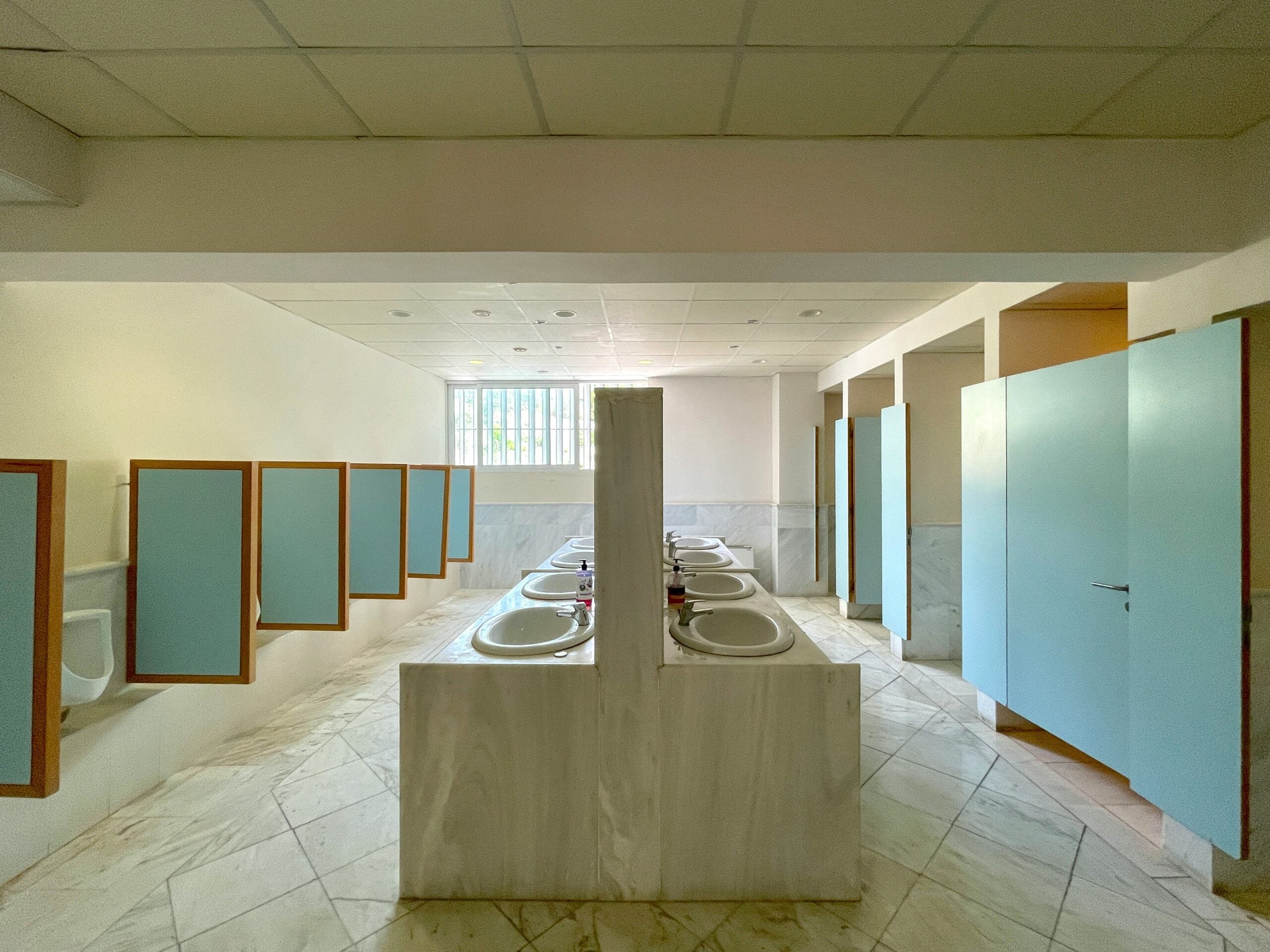
Building codes have long governed restroom accessibility and sanitation. Privacy, by contrast, has historically gone largely unaddressed. That balance is beginning to shift as occupant expectations rise.
For specifiers, code evolution is worth watching closely. Requirements that start as recommendations often become mandates. Anticipating that trajectory protects projects from costly retrofits later.
What Have Codes Traditionally Required?
Traditional codes focused on accessibility, clearances, and fixture counts. Privacy of the stall enclosure itself was rarely specified in detail. The result left partition design largely to market convention.
That convention produced the gapped stalls common across the country. Codes neither required nor prohibited the visible gaps. Privacy simply fell outside the regulatory scope.
Why Is Privacy Now Entering the Conversation?
Privacy is entering codes because occupant expectations have grown loud and consistent. Survey data showing widespread dissatisfaction gives regulators a basis to act. Public sentiment is increasingly difficult to ignore.
An industry analysis of this trend notes that some jurisdictions are already moving toward stricter enclosure requirements, and it argues that specifying restroom stall privacy gaps out of a design proactively is wiser than waiting for a mandate. The report frames code evolution as a question of when, not whether.
Several states have begun examining partition privacy more closely. The direction of travel favors greater enclosure. Specifiers who anticipate it avoid being caught by a sudden requirement.
What Changes Might Codes Introduce?
Emerging requirements tend to target the most visible shortcomings. The changes most likely to appear in codes include:
- Reduced maximum gap widths at stall doors
- Minimum door heights closer to the floor
- Sightline limitations from adjacent fixtures
- Privacy provisions tied to specific occupancy types
- Enhanced requirements in schools and healthcare settings
Each of these addresses a documented occupant complaint. Together they point toward genuine enclosure as the regulatory goal. Products that already meet these criteria will have a clear advantage.
How Do Privacy and Accessibility Interact?
Privacy requirements must coexist with accessibility mandates. A high-privacy stall still has to provide compliant clearances and reach ranges. Good partition design satisfies both at once.
This intersection is where careful specification matters most. Privacy cannot come at the expense of accessibility. Systems engineered for both avoid forcing a tradeoff.
How Should Specifiers Prepare?
Specifiers can prepare by selecting partition systems that exceed current minimums. Choosing high-enclosure products now insulates a project from future code changes. It also satisfies occupant expectations in the meantime.
Documentation supports this approach. Specifying for privacy on the front end is far less costly than retrofitting after a code update. Foresight is the cheaper path.
How Can Documentation Support Compliance?
Thorough documentation makes it easier to demonstrate compliance as codes evolve. Specifying partition systems with clear privacy performance gives a project a defensible paper trail. That record matters when requirements tighten unexpectedly.
Specifiers who note privacy criteria in their documents protect future projects. The detail establishes intent and supports later inspections. It is a small step that prevents larger problems down the line.
Why Do Occupancy Types Matter for Future Rules?
Privacy requirements are likely to vary by building type rather than apply uniformly. Schools, healthcare facilities, and public venues each present distinct privacy expectations. Codes tend to tighten first where the need is most acute.
Specifiers working in these sectors should watch developments closely. A requirement that begins in healthcare can spread to other occupancy types. Anticipating sector-specific rules keeps projects ahead of the curve.
Code attention to restroom privacy is still early, but the trajectory is clear. Occupant data is pushing regulators toward greater enclosure over time.
For specifiers, the prudent move is to design ahead of the curve. Meeting tomorrow’s likely requirements today avoids the expense of catching up later.