
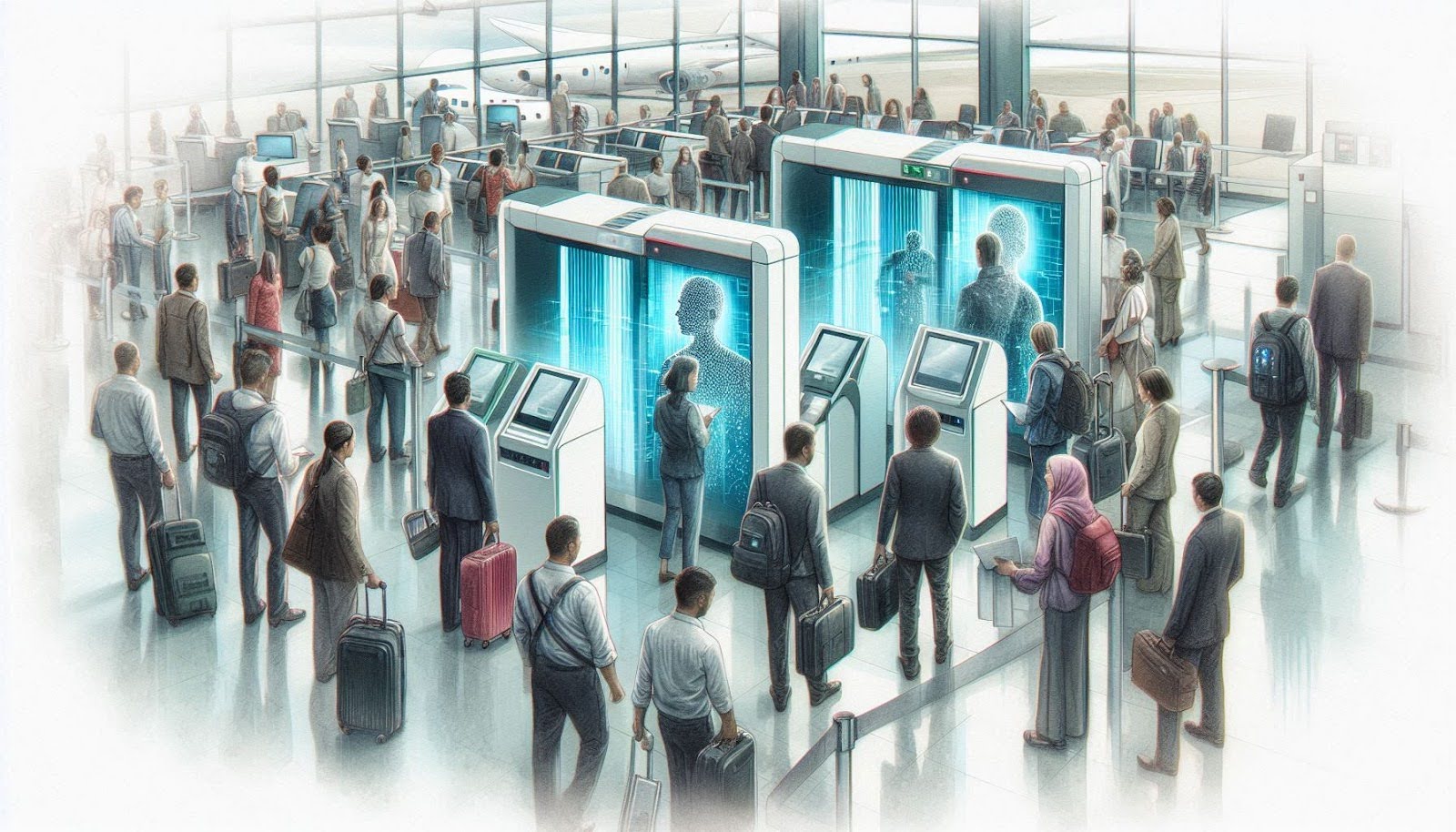
Exploring gait analysis, voice recognition, and rapid DNA testing in the current fugitive hunting toolkit.
WASHINGTON, DC.
For more than a century, fingerprints were the gold standard of identification. A ridge pattern. A match. A name.
That era is not over, but it is no longer the whole story.
In 2026, the modern manhunt is increasingly multimodal. Investigators still lift prints, but they also scan faces, compare voices, flag movement patterns, and in some cases, generate DNA profiles on timelines that used to be unthinkable outside a lab. The result is a shift in how fugitives are found and how often people are identified without ever touching a doorknob.
This matters because the new toolkit does not just expand capability. It expands consequence.
When identification relies on a single physical trace, a suspect can avoid leaving it, at least in theory. When identification becomes a mosaic of signals, appearance, movement, speech, and genetic reference, ordinary life becomes the signal. And ordinary life is hard to stop living.
This story does not describe how to evade or defeat biometric systems. It looks at what is actually changing, why it is changing now, and why the growing dependence on biometrics is forcing a new debate about accuracy, privacy, and the risk of false certainty.
The nut graf
Fingerprinting works because it is stable and explainable. A print is either there or it is not. A match can be demonstrated and challenged. But fugitive hunting in 2026 is being reshaped by something fingerprints cannot do quickly: identify someone at distance, in motion, in real time, and in situations where a clean latent print does not exist.
That is where newer biometrics come in.
Some are mature, like facial recognition in controlled settings. Others are emerging and more controversial, like gait analysis and voice recognition. Rapid DNA testing sits in a separate category entirely, because it turns a biological identifier into a near-immediate investigative signal, and it raises questions that go beyond policing into the governance of genetic databases.
Together, these tools are changing the meaning of “identified.”
Fingerprints still matter, but they are no longer enough
Fingerprints remain powerful in a controlled environment. Arrest processing. Evidence collection. Database comparisons. Courtroom presentation.
But fingerprints are limited by opportunity. You need contact. You need a usable print. You need time to process it. You need context to interpret it.
A fugitive who is careful about touch points can reduce prints in public spaces. A fugitive who moves through the world without leaving clean latent prints can still be found through other channels, because other channels do not require contact. They require visibility.
And that is the foundational change. The new identification toolkit is designed for distance.
The rise of recognition at a distance
The most visible example is facial recognition.
It is not deployed uniformly everywhere, and it is not flawless. But it has matured enough that governments are openly discussing scaling it, not only as a specialized tool but as a standard part of day-to-day policing in some jurisdictions. Late last year, Reuters reported that British police planned to expand facial recognition use and proposed a new body to oversee it, a signal of how quickly the technology is moving from pilot programs into broader policy conversations.
The significance is not the camera itself. It is the operational effect.
Facial recognition shortens the identification loop. It can turn a blurry “possible sighting” into a prioritized lead. It can also create a new kind of friction for policing, because a system that produces fast matches also produces fast mistakes, and mistakes escalate quickly when officers treat a match like a certainty instead of a probability.
That tension, speed versus certainty, is the same tension that runs through gait, voice, and rapid DNA.
Gait analysis, the biometric you carry even when you hide your face
Gait analysis is the idea that the way you walk can be distinctive enough to support identification or narrowing.
It is attractive for a simple reason. People can obscure a face more easily than they can change how they move. A hat is quick. A scarf is quick. A walking pattern is harder to rewrite consistently, especially under stress.
In practice, gait analysis usually does not function like a fingerprint match. It functions more like a ranking system. It can help investigators filter video when faces are low quality, obscured, or captured at awkward angles. It can flag similarities across clips, connecting a person moving through different spaces even when the face is not clearly visible.
The promise is obvious. If a fugitive avoids direct camera angles, gait becomes a back door.
The risk is equally obvious. Gait can change with injury, fatigue, footwear, terrain, age, or disability. It can also be influenced by how a video is captured and compressed. In other words, gait is a biometric that lives inside real-world noise.
That makes governance critical. If gait analysis is treated as an investigative lead generator, it can be useful. If it is treated as proof, it can become dangerous.
The larger point is that gait analysis expands the reach of video. It offers a way to mine footage even when faces fail.
It also changes the “hiding” calculus in a way the public rarely appreciates. When identification becomes behavioral, privacy becomes less about what you reveal and more about the patterns your body produces automatically.
Voice recognition, the biometrics of speech, and the hazards of overconfidence
Voice recognition in the law enforcement context is often described as speaker recognition or forensic voice comparison. It is not the same as a consumer voice assistant recognizing your command. The goal is not to understand what was said, but to estimate whether two recordings likely came from the same speaker.
This capability is growing for three reasons.
One is volume. Investigations now routinely include large caches of audio, calls, messaging apps, voice notes, and sometimes intercepted communications. Even when none of that is admissible on its own, it can be operationally valuable.
Second is compute. Audio processing has become cheaper and faster. Analysts can scan large datasets, cluster similar voices, and prioritize what to review.
Third is integration. Voice comparison can be used alongside other signals, location patterns, associate networks, and video. On its own, a voice match may be uncertain. In combination, it can become persuasive enough to shape an investigation.
But voice is one of the most contested biometrics because it is situational.
A person’s voice can shift with illness, stress, sleep deprivation, intoxication, or emotion. Microphones, compression, and background noise can dramatically change the signal. Language and accent shifts can complicate comparisons. And there is a difference between a voice sounding similar and a voice being the same.
The practical truth is that voice recognition is often most useful as a narrowing tool. It can help investigators triage. It can help identify likely relevance. It can help connect audio across devices and platforms.
The ethical problem arises when triage becomes certainty.
A system that produces a strong similarity score can create a psychological trap for investigators. It feels like proof, even when it is not. This is why many experts argue that voice comparison demands cautious interpretation, strong validation, and clear limits on how it is used.
The public will likely see more debates around voice biometrics in the coming years, not only because police are interested, but because voiceprints are becoming a form of identity in consumer and enterprise systems. Once a voice becomes a key, it becomes a target, and governance becomes more complicated.
Rapid DNA: The most profound shift and the most sensitive one
Rapid DNA is a different kind of breakthrough. It does not identify a person at distance. It identifies a person through biology.
Traditionally, DNA analysis required labs, time, and careful chain of custody. That has not changed for many forensic workflows. What has changed is the growing capability to generate a DNA profile from a reference sample much faster, sometimes on a timeline measured in hours.
The FBI describes Rapid DNA as an automated process that can develop a DNA profile from a mouth swab in about one to two hours, without the need for a traditional DNA laboratory, in its law enforcement guidance on Rapid DNA.
The operational implication is clear. If a suspect is in custody, a faster DNA profile can accelerate decisions around identification and investigative direction, and it can help resolve uncertainty quickly in some cases.
The public implications are more complex.
DNA is not a typical identifier. It is not like a fingerprint in a database, a marker tied to an arrest card. It is a biological signature that can implicate family relationships, expose sensitive information if mishandled, and raise fundamental privacy questions. Even when rapid DNA is used for reference identification rather than crime scene evidence, it changes the scale of what is possible.
It also changes the risk of mission creep.
The more routine DNA processing becomes, the stronger the pressure will be to broaden collection, retention, and comparison. That is where public trust can crack, because people understand instinctively that genetic information is not just another piece of data.
This is why rapid DNA tends to produce a different kind of debate than gait or voice. With gait and voice, the fear is misidentification and surveillance. With rapid DNA, the fear expands into permanent genetic tracking and downstream uses that citizens did not consent to.
The modern toolkit works best when it is combined
The real power of 2026 biometrics is not that any single method has replaced fingerprints. It is that multiple methods can support each other.
A face match can lead to a location. A location can lead to camera footage. Camera footage can be analyzed for movement patterns. Movement patterns can connect clips. A voice snippet can connect a device to a person. A rapid DNA reference profile can resolve an identity question once someone is detained.
None of this requires a perfect system.
It requires a system that is good enough to narrow.
That is why the phrase “digital dragnet” feels accurate. The net is not a single rope. It is a weave of partial signals that become strong when combined.
The policy challenge is that a net does not only catch its target. It also catches bystanders.
The accuracy problem, and why the public keeps hearing about “false positives”
As biometric tools spread, one criticism keeps returning: false identification.
Facial recognition has been at the center of this debate, but the issue is larger than faces. It is about how any probabilistic tool behaves when it is used at scale.
A tool that is 99 percent accurate sounds impressive until it is run millions of times. At that scale, a small error rate produces a meaningful number of wrong matches. Those wrong matches are not abstract. They are traffic stops, interrogations, detentions, and sometimes arrests.
This is why the phrase “before they move” can feel chilling when paired with predictive and biometric systems. When algorithms are used to prioritize leads, the cost of being wrong is borne by real people.
That cost can be unevenly distributed. Critics argue that historical policing data and uneven deployment patterns can magnify disparities, creating a feedback loop where certain communities are scanned, stopped, and scrutinized more often. Even if a model is neutral in design, a biased environment can make its outcomes unequal.
In 2026, this is no longer a niche policy argument. It is becoming a mainstream governance question.
Privacy, consent, and the new friction of living in public
Biometrics blur a line that used to feel stable.
In the past, you could avoid leaving fingerprints by avoiding touch. You could avoid leaving a signature by avoiding paper. You could limit exposure by limiting contact.
But gait and face are not optional in the same way. They are emitted.
Voice can be captured at a distance. Video can be collected passively. A person can be recorded without doing anything extraordinary, simply by walking through the modern world.
That creates a deeper tension. The public expects safety, but it also expects that ordinary life should not feel like constant identification.
When citizens feel that their faces, movement, and voices can be captured and analyzed routinely, the psychological effect can be profound. It can change how people protest, how they socialize, and how safe they feel in public spaces. Even people who support aggressive enforcement against violent offenders can become uneasy when the same tools appear to expand quietly into lower-level contexts.
That is why transparency matters. People will accept powerful tools more readily when boundaries are explicit and accountable.
The legal question: What counts as evidence and what counts as a lead
A key distinction is often lost in public debate: investigative leads versus courtroom proof.
Many biometric tools function best as lead generators. They can narrow a list. They can point investigators in a direction. They can accelerate triage.
But the legal system demands explainability, reliability, and the ability to challenge. Fingerprints have a long history of use in courtrooms, standards, and professional practice. Many newer biometrics do not have the same baseline of legal maturity.
Gait analysis, in particular, can be difficult to present cleanly as proof because it lives inside video quality, environmental conditions, and interpretation. Voice comparison can be contested because of recording variability and the risk of overconfidence in similarity scoring. Even rapid DNA raises chain-of-custody and governance questions if collection and processing are expanded beyond carefully controlled protocols.
The most responsible enforcement posture treats these tools as accelerators of investigation, not substitutes for due process.
The human factor still ends most manhunts
It is tempting to frame biometrics as technology solving the fugitive problem.
In practice, technology is most effective when it exploits a constant: human needs.
People get sick. People return to family. People keep routines. People make emotional decisions. People slip.
Biometrics can tighten the window between slip and capture. That is the real operational advantage. It does not eliminate the human element. It compresses it.
This is why policymakers should be careful about narratives that suggest technology can replace judgment. Judgement is what prevents a system from turning a “match” into a cascade of harm.
Where compliance and governance intersect with enforcement
One reason biometrics are expanding is that modern institutions are becoming more verification-driven. Banks, employers, landlords, and border systems increasingly demand coherent identity narratives. That creates more touchpoints where inconsistencies surface.
Compliance-focused advisers often describe this as the verification era, where stability depends on consistency and documentation. Amicus International Consulting has argued that the same infrastructure designed to reduce fraud and manage risk also affects how quickly inconsistencies are flagged, which can accelerate enforcement and shrink the space for improvisation in high-scrutiny environments, a point reflected in its public analysis at www.amicusint.ca.
For law-abiding people, that perspective matters because it reframes the story away from cat-and-mouse games and toward governance. The same tools that can help locate dangerous offenders can also affect ordinary citizens if oversight is weak.
What comes next
The biometric frontier is expanding, and the next phase will likely focus on three realities.
First, integration will deepen. Agencies will increasingly blend biometric signals with case analytics, video review, and network analysis. The practical effect will be faster narrowing and faster action.
Second, oversight will become the main battleground. Communities will demand clearer limits on deployment, retention, and secondary use, especially for tools that capture information about people who are not suspects.
Third, the accuracy debate will become less theoretical. As more tools are deployed, more errors will be discovered. The question will not be whether error exists. It will be how agencies handle it, and whether the public has meaningful recourse when a system gets it wrong.
The bottom line
Fingerprints are not obsolete. They are simply no longer the only key.
In 2026, fugitive hunting increasingly relies on a portfolio of biometrics that can identify people without contact: faces at a distance, gait in motion, voices in fragments, and DNA on accelerated timelines once a person is detained.
This is a capability revolution, and it is also a governance test.
The societies that benefit most from these tools will not be the ones that deploy them fastest. They will be the ones that deploy them with the clearest rules, the strongest oversight, and the most humility about what “a match” really means when technology turns probability into action.