
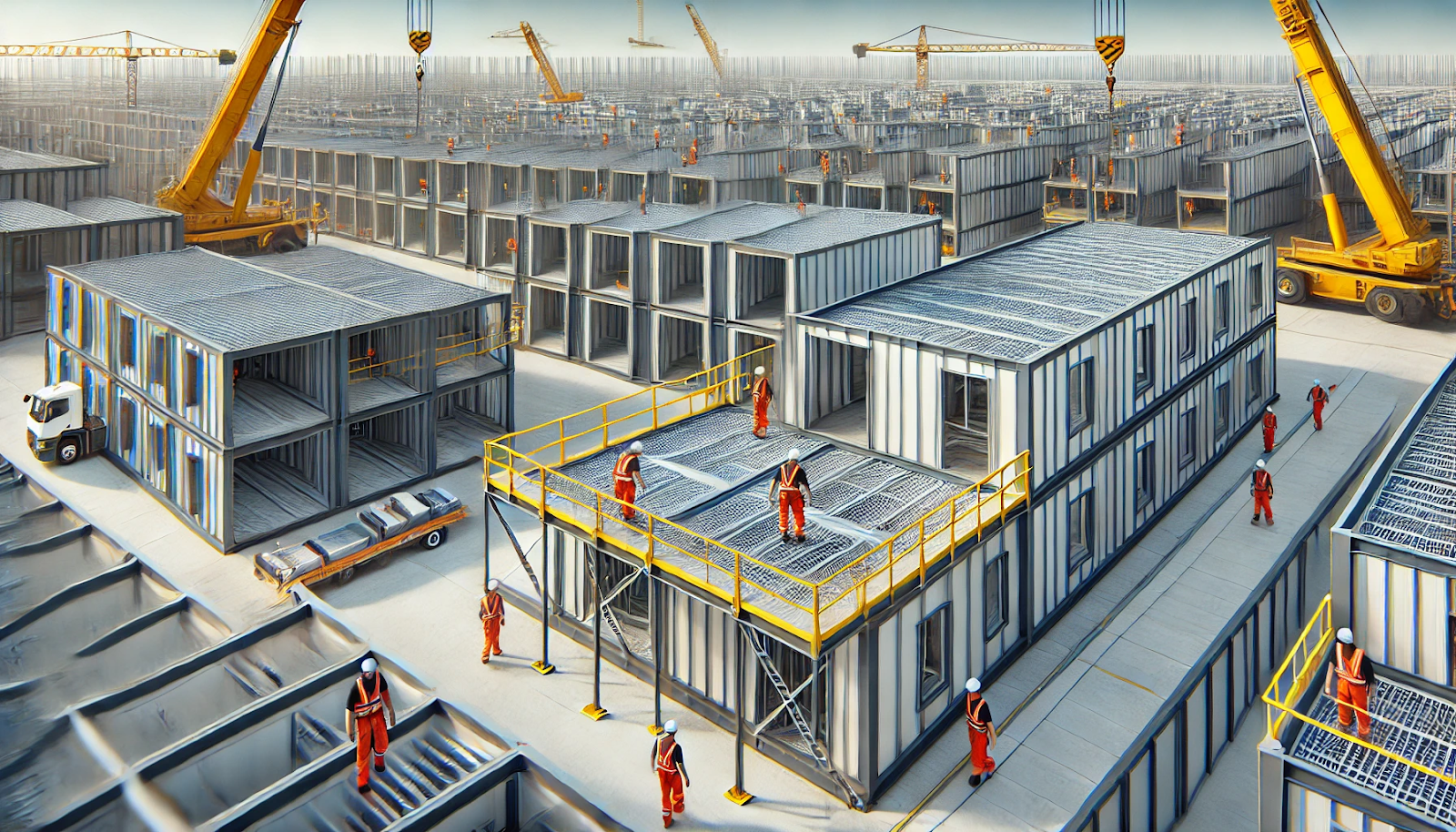
The construction industry is evolving rapidly, with modular and prefabricated construction emerging as leading solutions for efficiency, cost-effectiveness, and sustainability. At the core of this transformation is steel deck, a crucial component that enhances the structural integrity and performance of modular buildings. As developers and contractors seek ways to streamline construction processes while maintaining high-quality standards, steel decking provides a versatile and durable foundation that bridges the gap between traditional and modern building techniques.
The Role of Steel Decking in Modern Construction
Steel decking serves multiple purposes in construction, from acting as a formwork for concrete slabs to providing structural reinforcement. It is widely used in commercial, industrial, and residential projects due to its ability to withstand heavy loads while offering flexibility in design. With modular and prefabricated construction gaining traction, the importance of steel decks has grown significantly, as they contribute to faster project timelines and reduced on-site labor requirements.
Key Benefits of Steel Decking in Modular and Prefabricated Construction
1. Structural Strength and Load-Bearing Capacity
One of the primary reasons steel decking is favored in modular construction is its high strength-to-weight ratio. A steel deck can support substantial loads, making it ideal for buildings that require strong flooring and roofing systems. In prefabricated construction, where sections are built off-site and then assembled on location, steel decking ensures that these structures maintain stability and durability.
2. Speed and Efficiency in Construction
Modular construction aims to reduce build times by manufacturing components off-site in controlled environments. Steel decking complements this approach by allowing for quick installation, as pre-fabricated panels can be easily fitted together. Additionally, because steel decks are lightweight compared to traditional concrete or wooden alternatives, transportation and handling become more manageable, further accelerating project completion.
3. Enhanced Fire Resistance and Safety
Safety is a top priority in construction, and steel decking provides enhanced fire resistance compared to wooden or composite materials. Many steel decks come with fire-resistant coatings or are designed to support fire-rated assemblies, which adds another layer of protection to prefabricated structures. This quality is particularly important in commercial buildings, hospitals, and residential high-rises where fire safety regulations are stringent.
4. Cost-Effectiveness and Reduced Material Waste
Modular construction is inherently cost-effective due to its reduced reliance on on-site labor and minimized material waste. Steel decking aligns with these cost-saving measures by offering a durable solution that requires little maintenance over time. Additionally, because steel decks are pre-engineered and produced in precise dimensions, there is minimal material wastage, further reducing costs for developers.
5. Environmental Sustainability and Recyclability
Sustainability is a growing concern in the construction industry, and steel decking contributes to eco-friendly building practices. Steel is one of the most recyclable materials, meaning that steel decks can be repurposed at the end of a building’s lifecycle. The use of pre-engineered steel decking also reduces on-site construction waste, aligning with green building certifications and sustainability initiatives.
Applications of Steel Decking in Modular Construction
Steel decking is a versatile component used in various aspects of modular construction, including:
- Flooring Systems: Steel decks act as a base for concrete slabs, ensuring durability and stability in modular buildings.
- Roofing Systems: In prefabricated structures, steel decks provide a lightweight yet strong roofing solution.
- Bridging Components: Steel decking can be used to connect modular units, reinforcing structural cohesion across a building.
- Multi-Story Construction: High-rise modular buildings benefit from steel decking as it supports vertical load distribution efficiently.
Challenges and Solutions
While steel decking offers many advantages, it also presents some challenges. These include:
- Initial Cost: Although steel decks may have a higher upfront cost than traditional materials, their long-term benefits—such as durability, reduced maintenance, and faster construction times—outweigh the initial investment.
- Corrosion Concerns: Steel can be susceptible to corrosion if not properly treated. However, using galvanized steel decks or applying protective coatings can prevent rust and extend their lifespan.
- Design Compatibility: In modular construction, ensuring that steel decking aligns with prefabricated units requires precise engineering. Collaborating with experienced manufacturers and engineers can help integrate steel decks seamlessly into modular designs.
Future Trends in Steel Decking and Modular Construction
As technology advances, steel decking will continue to play a pivotal role in the evolution of modular construction. Some key trends to watch include:
- Integration of Smart Materials: New coatings and treatments that enhance the thermal efficiency and self-healing properties of steel decks.
- 3D-Printed Modular Components: The combination of 3D printing and steel decking to create customized prefabricated structures with minimal material waste.
- Increased Use in Residential Construction: While modular construction is widely used in commercial projects, residential applications are growing, with steel decks being incorporated into multi-family housing and affordable housing solutions.
- Automation and Robotics: The use of robotics in steel deck installation to further improve precision and reduce manual labor.
Conclusion
Steel decking is a crucial element in modular and prefabricated construction, offering unparalleled strength, efficiency, and sustainability. As the construction industry shifts towards faster, cost-effective, and environmentally friendly building practices, steel decks will remain at the forefront of innovation. By integrating steel decking into modular construction, developers and contractors can achieve greater structural integrity, streamlined installation, and enhanced project outcomes. The future of construction is modular, and steel decking is helping to bridge the gap between traditional and modern building methodologies.